"Protection of the World's Artifact and Architectural Monuments"
the theme of Tobu World Square
. The best was saved for the final part of our school trip this year, as the visit to Tobu World Square was perhaps, the highlight and the most interesting spot we were taken to during the two-day long trip. Tobu World Square is a theme park but it is not like a theme park with roller coaster and scary rides as you might imagine. Instead, it exhibits world famous architectural works and ancient monuments, all scaled down to 1/25 of their actual sizes. A total of 102 structures from 21 countries, including 45 inscribed as World Heritage by UNESCO are displayed here. Just like what the tour guide told us, we felt as if we are gigantic Gulliver when we stepped into this theme park. First up will be our group shot in front of the entrance of Tobu World Square.  The group shot where all but one of us who joined this trip were inside the picture.
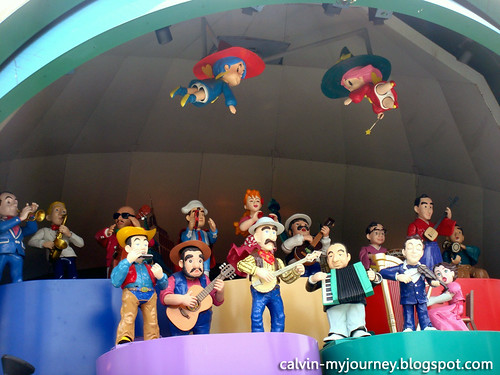 The group of toy band which will perform at a certain time, several times a day which is located just before we enter the park. It so happened that they were halfway through their performance of some songs when I was just about to leave the park later that day.
  Yakushi-ji Temple in Nara, considered as one of the most famous imperial and ancient Buddhist temples in Japan.
 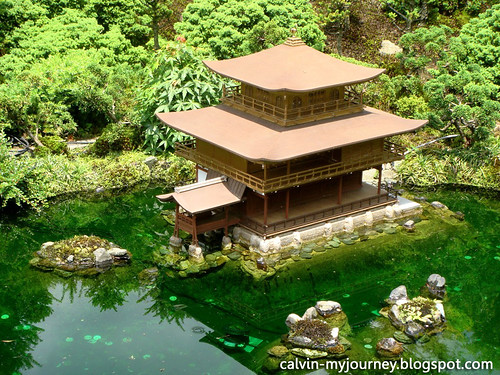 Rokuon-ji Golden Pavilion in Kyoto, more popularly known as Kinkaku-ji Temple.
  Kiyomizu-dera Temple, a Buddhist temple which is a must-go location in every visit to Kyoto.
 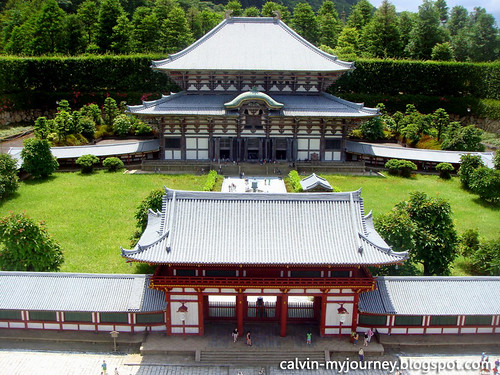 Todai-ji Grat Buddha Hall in Nara. Alongside the Great Buddha statue in Kamakura, this is one of the biggest Buddha statue in Japan and it is placed inside that huge hall behind the red entrance.
 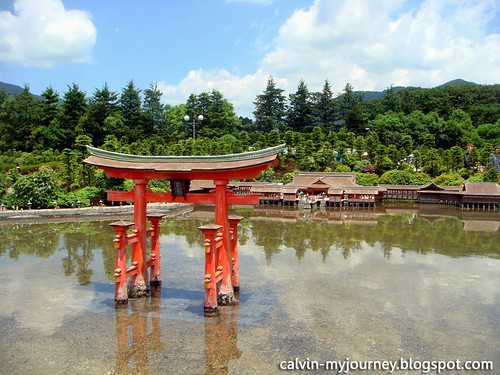 Ikushima Shrine in Miyajima. I was there last summer to watch the on-the-sea fireworks festival which was held on the water and it was really magnificent.
  Himeji Castle, which is considered one of the most famous castle in Japan, but I have yet to pay a visit to this castle so far.
 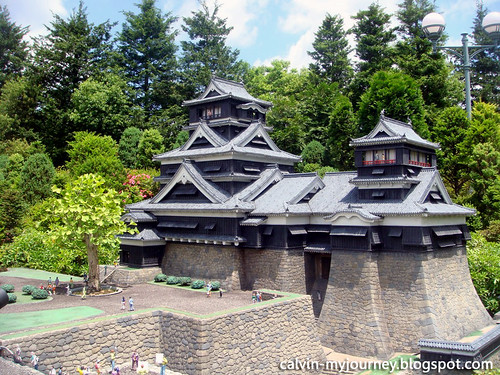 Kumamoto Castle in Kyushu Island. If you had watched the movie "Sinking of Japan" before this, then this castle should be familiar to you as it was one of the first castles destroyed by the volcanic eruptions.
  A typical train station in Japan.
  Former Kaichi School in Nagano.
 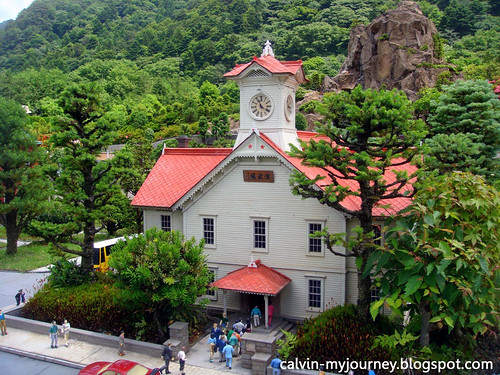 Sapporo Clock Tower in Hokkaido. To be honest, it looked a tad different from the actual one I saw when I was there last summer.
 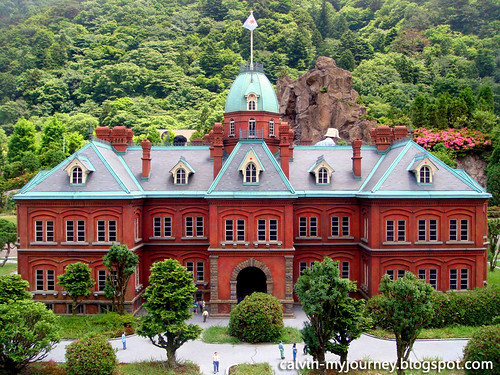 Former Hokkaido Prefecture Government Building, also in Sapporo. It is more commonly known as the Akarenga Government Office Building. Seriously, it really looked like a carbon copy of the real building like here.
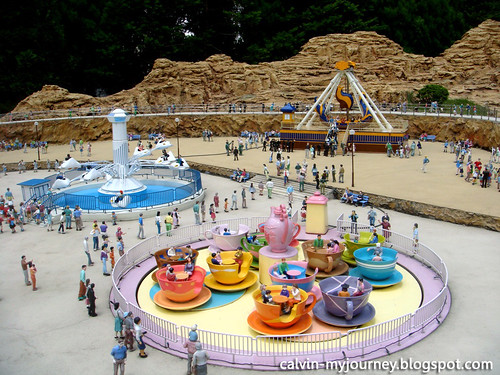 As if it could not be any more random than this, they even displayed an amusement park. Seeing this certainly reminds me of the fun I had whenever a funfair comes to my town when I was young.
 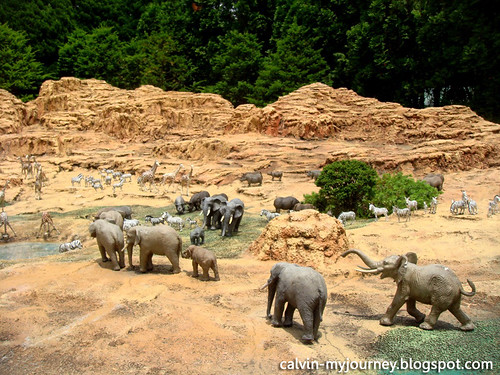 A wild safari was displayed too at the end of this park.
  If you are wondering how they produced the exhibits in this theme park, there is a step-by-step explanation one the process they go through to make an exhibit. What caught my eye was the first picture, when they will send a team to the actual site to gather the information like taking pictures and sketch the design of the original building. That must cost a hefty lot.Finishing this entry means you had got to see most of the famous spots in Japan in less than five minutes. You will never get a vacation around Japan any faster than that, would you? And the best part of it is that you didn't have to spend a single yen for that.
The group shot where all but one of us who joined this trip were inside the picture. The group of toy band which will perform at a certain time, several times a day which is located just before we enter the park. It so happened that they were halfway through their performance of some songs when I was just about to leave the park later that day. I will be dividing this entry into two parts and the first will be from the Modern Japan Zone and Japan Zone, while the second one will be from the rest of the world and that will be in another entry. The Modern Japan Zone is the first section we got to when we enter the park, and it includes Tokyo Station and Diet Building (the national legislature building), and building structures representing the Japanese capital Tokyo. 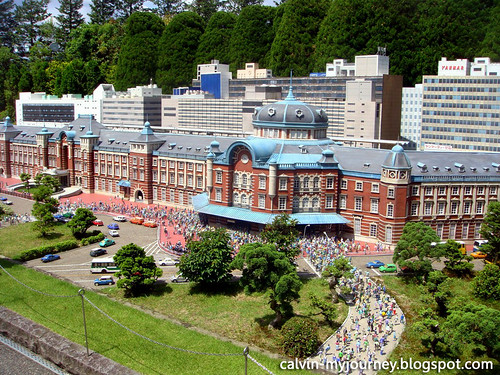 The central station of Tokyo Station, crowded with commuters in the rush hour has a replica of the dome roofs which were rebuilt after they were destroyed during World War 2. Today, it looks very much different, based on what I saw during my first and only time there when I first arrived in Japan more than a year ago.
 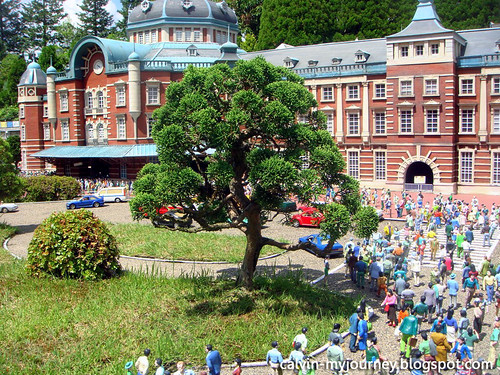 The trees and plants are real, but not the plastic human figures.
 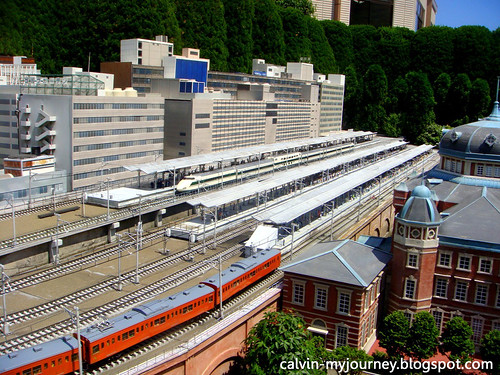 On the other side of the station, there are Tohoku Shinansen Yamabiko (bullet train) and Chuo Line trains (reddish orange train), considered as one of the most important and busy line in the heart of Tokyo metropolitan.
 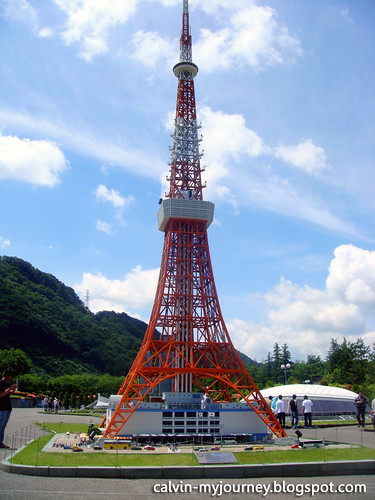 The red version of Eiffel Tower, the Tokyo Tower in Roppongi.
  This is the exact miniaturized replica of the original Imperial Hotel designed by famous architect Frank Lloyd Wright.
 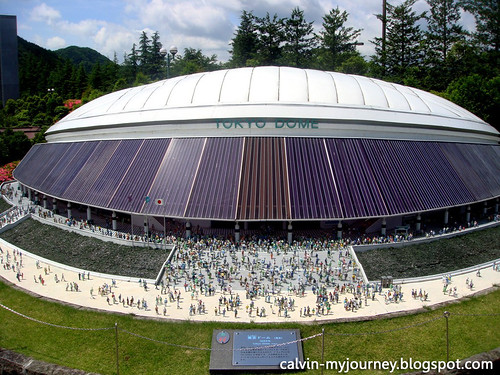 Tokyo Dome, which I went once last May.
 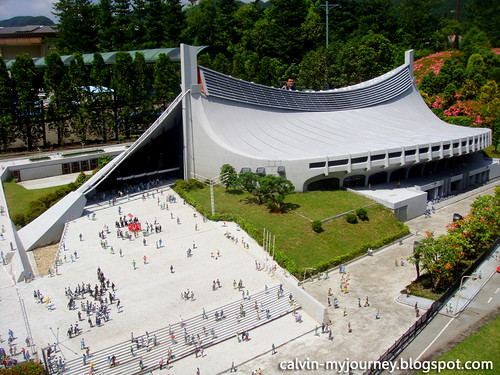 Yoyogi National Stadium.
 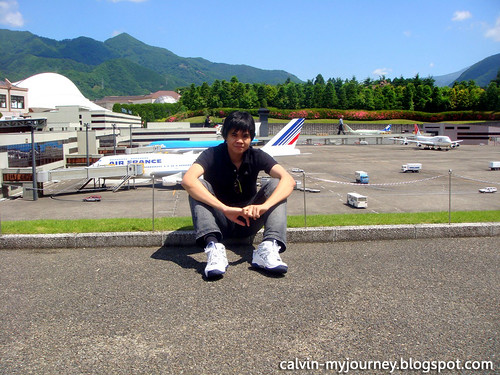 New Tokyo International Airport, Terminal 2 in Narita. I felt as if I am so close of going home when I came to this section and also it made me realized that I am edging nearer towards my summer holiday, which I am looking forward to it so much.
 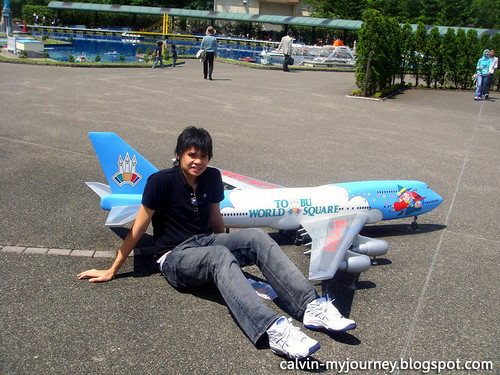 I could see the plane I am taking to go home as well. Obviously, it is not this one though.
 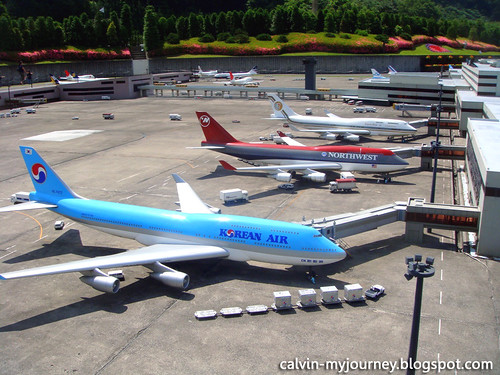 But one of these.
The central station of Tokyo Station, crowded with commuters in the rush hour has a replica of the dome roofs which were rebuilt after they were destroyed during World War 2. Today, it looks very much different, based on what I saw during my first and only time there when I first arrived in Japan more than a year ago. The trees and plants are real, but not the plastic human figures. On the other side of the station, there are Tohoku Shinansen Yamabiko (bullet train) and Chuo Line trains (reddish orange train), considered as one of the most important and busy line in the heart of Tokyo metropolitan. The red version of Eiffel Tower, the Tokyo Tower in Roppongi. This is the exact miniaturized replica of the original Imperial Hotel designed by famous architect Frank Lloyd Wright. Tokyo Dome, which I went once last May. Yoyogi National Stadium. New Tokyo International Airport, Terminal 2 in Narita. I felt as if I am so close of going home when I came to this section and also it made me realized that I am edging nearer towards my summer holiday, which I am looking forward to it so much. I could see the plane I am taking to go home as well. Obviously, it is not this one though. But one of these. After walking through the Modern Japan Zone, I travelled backwards the time zone and reached the Japan Zone which is dotted with Japanese historical building structure. This is the zone were the "good old days" of Japan could be felt and 97% of the miniature trees are real ones, making the scenery looking more realistic.
Yakushi-ji Temple in Nara, considered as one of the most famous imperial and ancient Buddhist temples in Japan. Rokuon-ji Golden Pavilion in Kyoto, more popularly known as Kinkaku-ji Temple. Kiyomizu-dera Temple, a Buddhist temple which is a must-go location in every visit to Kyoto. Todai-ji Grat Buddha Hall in Nara. Alongside the Great Buddha statue in Kamakura, this is one of the biggest Buddha statue in Japan and it is placed inside that huge hall behind the red entrance. Ikushima Shrine in Miyajima. I was there last summer to watch the on-the-sea fireworks festival which was held on the water and it was really magnificent. Himeji Castle, which is considered one of the most famous castle in Japan, but I have yet to pay a visit to this castle so far. Kumamoto Castle in Kyushu Island. If you had watched the movie "Sinking of Japan" before this, then this castle should be familiar to you as it was one of the first castles destroyed by the volcanic eruptions. A typical train station in Japan. Former Kaichi School in Nagano. Sapporo Clock Tower in Hokkaido. To be honest, it looked a tad different from the actual one I saw when I was there last summer. Former Hokkaido Prefecture Government Building, also in Sapporo. It is more commonly known as the Akarenga Government Office Building. Seriously, it really looked like a carbon copy of the real building like here. As if it could not be any more random than this, they even displayed an amusement park. Seeing this certainly reminds me of the fun I had whenever a funfair comes to my town when I was young. A wild safari was displayed too at the end of this park. If you are wondering how they produced the exhibits in this theme park, there is a step-by-step explanation one the process they go through to make an exhibit. What caught my eye was the first picture, when they will send a team to the actual site to gather the information like taking pictures and sketch the design of the original building. That must cost a hefty lot.