I used to live in Setapak area for almost two years when I was doing my foundation in Kuala Lumpur. Although I know the factory for Royal Selangor Pewter is located just somewhere the area, I never know where the exact location is all this while. Since a visit to the pewter factory is included inside the initerary of the Japanese school trip, I decided to follow them as well. It is relatively convenient for us, as the representatives from the company came with two vans and picked us up at the hotel in the morning. They will provide free transportation for visitors to their factory from any hotel around Kuala Lumpur, regardless of the number of people in the group. What we need to do was to make revervation with them earlier.There were already a few people from the factory waiting upon our arrival there, and we were introduced to an Indian guy, who would be our tour guide around the place. Al of us were taken aback, when he started to speak with us in Japanese. From a short chat with him, I found out that he was sent by the company for Japanese lessons five months back in order for him to be able to be in-charge of Japanese visitors to the factory. I must say he could speak good and fluent Japanese, despite the fact that he just started learning the language.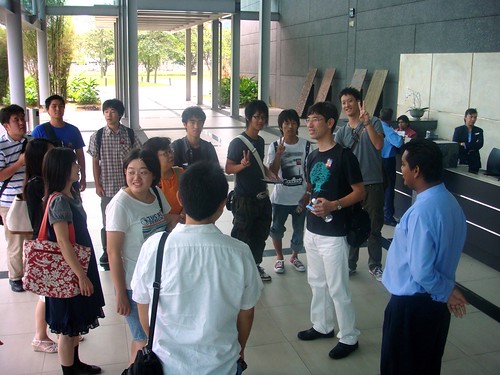
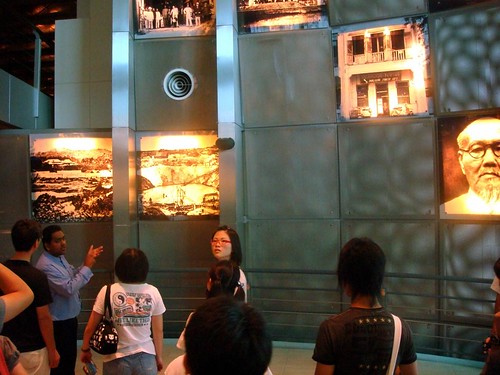 That old man was the pioneer of the pewter industry in our country.Before we get into the showroom, there was a figure of a misshaped crocodile which I supposed is made of pewter.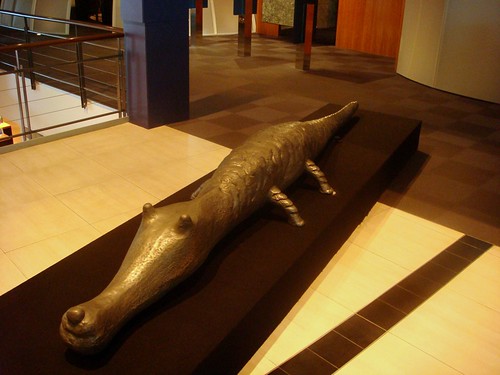
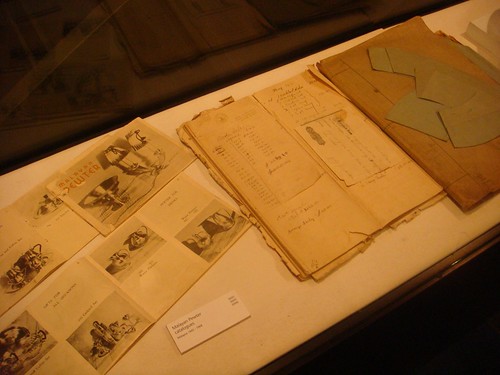 Malayan pewter catalogues.
 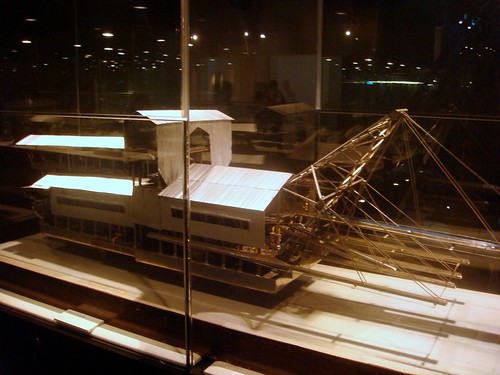 This was used to mine tin.
Some even camwhore in the showroom.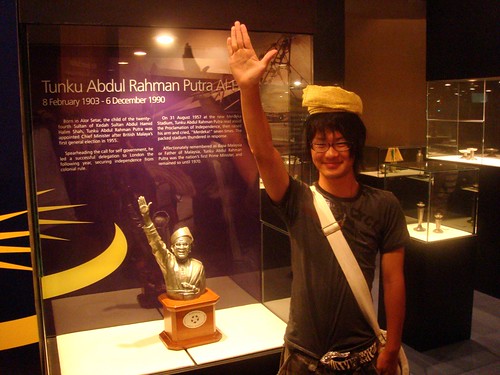 I am not sure if he knows who is Tunku is in the first place.
 This should explain why I do not have a Japanese girlfriend.We later proceeded into a different showroom, which gave us a more scientific and detailed explanations about pewter. Before that, we came across this interesting wall, which shows the hand prints of the workers of Royal Selangor, who has worked there for more than five years.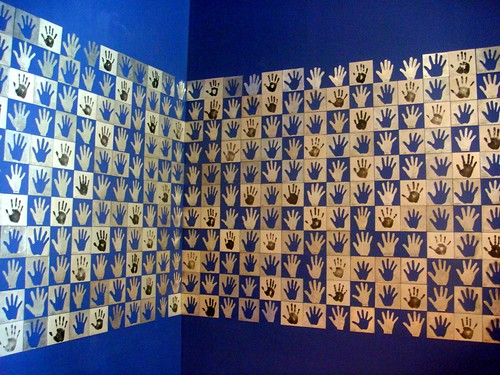
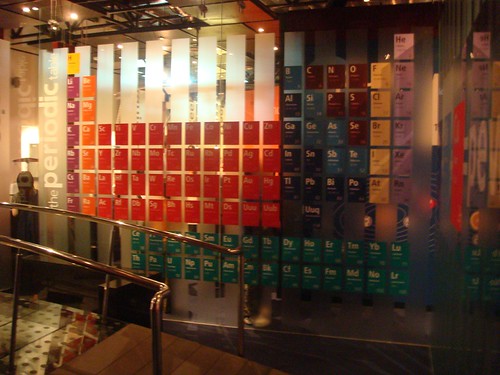
The periodic table.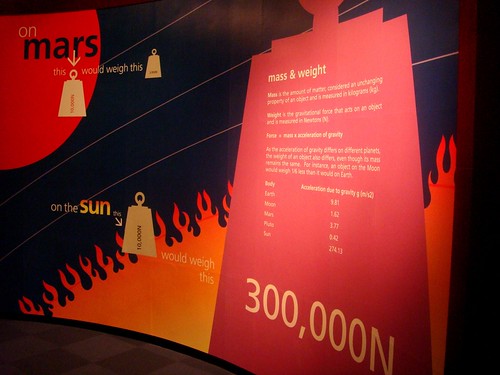 How the weight of pewter changes accordingly to gravitational force.
 How heavy pewter is, compared to gold.
 Suddenly, my Japanese senior looked so small.
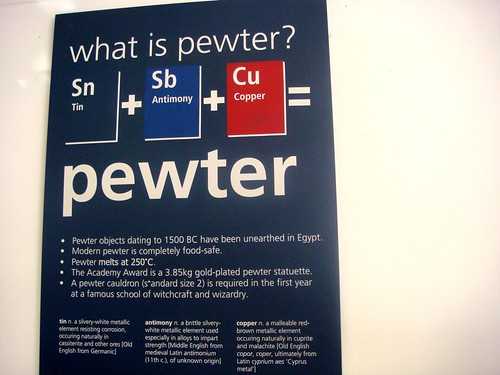 Just in case you are wondering what pewter is.
At the end of the visit to the showrooms, we took a break and were served with soft drinks in pewter-made cups, before we were taken to tour around the factory.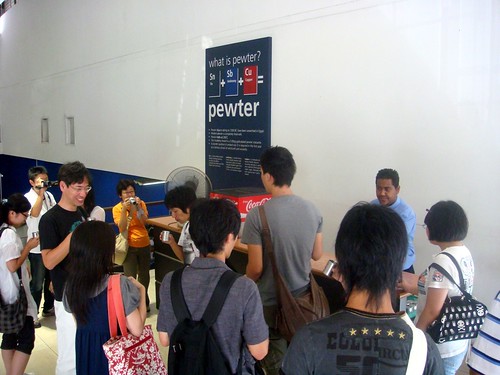 Take five, everyone.
 This is the factory.They allowed us to have a closer look at how the pewter items are produced, which include processes like molding, carving, polishing and knocking. One of the process is to produce the hand of mugs, in which boiling pewter still in liquid form is poured into a designed mold, and later left to hard. The worker was fully concentrated on her work, that she did not even bother to look at us.The molding process.
 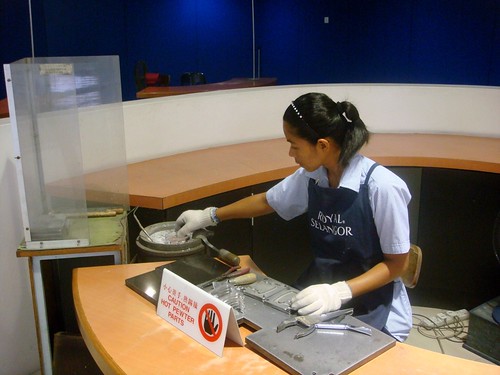 Told you she never smiles.
Here is a short video on the molding process.The rest of the processes are shown as below.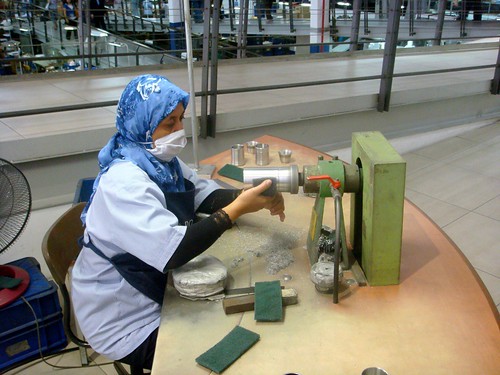
 Putting some final touches. By the way, that is a tumbler to store tea to keep it warm.
 Knocking motifs on the mug.We got the chance to try on knocking on the pewter mugs, but it was really different from what we saw. It looked simple, but when we tried our own hands on them, we could hardly control the movement and the placement of the motifs in a straight line, just like how it was supposed to look like.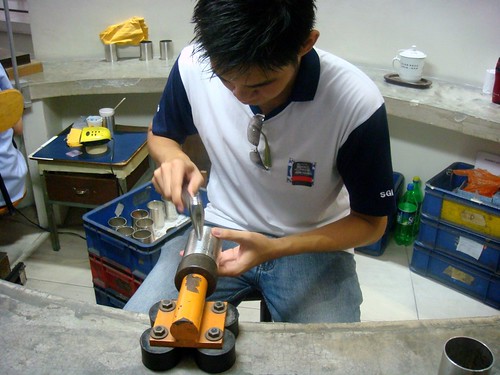
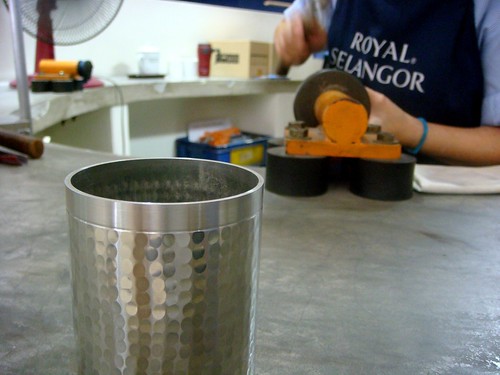 This is how it is supposed to look like.
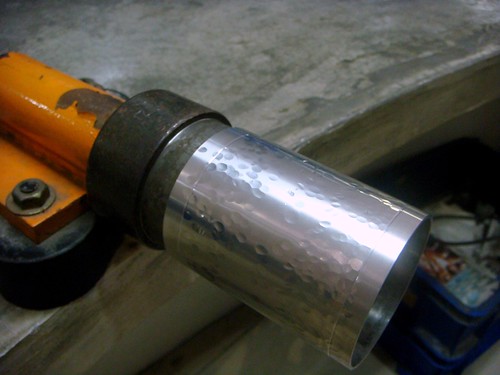 But we screwed everything up until it looked like this.
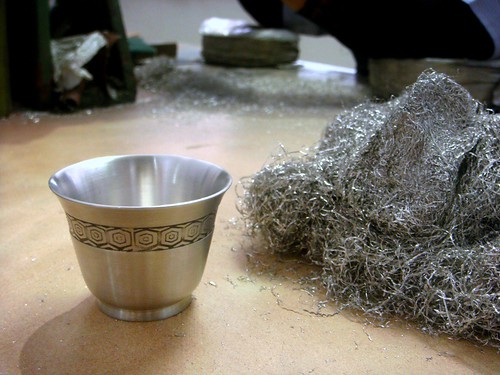
Except for the flowery motifs on the pewter products, where molds are used on them, most of the design are hand-made, and that explains why the products are sold at such high prices. The left-over of pewters from the polishing and carving process are not disposed just like that, but they are melted once again to be reused to make new items.

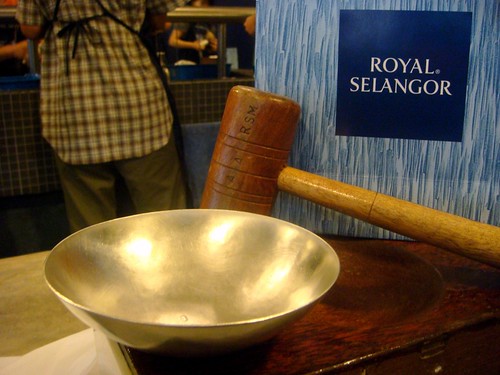 That aside, we were given a certificate to certified our participant at that session. In fact, not only that we got to bring back the pewter bowl we made ourselves, they even let us bring back the apron as our souvenir. But when we asked the guy if it is okay to bring back the hammers too, he told me I might as well bring the whole factory back.
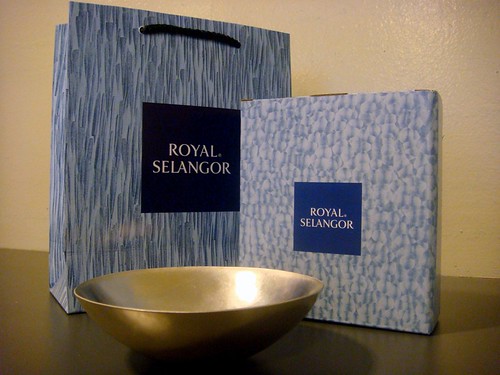 In the end, I just brought back everything but the hammer.Some shopped for souvenirs at their gift shop, but the stuff sold were way too expensive that I do not think everybody are afford to buy them.There was actually an incident happened during the payment for the souvenir we made earlier, because after totaling-up the money paid, the man at the cashier told us that there were still two person who have yet to pay. I asked the Japanese and each of them said they have paid for their part. So, someone must have made a mistake here. When I asked the same guy again for the names of the two person who have not paid yet, he could afford to tell me that he did not mark on the names of those who made their payment. I was quite taken-aback, because he could make such a mistake with such a huge sum.I told him in a nice way, that it was clearly his mistake because he did not make sure the names of people who have paid and have not. He admitted his mistake, and I had some discussion with a senior manager, telling her that generally Japanese are honest and would not cheat on this kind of matter. She acknowledge that point, and decided to put away with the matter, without demanding us to make any extra payment. I am not trying to side the Japanese here, but from what I have seen, they would not cheat in this kind of situation. However, it would be a different thing completely, when we are talking about Malaysians.
We gathered in front of the factory for a group picture before we left the place.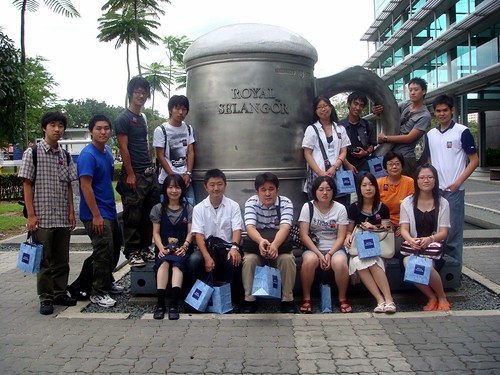 Height: 1.987; weight: 1557 kg; capacity: 2796 liters.That piece of metal is certified as the world's largest tankard.
A brief introduction at the reception counter.
We came into a spacious area when we stepped into the main entrance of the factory, to see pictures on the wall that depicted the man who started the business decades ago and the history of how it has developed into an international brand today.That old man was the pioneer of the pewter industry in our country.And this croc is suffering from malnutrition.
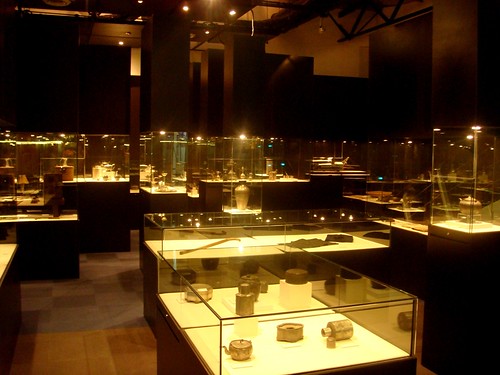
The stuff displayed inside the showroom were basically stuff which were made of pewter and were used during the olden days, such as currency with animal shapes, decorative items, candle stand, and lots more.Pewters, everywhere.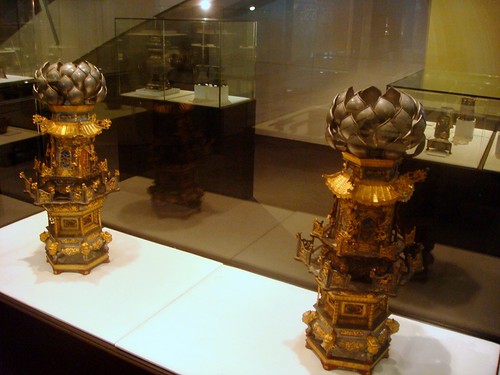
A pair of candle stands.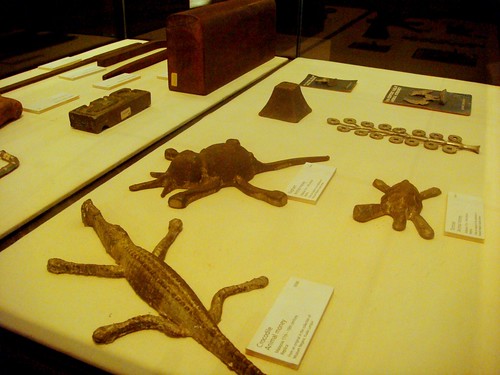 I wonder how many animals like these millionaires in the past had in their bank.
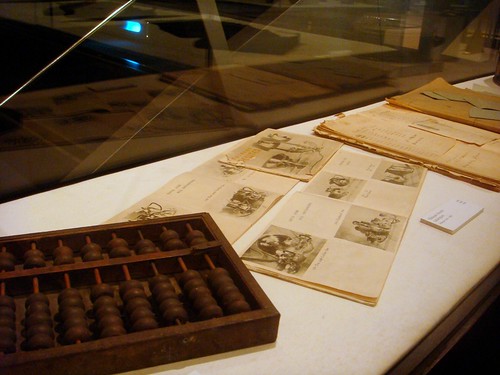 Abacus and old documents.
I wonder how many animals like these millionaires in the past had in their bank.Abacus and old documents.Malayan pewter catalogues. This was used to mine tin.I am not sure if he knows who is Tunku is in the first place.This should explain why I do not have a Japanese girlfriend.Royal Selangor's Hall of Fame.
The periodic table.
How the weight of pewter changes accordingly to gravitational force.How heavy pewter is, compared to gold.Suddenly, my Japanese senior looked so small.Just in case you are wondering what pewter is.Take five, everyone.This is the factory.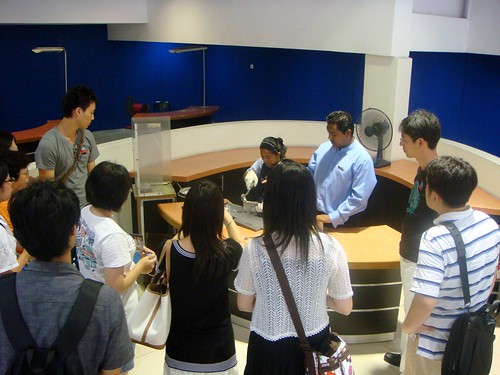
Polishing.
Putting some final touches. By the way, that is a tumbler to store tea to keep it warm.Knocking motifs on the mug.I tried to knock the mug.
Apparently, whenever the worker made a mistake, even one wrong knock, they will have to melt the mug once more and repeat the process all over again.This is how it is supposed to look like.But we screwed everything up until it looked like this.Except for the flowery motifs on the pewter products, where molds are used on them, most of the design are hand-made, and that explains why the products are sold at such high prices. The left-over of pewters from the polishing and carving process are not disposed just like that, but they are melted once again to be reused to make new items.
An example of a finished item with the left-over of pewter.
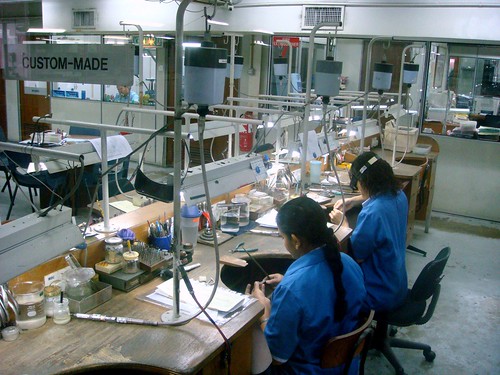
Some customers prefer to have their item to be custom-made, and there is a special area in the factory where only custom-made products are produced.Workers busy working on the task ahead.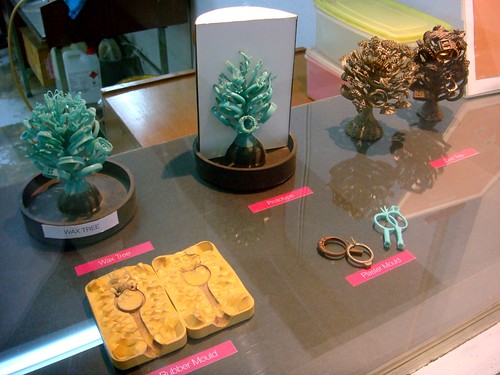 From these molds.
From these molds.I never know pewter can be used to produce rings.
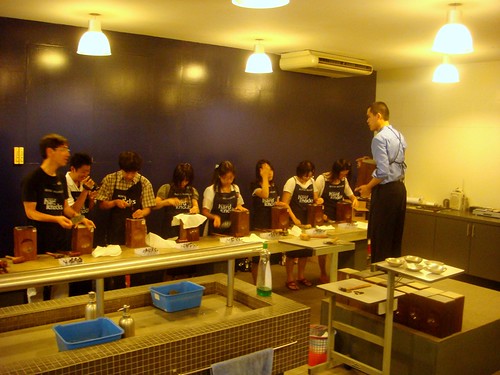
The highlight of our visit to the factory was to try doing our own pewter product at Royal Selangor's School of Hard Knocks. The guy giving a brief explanations to everyone.
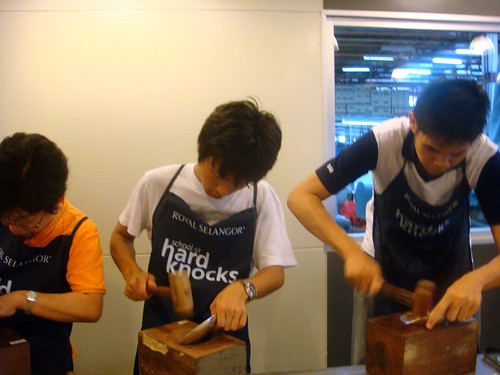
We were given a round flat pewter plate, and we were supposed to knock them into a bowl. But before we start knocking the plate on a mold, we carved our initials on the back surface of the pewter plate first. I carved the letter 'C' on my piece of pewter, which indicates 'cat'.Ping piang, pong piang...
From that on, it was all knocking and knocking from us, that the whole room was so noisy, just like a construction site. In the end, I just brought back everything but the hammer.
We gathered in front of the factory for a group picture before we left the place.
Height: 1.987; weight: 1557 kg; capacity: 2796 liters.