SEPTEMBER 11, 2007
The first day in Sapporo started as early 8 in the morning. For our 2-days stay in Sapporo, we stayed at my friend's friend hostel in
Hokkaido University. So to start our day, we decided to walked around the campus of this university.
In a few more years to come, I am wondering if I will be actually be here again, but with a different purpose. We shall see =)
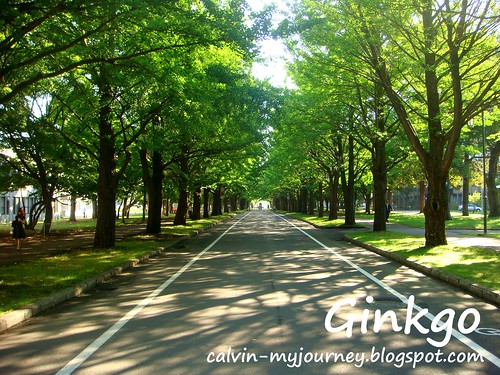
The next place was a road with
Ginkgo trees along the way at both sides of the road. I was told that they are called the Yellow Tunnel. However when we were there, it wasn't really autumn yet and the leaves have not turned their colours.
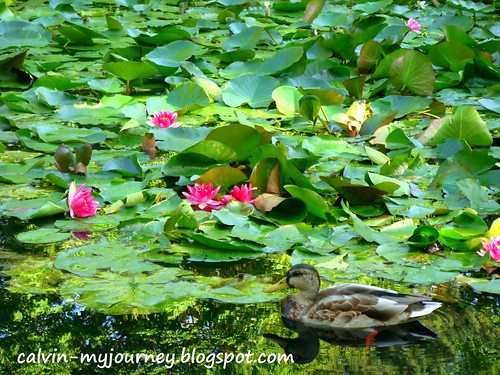
So, for the time being, I call them the Green Tunnel. Not far from the Ginkgo trees, there was a pond full with pink water lilies.
But as I have said this all the time, ducks just seem to appear out of no where at wherever I go. I am still wondering why they are attracted to me so much. Or should it be the opposite? Hehe.
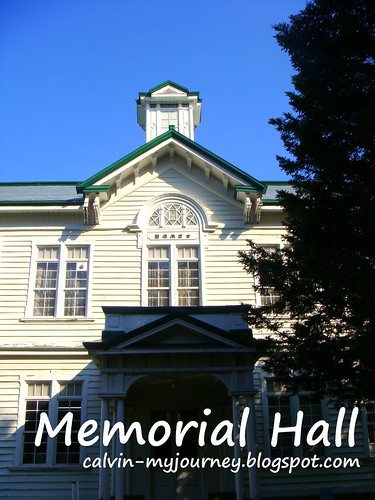
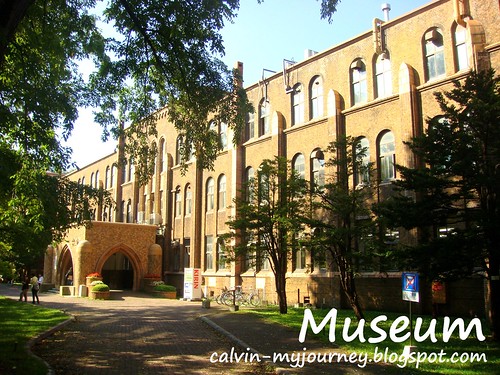
After spending some time quacking with watching those ducks, we came to 古川記念講堂 (Kogawa Memorial Hall). Build in 1909, it is the first building in Hokkaido with French Renaissance style of architecture. At present, it is used as a lab for Literature Research Center.
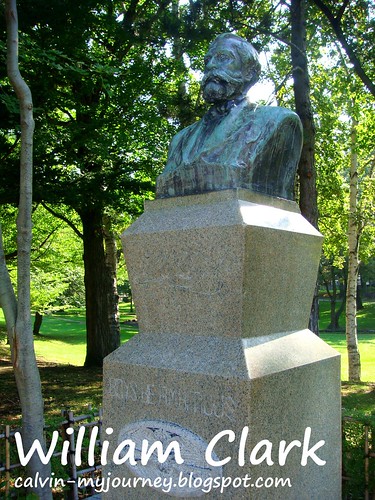
This is William Smith Clark.
Not the real person, of course. Carved by Tajima Sekiro, this statue was placed 1926 as a golden jubilee celebration of the university . By that time, the statue has already being widely known as it was published in text books. During the Pacific War, the golden statue was melted but was rebuilt in 1948.
In 1903, there was a small-scale
Poplar afforestation (plantation) project being carried up. As a result, at present day there is a small lane with poplar trees along it.
The typhoon occurred in September 2004 made almost half of the poplar trees collapsed. Preservation work was carried up immediately after that incident, where replantation and outsiders are prohibited from entering the area. However, there is a 80-meter lane open to the public to have a short stroll there.
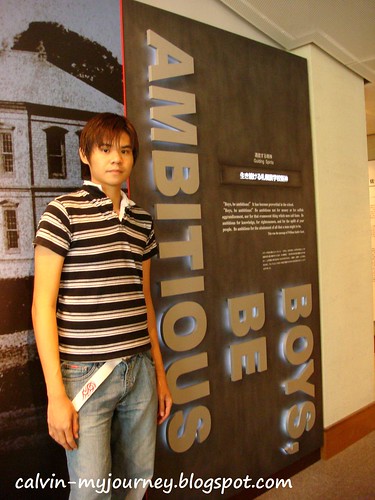
I was walking though the exhibition one after another, when I came across this catchy quote.
Apparently, the phrase "Boys, Be Ambitious" is the motto for Hokkaido University. Clearly, Dr. W. S. Clark, who fought against slavery in the civil war to the Declaration of Independence of the United States of America, his famous aphorism "Be Gentleman" and "Be Ambitious" are still remembered.
The museum is still under construction and only a part of it is open to the public. On the first floor of the South wing, there exhibits some remnants to inspire the lasting spirit of Sapporo Agricultural College, which should be nominated as the Hokkaido Heritage. On the third floor, there are exhibit of fossils and various rocks and ores.
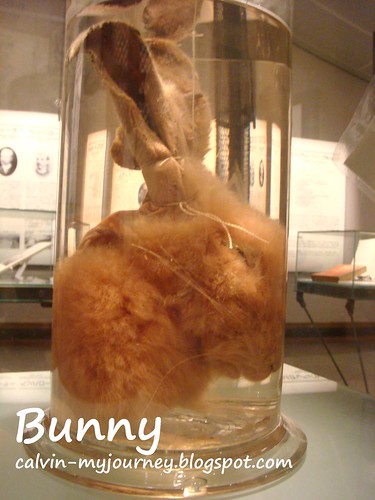
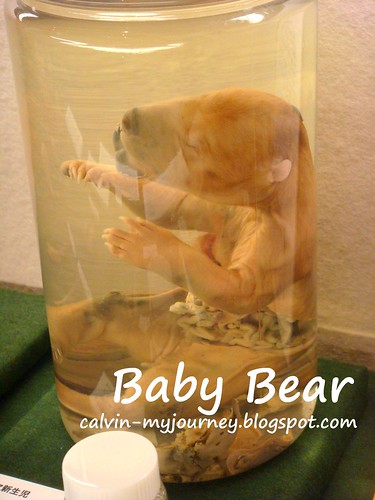
There is corner which exhibits some subjects on life science, environment, volcanology, studies of northsphere and etc. Here is where I came across specimens of animals preserved in bottles.
At first glace, I thought it was a duck. The ear of the rabbit looked similar to duck's beak. Again, the story of duck returned. I guess I have been thinking about duck too much. The next one however, was easier for me to recognise.
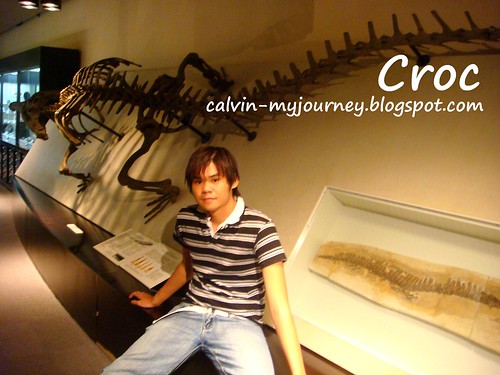
It wasn't just preserved animals being put on display. Just like any other museum, there were animals skeleton. But they were huge.
Tell me, where can you see such a huge crocodile. Not even Sungai Rejang in Sarawak. It actually came from some species of crocodile form the pre-historic era.
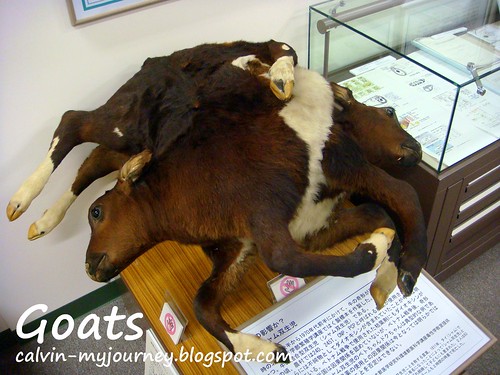
I have seen conjoint Siamese twins, whether at the head, shoulder or even stomach before. But I never knew it will happen to goats.
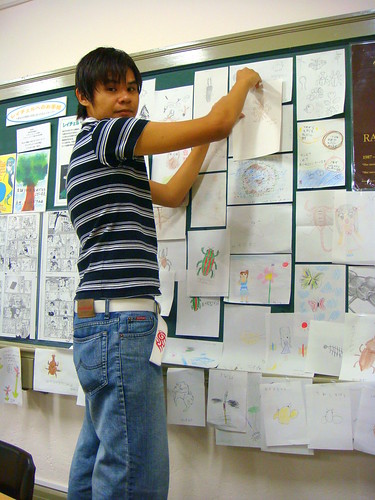
I mean, I know it is nothing unusual for it to happen to animals, but I just didn't come across any before. Inside the exhibition hall, there was a section on the wall full with drawings. When I went to take a closer look, they were actually drawings by small kids.
I thought of leaving something there from my visit to the museum.
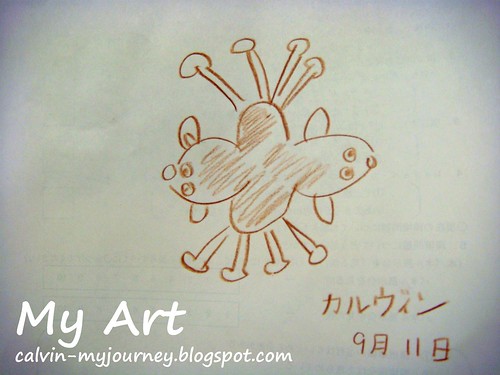
Here is a closer shot at what I drew and pasted on the wall.
What say you? Nice? I think it looks not bad. But when I show it to Jonathan, guess what reply I got.
"Why you go and draw insects?"
Okay, fine. I know it has eight legs. Perhaps that made it looked like a spider.
After spending my time
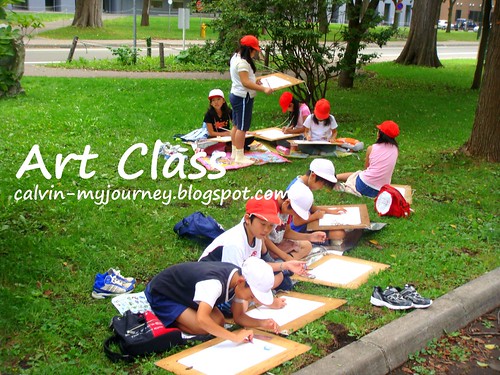
drawing that twin goats there for almost an hour, we went out from the museum. Only to come across a group of kindergarten kids having their drawing lesson in front of the museum building.
I was walking through those kids, until I spotted a kid which look nothing similar at all compared to typical fair-skin Japanese. I approached her and tried to start a chat with the little girl.
Me: 日本人ですか? (Are you a Japanese?)
Little girl: いいえ (Nope)
Me: じゃ、どこから来たの? (Then, where you came from?)
Little girl: マレーシア (Malaysia)
Malaysia! The moment I heard that word from her, I continued chatting with her. Akira is currently studying in Primary 2 in one of the local primary school. When I asked whether she is able to speak Bahasa Malaysia, she answered me "sikit-sikit". I tried talking "sikit-sikit" BM with her.
Me: Orang mana?
Akira: Jepun...
*I almost laughed out, but I mantained my composure and asked her the next question*
Me: Bukan macam itu. Maksud abang, asal dari mana?
Akira: Tak tau...
Me: Dah berapa tahun tinggal kat Jepun? (How many years you have been living in Japan?)
Akira: Tak tau…
I decided not to continue any further using her "sikit-sikit" Bahasa Malaysia. Sakit hati dibuatnya. Anyway, before we leave, we tried to take a photo with her, but she was shy. After some persuation by us and her teacher, she finally agreed; with her friends together as well.
 Akira is the girl at furthest right.
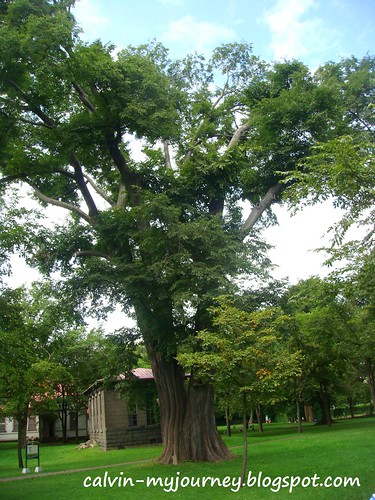
 The compound in the campus is surrounded with trees. These trees are not just any trees. They dated back hundred years ago.
You can sense the peaceful and tranquil atmosphere by just walking in the campus. Just the perfect environment for a learning institution.
Our initial plan for the day was to walk around the city. By the time we finished walking around the campus of Hokkaido University, it was already close to noon. Having planned where were we going on that day the previous night, we didn't waste any time and started walking to the first location - the Clock Tower.
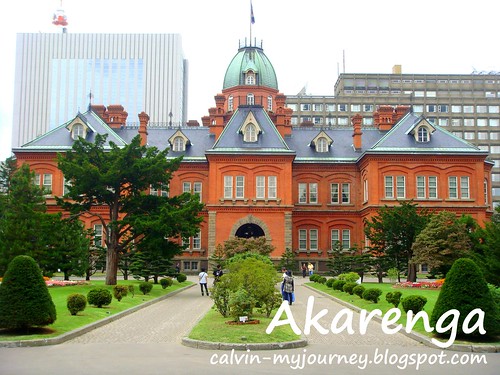
This is not the Clock Tower. It is the Former Hokkaido Government Office Building. It was supposed to be the next stop after the Clock Tower, but after some mistakes I made in map reading, we came to this place also known as 赤れんが庁舎 (Akarenga Government Office Building).
Nicknamed Akarenga (Red Brick), it was constructed in 1888 as a base for the administration of Hokkaido's development. This American neo-baroque style stucture was designed by Hokkaido's office officials and was built entirely utilising local materials.
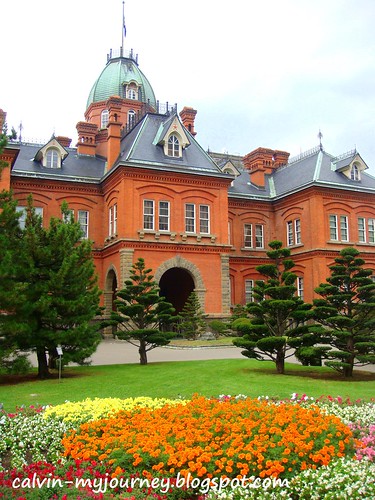
It was unique to Japan being one of the largest and tallest buildings of that time. The structure, rebuilt in 1911 after being burnt by a fire, was designated as an important cultural property in March, 1969.
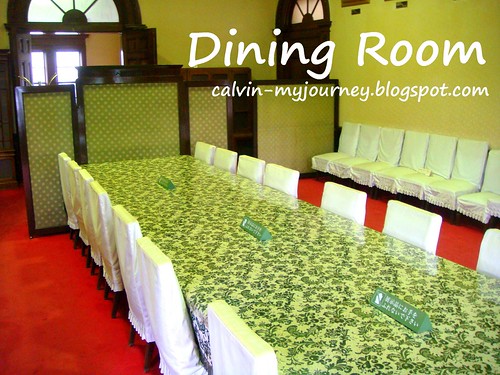
There wasn't any admission fee charge in order to enter the building. Inside, among the stuffs displayed are historical paintings. The Former Governor's Office looks like a dining room.
It has a office-looking corner though.
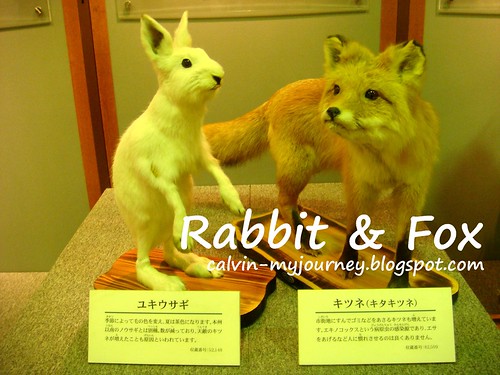
One of the gallery displays the history of Hokkaido. Or should I say the animals found in Hokkaido. Snow Rabbit and Fox as starters.
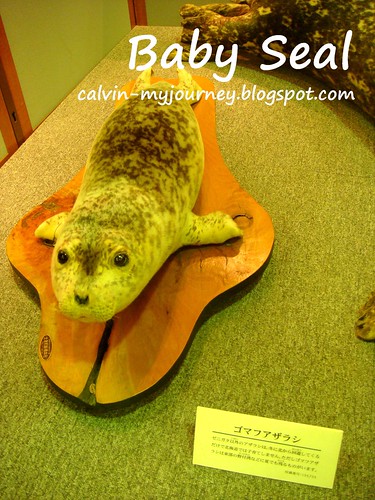
With some extra flavour of Baby Seal.
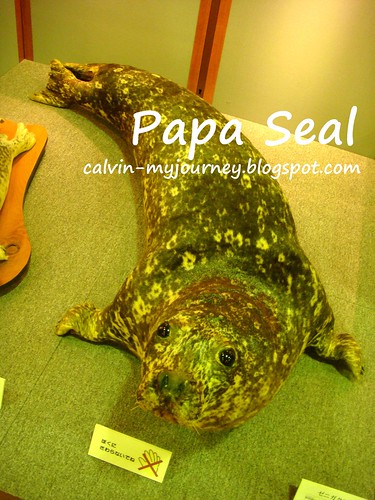
And Papa Seal to top it off.
But it wasn't just animals as there are some other stuff regarding Hokkaido's history. The traditional tools used for farming, for instance.
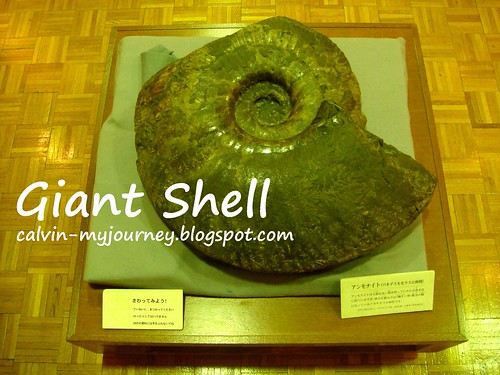
That giant wok reminds me of dodol. On the way out, there was a giant shell, measuring almost 1 metre in diameter.
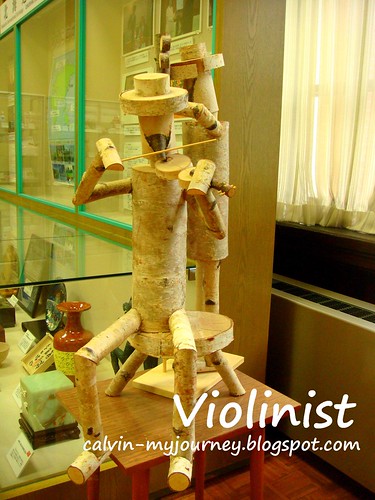
The next hall I went in was the Exhibition Room of Hokkaido's International Exchanges and Local Products. I wasn't sure where this wooden thing came from, but it looked interesting to me.
After trying going around the room to see if there is something which was part of Japan and Malaysia cultural exchange, I saw this and straight away I knew it was from Malaysia.
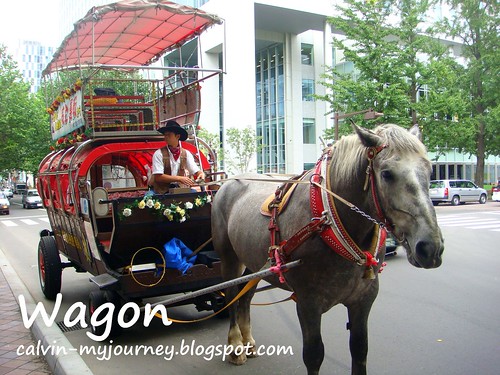
It was a small goblet and paper knife set given by Tan Sri HM Kadif, a Malaysian ambassador to Japan. As we were on our way to the next stop, I saw horse outside Akarenga.
This covered wagon ride offers ride along two course - the Clock Tower course and the TV Tower course; and each ride will last for 40 minutes. It cost about 1,800yen (RM60) to 2,200yen (RM70) per ride, depending on the seat.
The next stop was the place we supposed to go earlier -the Clock Tower.
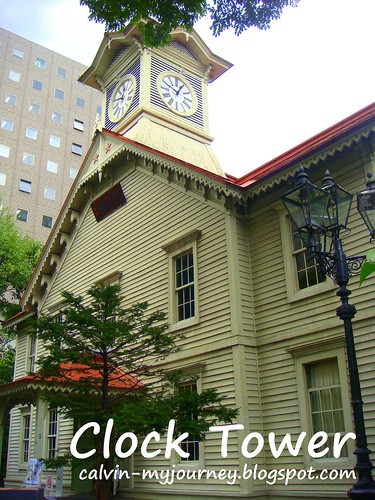
The building was constructed in 1878 as a drill hall of the Sapporo Agricultural College. The US made clock was added in 1881. The Clock Tower has been designated an Important Cultural Property and now houses a small museum. It is said that a trip to Sapporo would not be complate without visiting this Clock Tower.
One thing good about the tourist spots in Sapporo is that they are all within walking distance.

This is Sapporo TV Tower.
It looked very much like the Eiffel Tower and Tokyo Tower. The observation deck, towering 90.38 meter above ground level, is accessible in approximately 60 seconds by evalator and commands views of Odori Park, the symbol of Sapporo, as well as the surrounding mountains and even the sea.
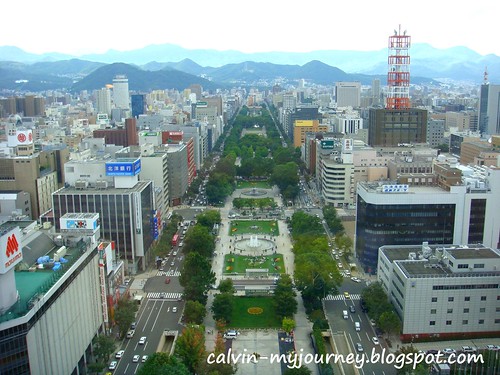
Odori Park from Sapporo TV Tower
I have gone up the Petronas Twin Towers and KL Tower, but not Tokyo Tower or any tower in Japan. So it was my first time. We later went to Odori Park, the broad median of Odori (large street) in the center of Sapporo, which separates the city into North and South.
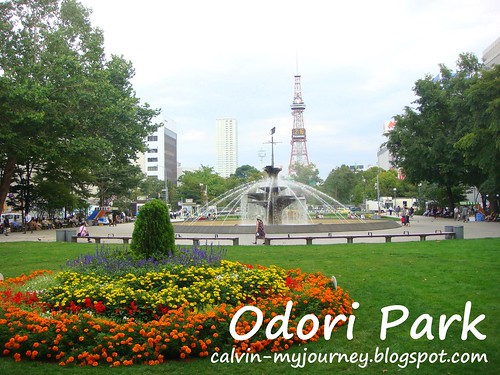
The park stretches over twelve blocks and offers pleasant green space during the warmer months, while staging the annual Sapporo Snow Festival in February. Besides that, other festivals includes Lilac Festival (late May), Sapporo Summer Festival (mid July-late August) and White Illumination (late November-early January).
It took us close to two hours to finished walking Odori Park while camwhoring along the way. At the end of the park, there was another museum - Sapporo City Museum.
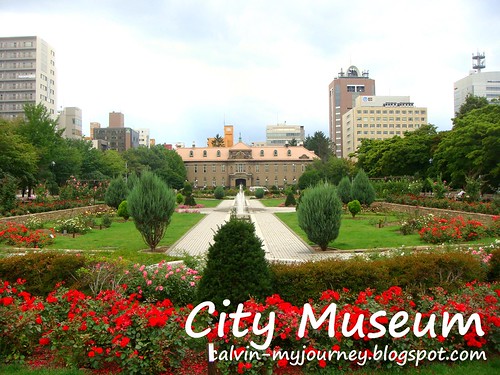
Having already entered two museums in halfday, I decided not to enter another one again. Instead we took a short break and later went to 二条市場 (Nijo Market).
Nijo Market is a public market in central Sapporo, where locals and tourists shop for fresh local produce and seafood such as crabs, salmon eggs, sea urchin and various fresh and prepared fish.
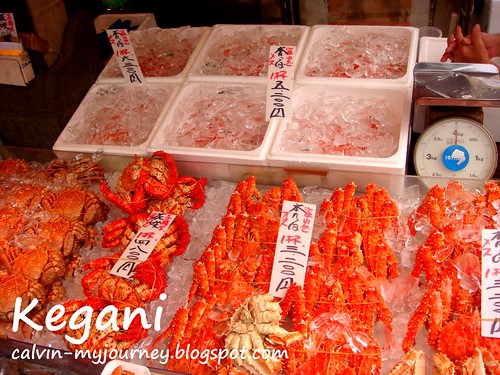
The last stop of the day was Susukino.
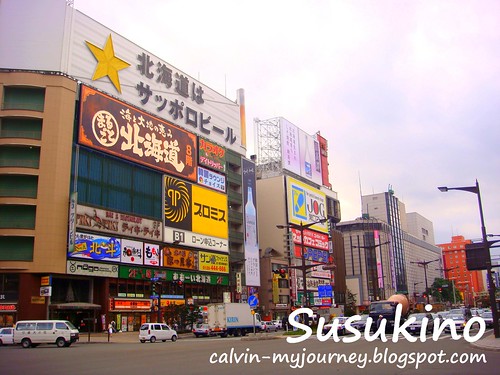
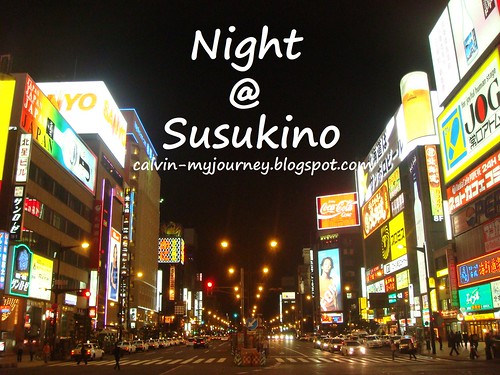
Susukino is well known as Japan's largest entertainment district north of Tokyo. It is packed with stores, bars, restaurants, karaoke shops, pachinko parlors and red light establishments.
When night came, we felt as if we were in Shinjuku.
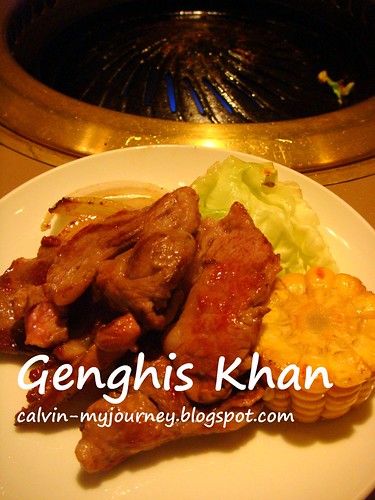
For dinner, we went for a popular cuisine in Sapporo. It is called Genghis Khan. It is exactly the same as the typical Japanese yakiniku. But instead of using beef or pork, they use lamb, ram, sheep (I am not sure which one) meat.
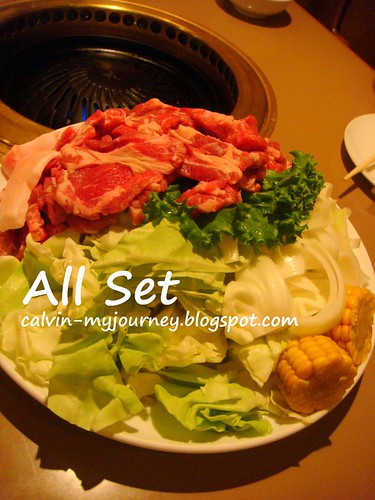
It was another 食べ放題 (tabehoudai) or eat-as-much-as-you-can thing. But I couldn't continue eating after finishing the second plate. It was too filling as I had three big glass of apple juice along the way as well.
Nevertheless, it was worth it as it taste just great. The juicy part of the meat can be felt when you bite on them.
If the United States has the Statue of Liberty, Japan has one as well. Exactly the same as the one in the States. But it has a different name.
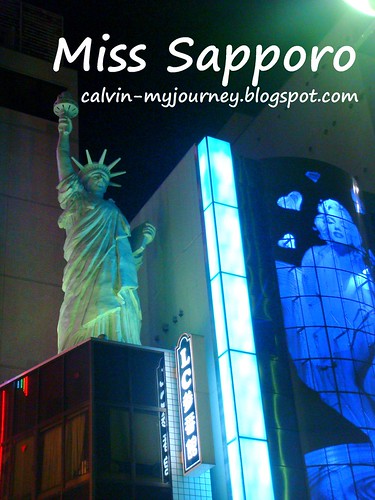
I call it the Statue of Miss Sapporo.