
Once upon a time, I joined a group of international students for a tour around Nagaoka, organised by the International Affairs Division of Nagaoka City Office. I used the phrase "once upon a time" to refer to this trip because it is a fact that this trip was held many many many months ago haha! February 2010, to be exact; that is equivalent to fifteen months ago!
Since my final semester had ended and I was left with nothing much to do except for waiting to move to Chiba and my graduation ceremony a few weeks later, I nearly reached the stage of bored to death. Fortunately, this trip, alongside my trip to see the hot-air balloon in Ojiya the previous day, came to my rescue.
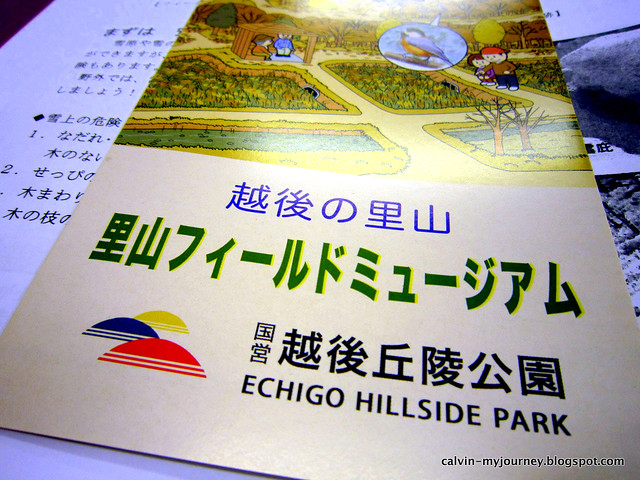
Our first stop was Echigo Hillside Park.
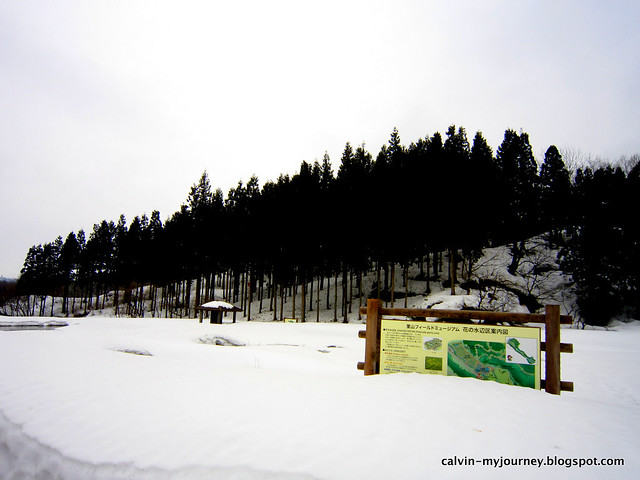
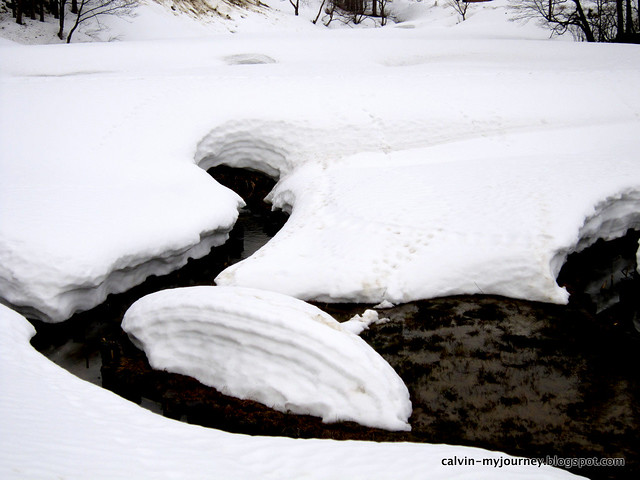
Just look at how thick the snow is. That is easily more than half a meter high.
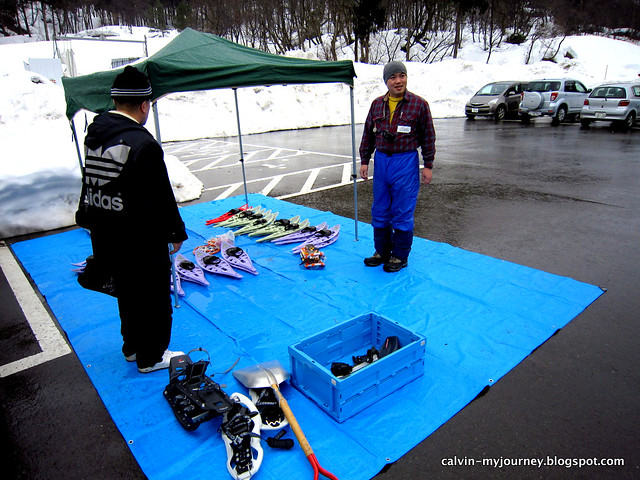
The equipments for an interesting adventure we gonna embark on. Guess what will that be?
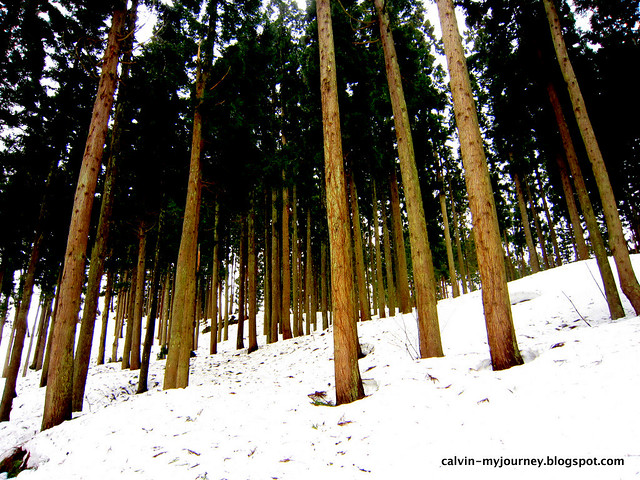
We were given a warm welcome by several staffs from the park, who were already there waiting for us when we arrived. First up was to get into the office to go through all those formalities - welcoming speech, briefings on the activities we gonna experience, etc. Only then that they told us we will be taken for a walk through the reserve forest at the park.
In winter, the area is covered with thick layer of snow - hence we will have to gear ourselves with special snowshoes.
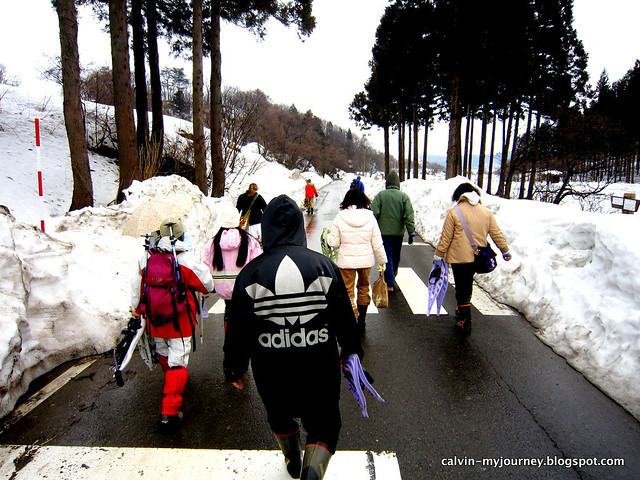
Everyone, equipped with their snowshoes, walking towards the starting point of the hike.
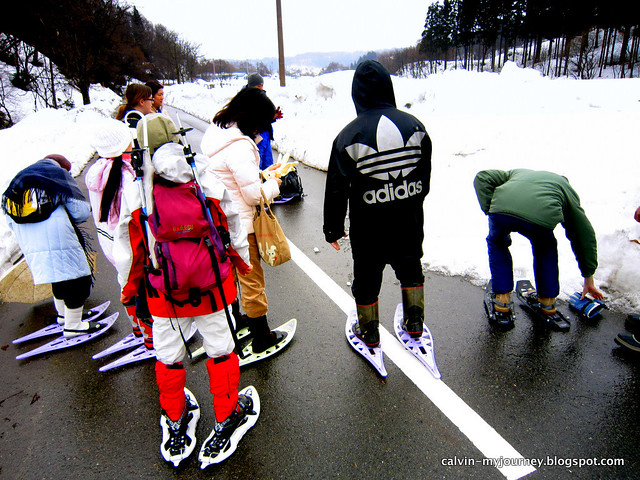
Time to put on our showshoes. For first-timers like most of us there, it feels a little awkward to walk on that snowshoe but we gradually got used to it
once we stepped onto the snow.

My bright red penguin shoes haha!

These snowshoes are specially designed in a way that it distribute the weight of the person over a large area so that the person's foot doesn't sink completely into the snow.
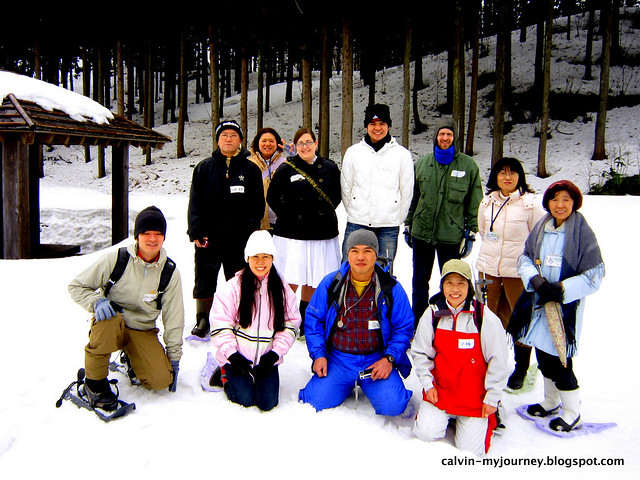
A group photo with the coordinator and our guide before we started our journey.
Along the journey, we were given a brief description about the history of the area, introduced to various species of trees, plants and wildlife found there, plus their importance and how they relate to each other in maintaining a balanced ecosystem within the area. We would stopped at several spots every few minutes to be given a short explanation about those stuff.
It is kinda impressive to see how informative they are, as every single details are at their fingertips; something like a talking-encyclopedia haha! Just show them a random leave and they will tell you what plant it comes from. I wonder if I'd showed him a durian leave, will he be able to tell me it's from a durian tree haha!
Saw some small leg-prints on the snow (centre of the photo). Those are leg-prints of foxes.
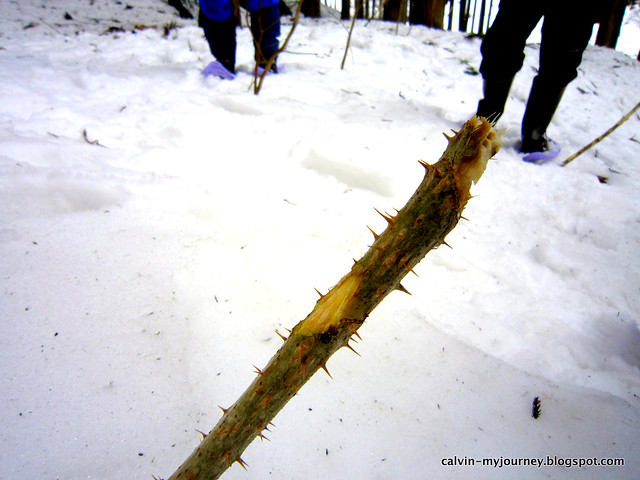
A branch which was still fresh from being bitten by a rabbit.

Taking a look at a dried plant, which propagating mechanism is by popping its dried seed around.
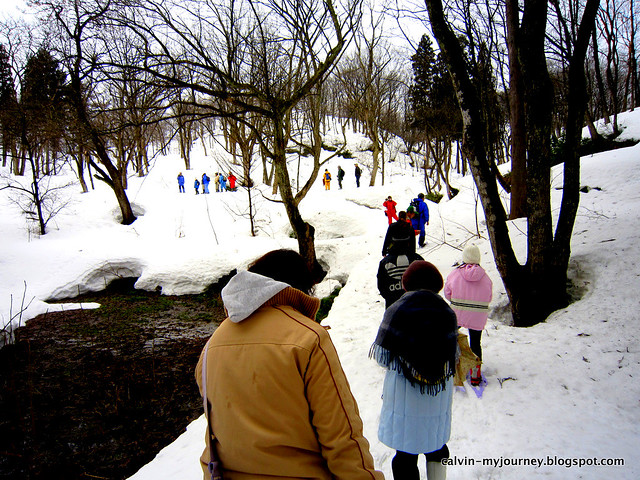
There was already another group ahead of us.
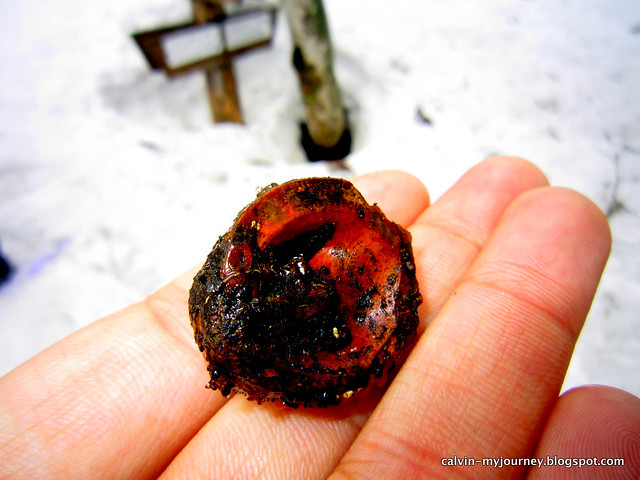
The most fresh hazelnut you can get - from the wild.
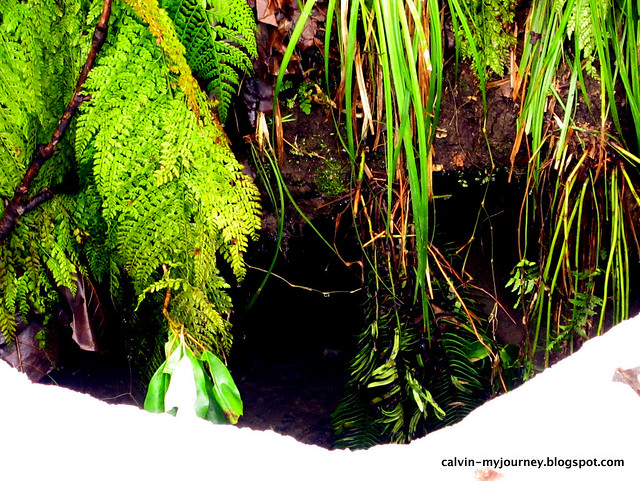
Guess what hole is this. It's where the musang sleeps and eat dinner, in other words, their house haha!

Our guide showing another plant, which branch produce some nice smell.

And everyone tried to smell it. I think I didn't smell anything at all lol!

Woodpecker's house.

Rabbits footprints. One thing about rabbit is that when they hop, they trust their back legs to the front first, followed by their front legs.
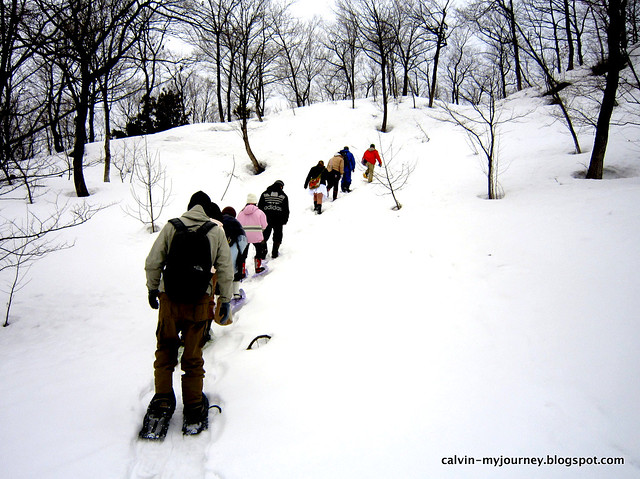
Our journey continued with a short hike up a hill.
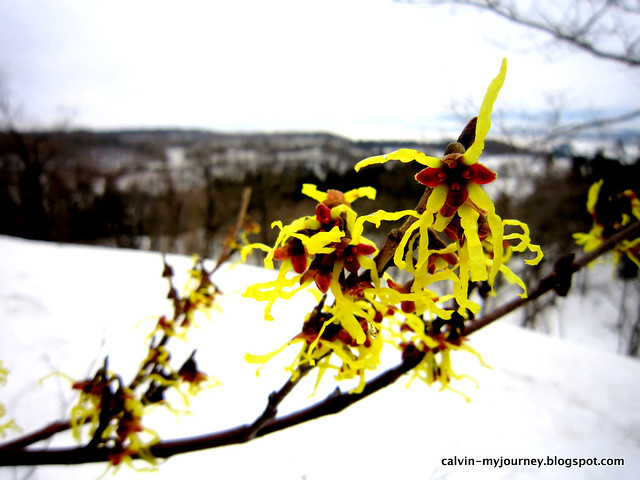
One of the first few early flowers to bloom before spring arrives.

At the top of the world haha wtf!

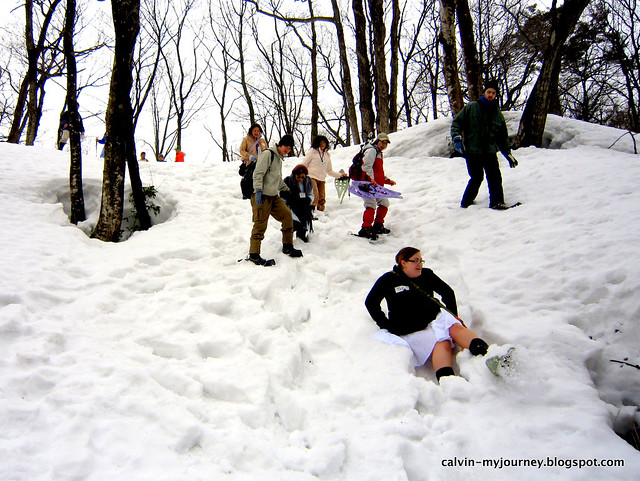
What goes up, comes down. But if you aren't careful, you will come crashing down haha! It was fun actually to throw your body on the soft and fluffy snow.
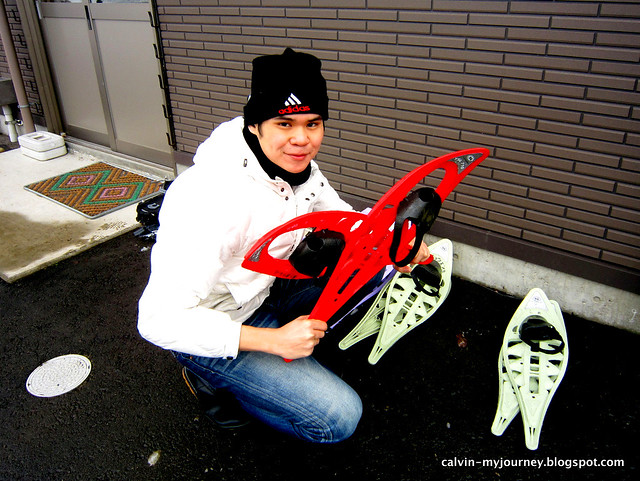
Bidding farewell to my penguin snowshoes. Thanks to it, I didn't sink on the snow despite my gigantic size lol!
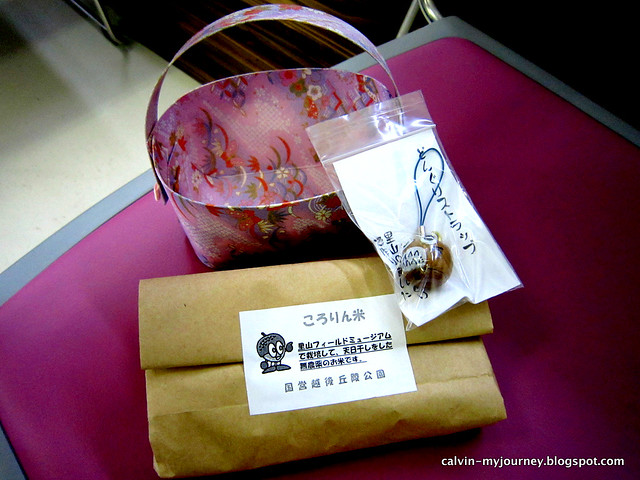
Each of us were given some souvenirs - a key chain made of some nuts and a packet of forest rice, planted at Satoyama field museum.
Next, we moved over to the other side of Echigo Hillside Park, to take our lunch. It was bento set brought along by the staff from the city office. After our wonderful lunch, we wandered around the place. Coincidentally, there was a flower exhibition going on there.
Commonly known as hellebores, members of the genus Helleborus comprise approximately 20 species of herbaceous perennial flowering plants in the family Ranunculaceae, within which it gave its name to the tribe of Helleboreae. Many species are poisonous. Although the flowers of some species may resemble wild roses and despite some of their common names, such as "Christmas rose" and "Lenten rose", hellebores do not belong to the rose family (Rosaceae).
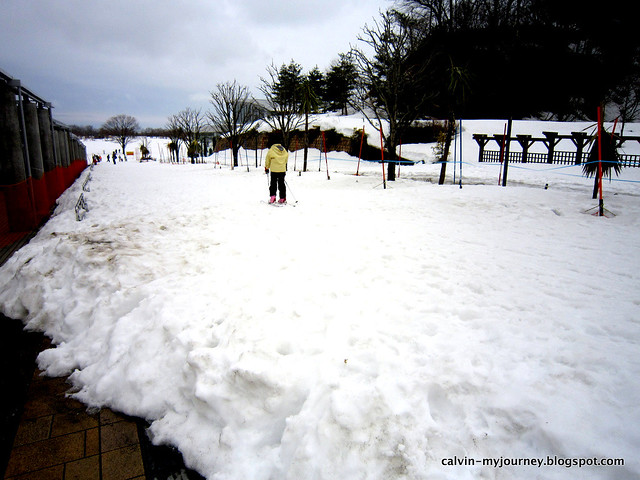
The view at Echigo Hillside Park during winter is totally different than spring, when the place is beautifully decorated with colourful tulips.

Free bento set lunch for us.

Annual events held at Echigo Hillside Park.
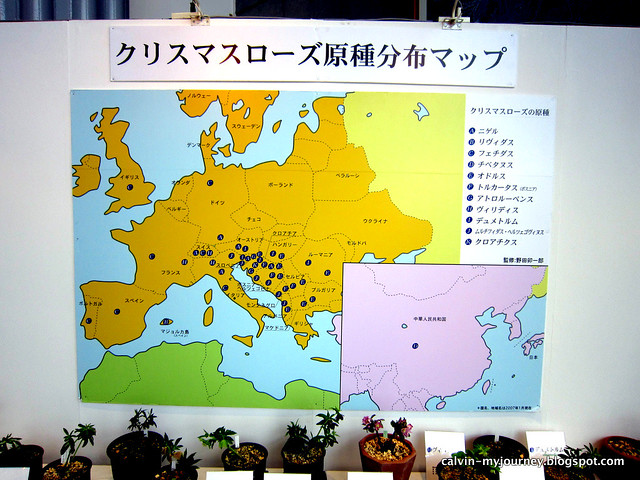
The distribution of Christmas rose, which is native to much of Europe.
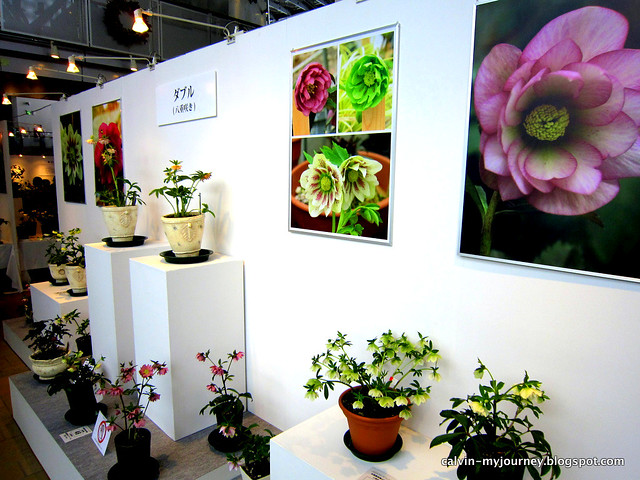
Double blossoms varieties, known as yaezaki (八重咲き), where the petals blooms in several layers.
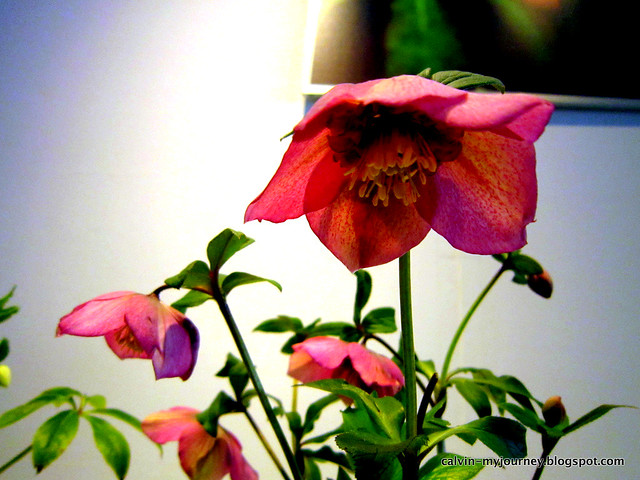
Hellebores are widely grown in gardens for decorative purposes, as well as for their purported medicinal abilities.
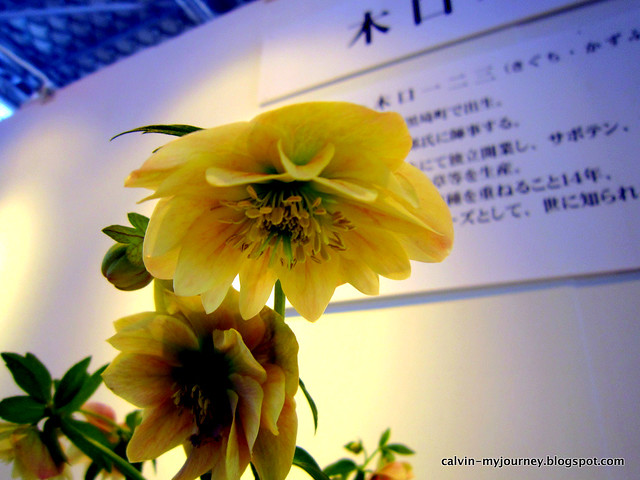
They are particularly valued by gardeners for their winter and early spring flowering period; the plants are surprisingly frost-resistant and many are evergreen.
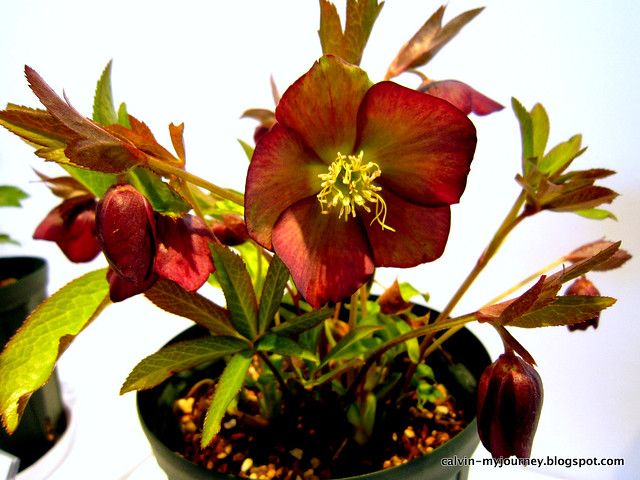
The flowers have five "petals" (actually sepals) surrounding a ring of small, cup-like nectaries (petals modified to hold nectar). The sepals do not fall as petals would,
but remain on the plant, sometimes for many months.
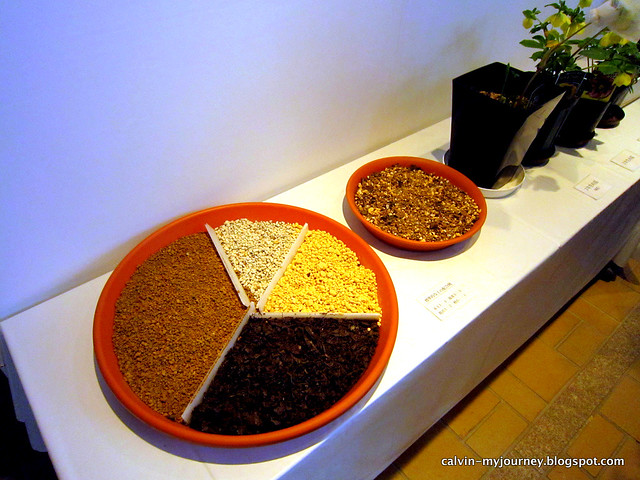
Recent research in Spain suggests that the persistent calyx contributes to the development of the seeds (Herrera 2005).
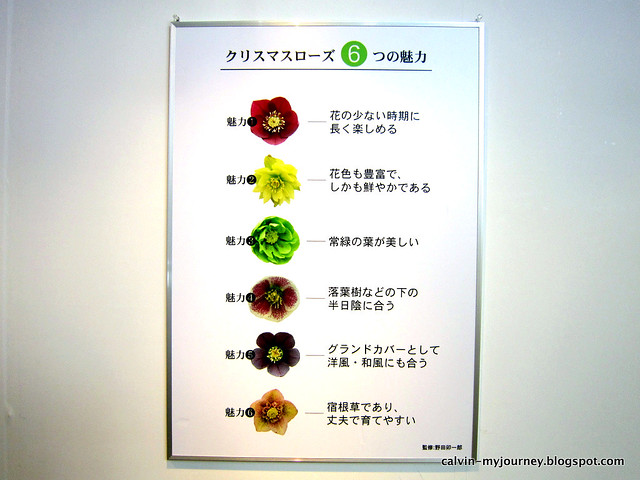
Six characteristics that make Christmas rose special.
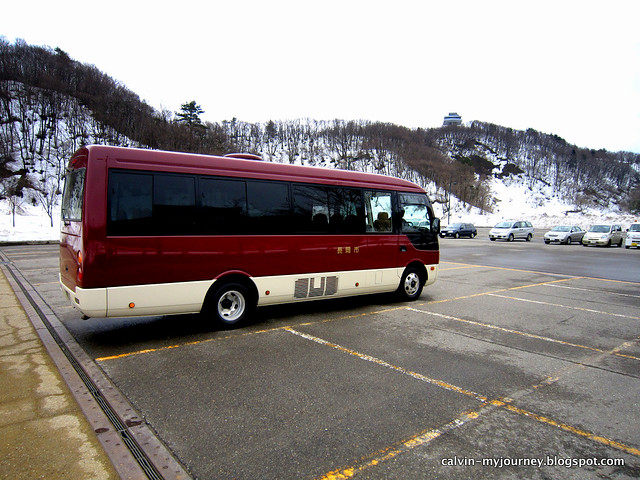
The city office bus that took us around during the half-day tour.
After spending some time admiring those flowers, we make a return to the city office in the town to continue with a few more activities. As it was the heading towards the end of February, there was a special corner at the city office, where they decorated the place with Hinamatsuri dolls, which is associated with Japanese Dolls Festival or Girls' Day celebrated on March 3.
This is a day to pray for young girl's growth and happiness. It is also called "Momo no sekku (Peach Festival)" because of the peach blossom season on the old lunar calendar. Most families with girls display "hina-ningyo" (special dolls for Hinamatsuri) and dedicate peach blossoms to them. They are usually arranged on a five or seven-tiered stand covered with a red carpet. At the top are the Emperor and Empress. The next step contains three court ladies (sannin-kanjo), followed by five musicians (gonin-bayashi), two ministers (udaijin and sadaijin), and three helpers or samurai ending the bottom row in a five-tiered display. There are also small pieces of miniature furniture, tools, carriages, small meal dishes, etc displayed on the sixth and seventh tiers.
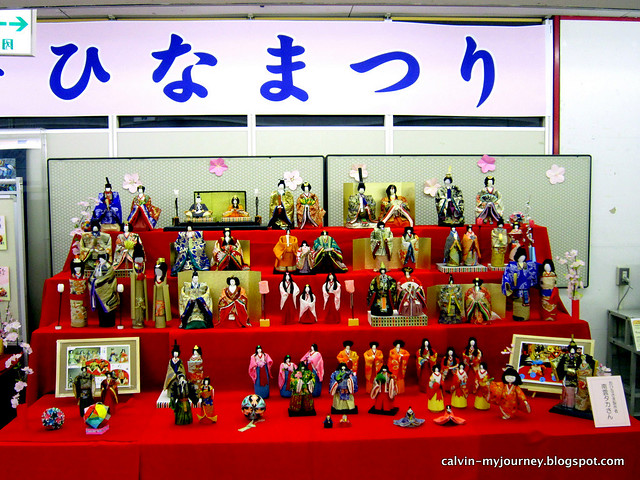
The term for the platform in Japanese is hina dan (雛壇). The layer of covering is called dankake (段掛) or simply hi-mōsen (緋毛氈), a red carpet with rainbow stripes at the bottom. All this colourful Japanese dolls are individually hand-made.
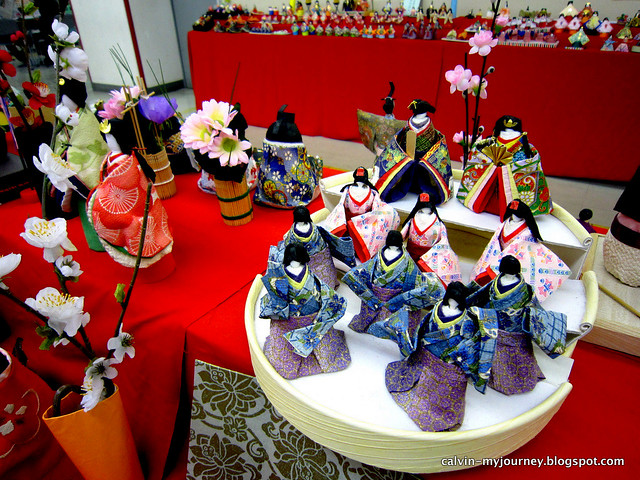
The dolls are dressed in costumes from the Heien period (794-1192). The princess, for example, wears Juni-Hitoe, a very intricate kimono with 12 layers of fabric.
This style of kimono is now only used in royal wedding ceremonies.
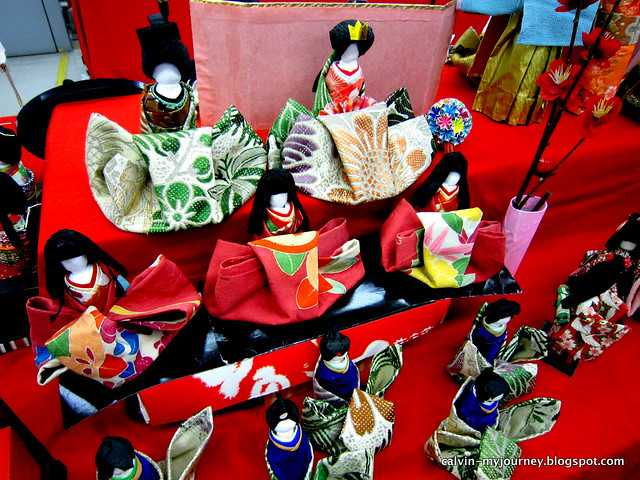
Hina-Ningyo are taken out only once a year for this day before being stored away for another year. They say that if the dolls are not stored soon after the festival,
the girl will be doomed to marry late.
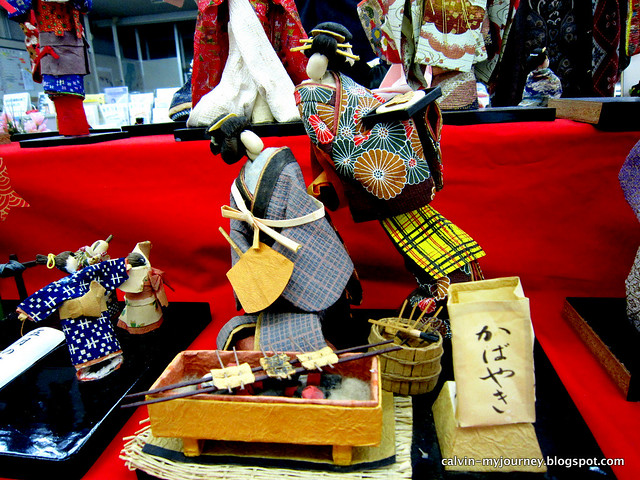
Due to the high price of a full set (some sets costing over one million yen) and the small living space in many Japanese apartments, some people buy a set that includes only the royal couple. The girls' parents will usually add one or two dolls to the collection each year until the set is completed.
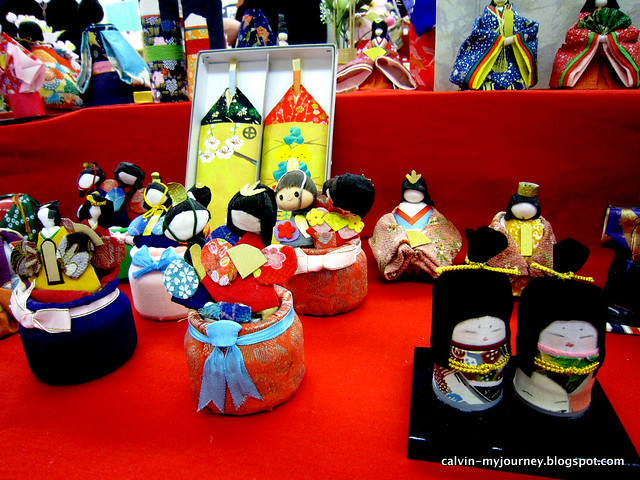
Some girls are given an heirloom set that belonged to their mother or grandmother. The dolls are very special and the girl will pass her dolls on
to one of her own daughters one day.
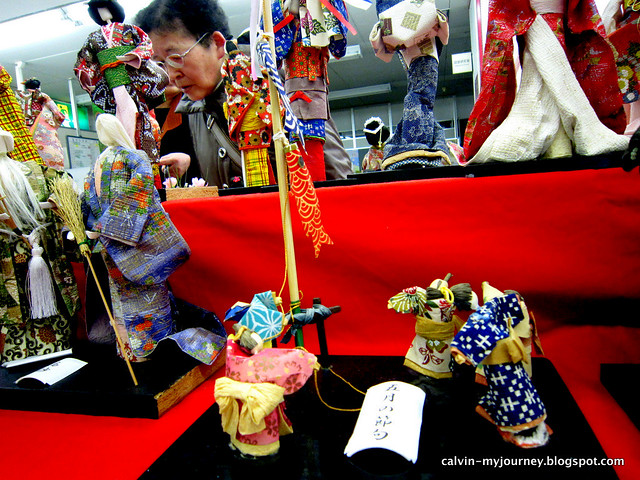
A set of dolls to celebrate the Childrens' Day or Kodomo no hi, where the koinobori can be spotted hanging from the bamboo pole.
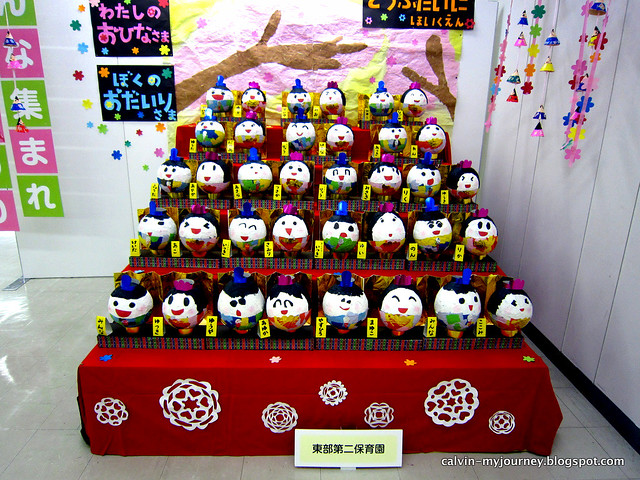
A cetak rompak set of Hinamatsuri dolls by the kids from a local school haha! Looks like Humpty Dumpty to me lol!
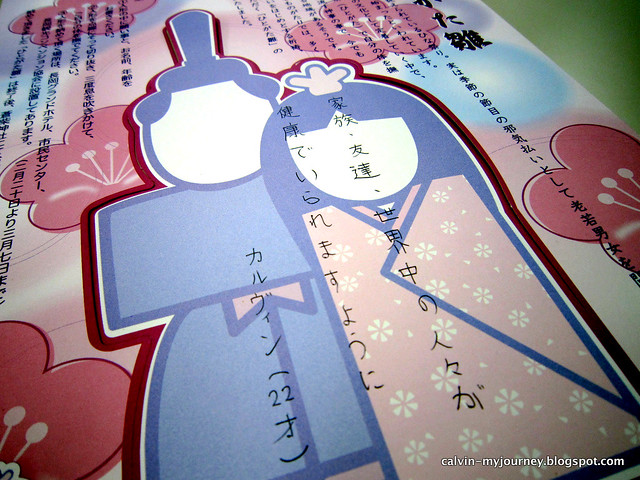
A message on a card written with well-wishes for everyone.

The card is then hung in between the branches of a stack of miniature tree.
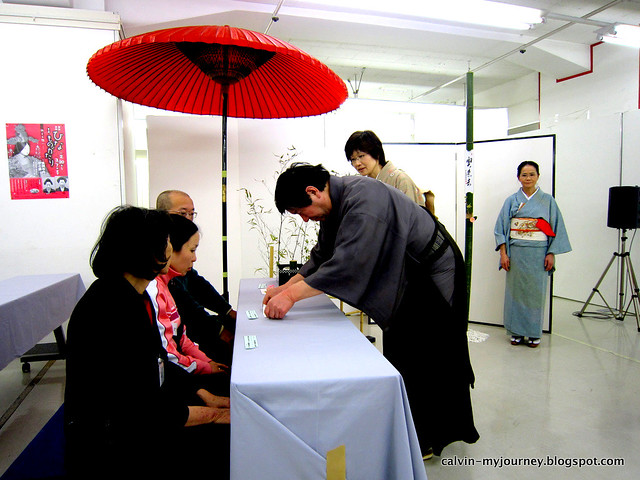
Next up was a demonstration of the Japanese traditional tea ceremony. This tea ceremony-cum-story telling event is held in-conjunction of the Hinamatsuri Festival
at the Citizen Centre of the city office.

A piece of small sweet (wagashi) that resembles a peach blossom is given to everyone to be taken before we have our green tea.
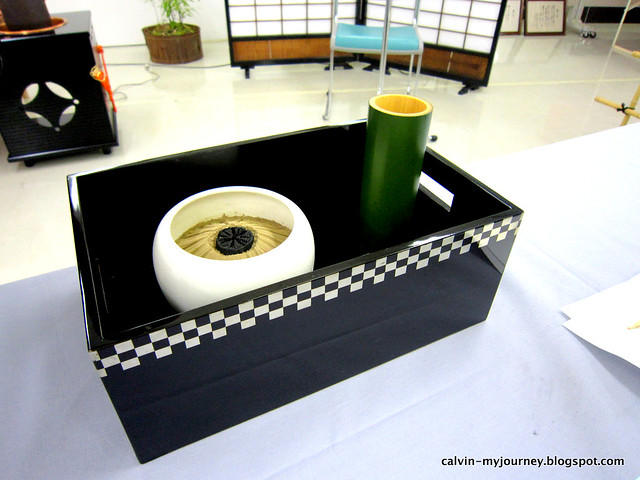
Forgot already what is this for, but it is one of the equipments used during the tea ceremony.
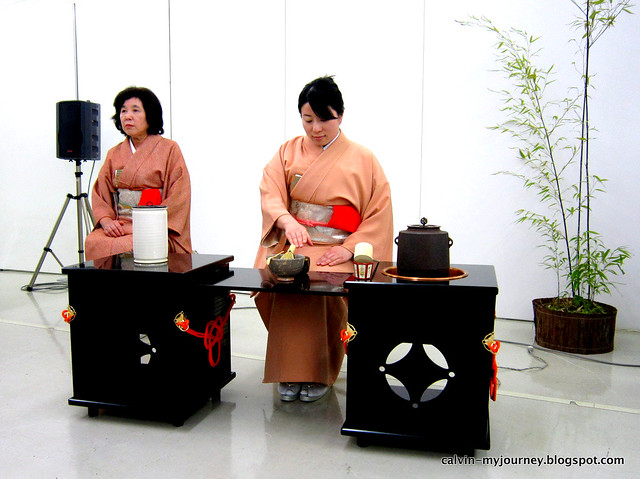
I've seen this quite few times already, but it is always fascinating to see how delicate and detailed the steps involved in preparing a cup of tea are.
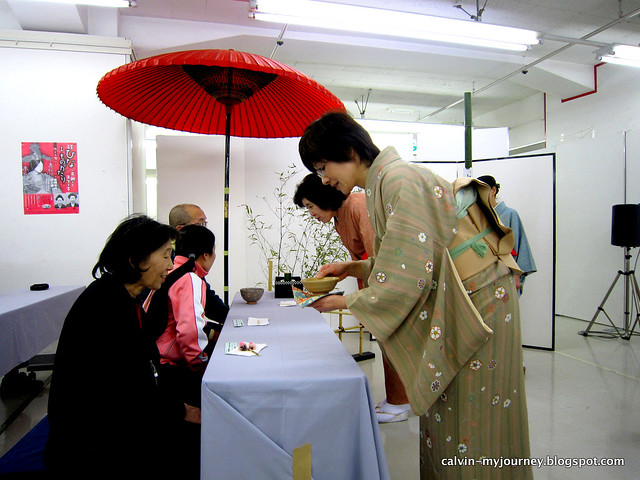
Even the method of serving the tea has special ways.
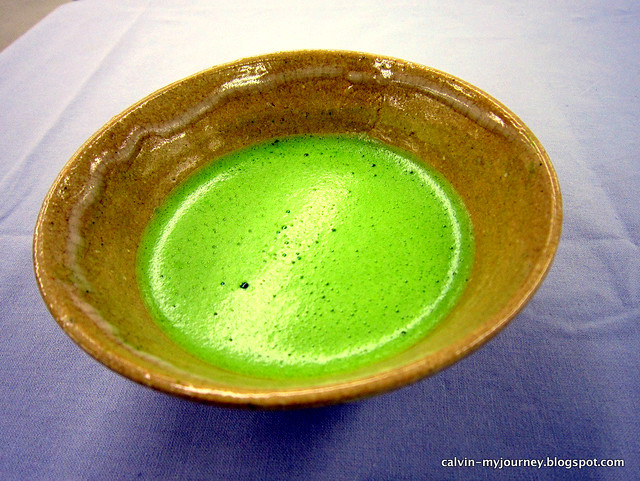
Thick and tasty matcha or powdered green tea. It was slightly bitter but trust me, it tasted really good!
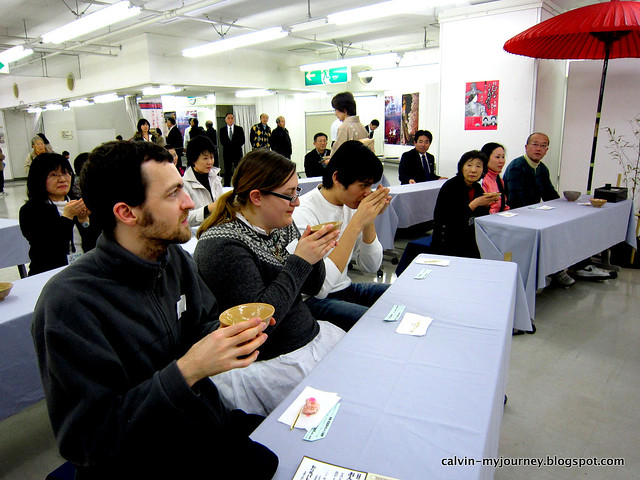
There are also certain ways to do when you drink your cup of tea. It involves some turnings in clockwise and counter-clockwise, and finally the way you place your cup
after finishing your tea.
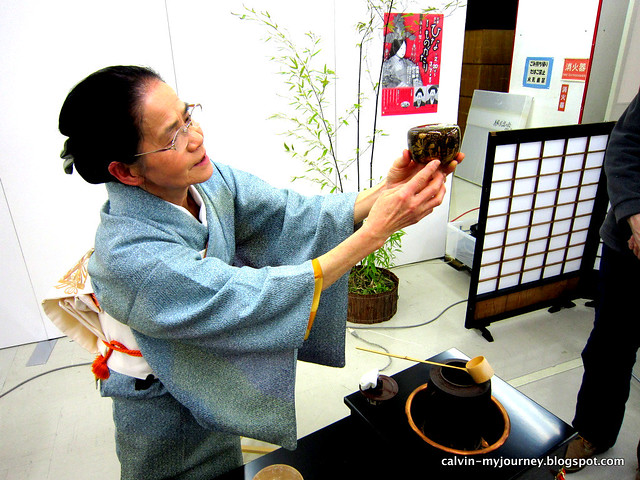
One of the expert aunties explaining to us about the different motives of flora on the cup, which represent each season of the year. Seasonality and the changing
of the seasons are important in tea ceremony.
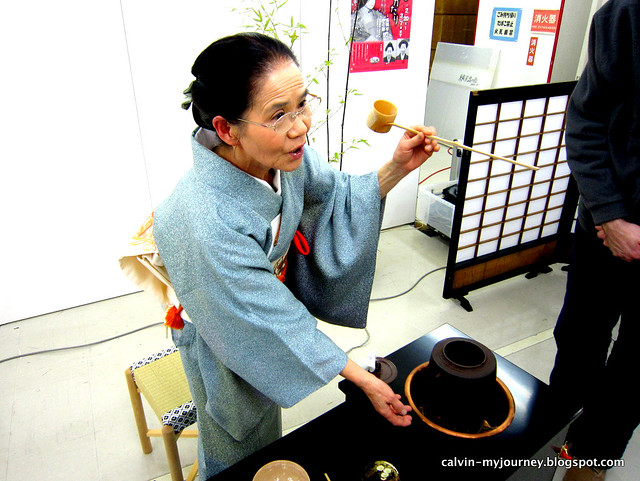
If I am not wrong, the whole stick of that wooden ladle is made from one same bamboo, which means the handle and the scooping part is not attached with glue or nails.

Here comes the cerita dongeng-telling session haha!
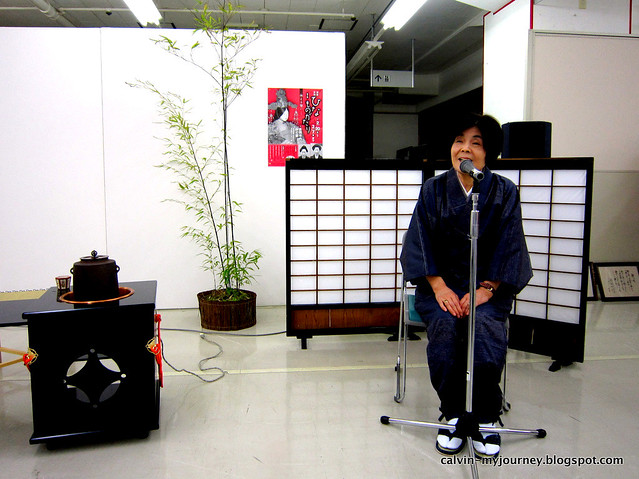
Just like English, they start their story-telling with the phrase with "tonto mukashi atta to" (とんと昔あったと), which translates "once upon a time".
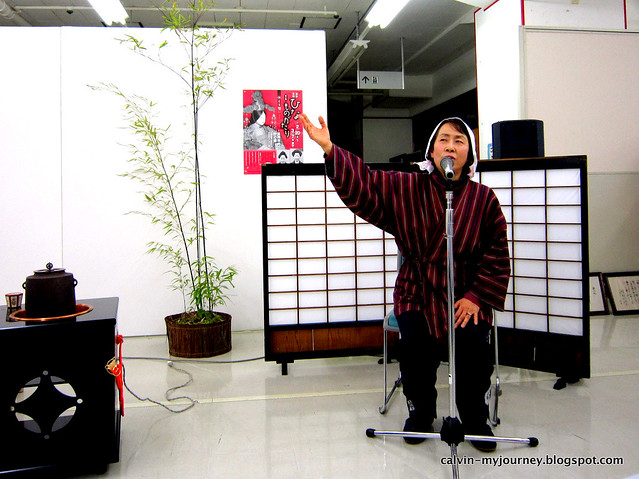
I have to be honest here; I didn't really get most part of the stories told, but when I saw other laughed, I just followed them to laugh haha!
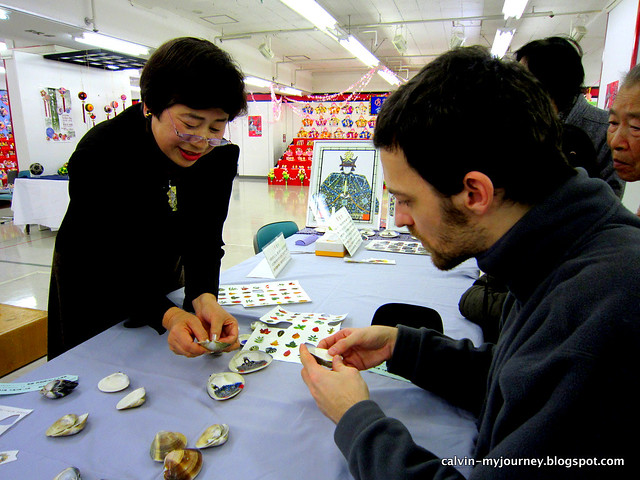
The final session was making some decorative stuff using sea shells.
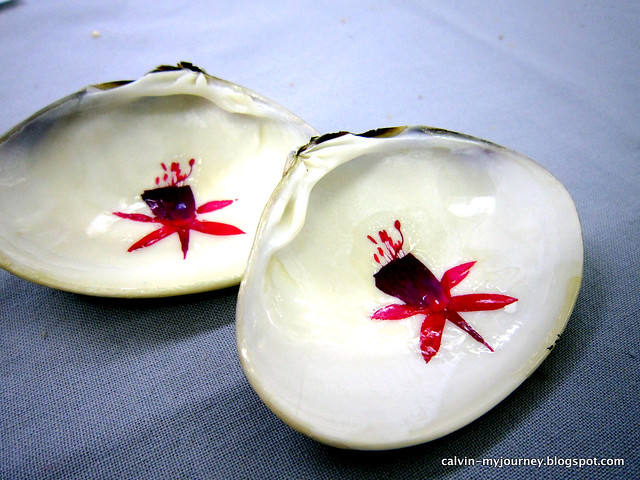
This is my masterpiece. It is done in two pieces, so that the other piece can be given to someone you loved.
The whole trip, which started early in the morning, ended at about four in the evening. It was indeed a fruitful and interesting trip.


2 comments:
haha yo calv long time man no dropped by your blog anyway i promised to leave comment here and ive done it hehe btw cool post as usual :D
@ anonymous:
hello there!
i am not sure who's this, so i would be really grateful if you could leave your name here. anyway, thanks for leaving a few words in my blog and i hope you will enjoy reading my blog : )
Post a Comment