Wednesday, July 10, 2013

Comesta - Italian Home Restaurant In Noda City

"How are you?"

what the word "comesta"
means in Italian


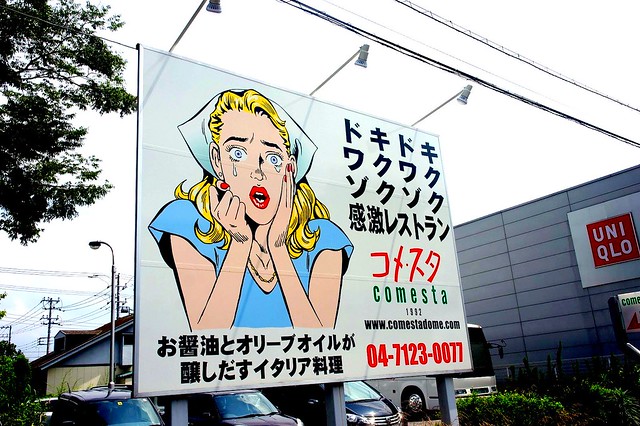
 SAM_3099

A restaurant that will make someone throbbing, exciting, shivering, as seen from the expression of the lady (photo credit: Ros).

Noda City in Chiba Prefecture is well known as one of the main producers of soy sauce in Japan. After our tour to the Kikkoman Soy Sauce Museum in the morning, it was time for lunch. We were taken to an Italian restaurant - Comesta (コメ・スタ) for lunch. You might ask why Italian food, when the Chiba Kun Ambassadors are supposed to introduce good local food found in Chiba.

The answer lies within the special characteristics of this restaurant. Comesta is a restaurant one of its kind, which serves Italian food using locally produced soy sauce and fresh olive oil as its main ingredients. In other words, the food here is more of a fusion between Italian and Japanese food.

P1580629-001

  A colourful building with an easily recognisable signboard.

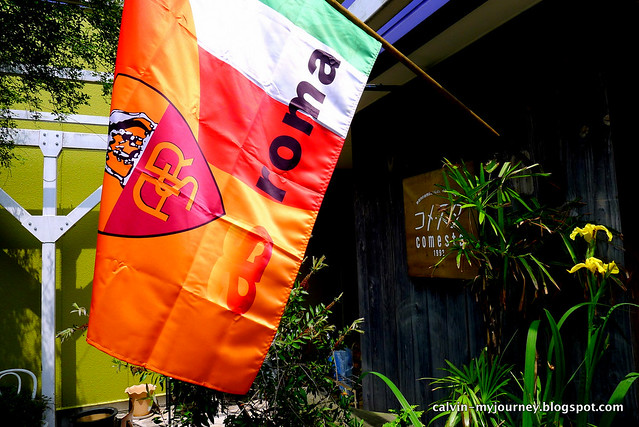
  P1580631-001

Another piece of colourful cloth that emphasis even further that this is an Italian restaurant.

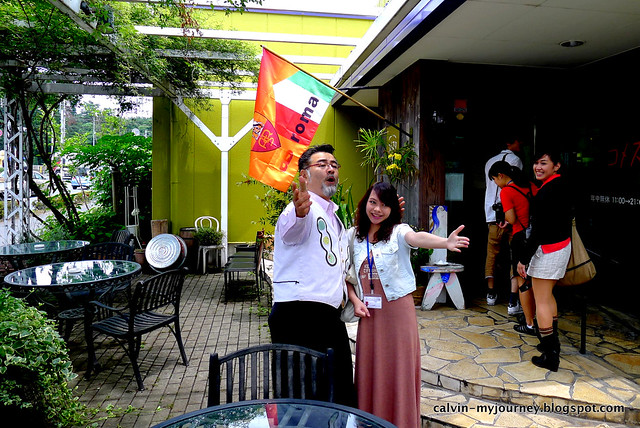
P1580570-001

 And the ambassadors were warmly greeted by Mr Caccini Sakurai (カチーニ桜井), the entertainment producer of Comesta, who loves to eat and laugh hahaha!

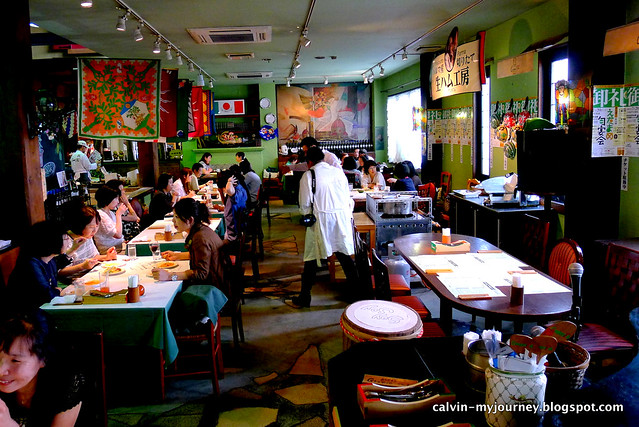
 P1580623-001

The concept of the interior of the restaurant is based on a typical Italian home, such as the fireplace in the main hall.
P1580624-001

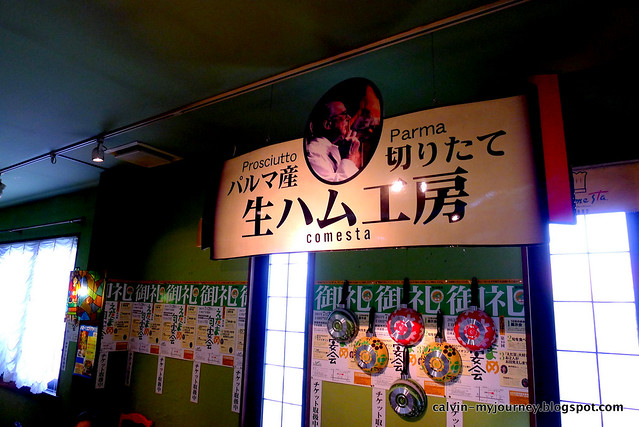
 Freshly cut ham from Parma.

P1580595-001

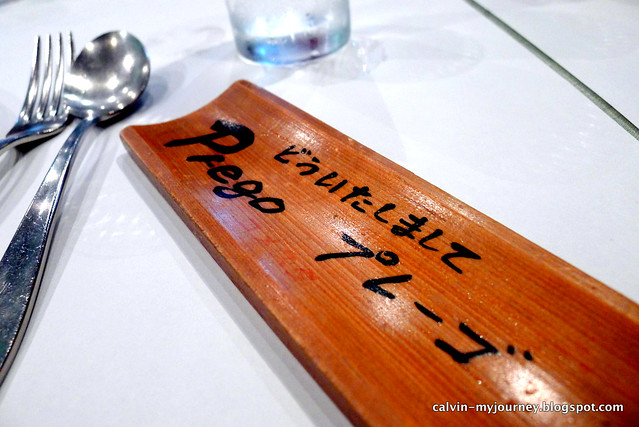
 There were different piece of words written on the wood to place the hand towel, and this is one of them.
P1580580-001

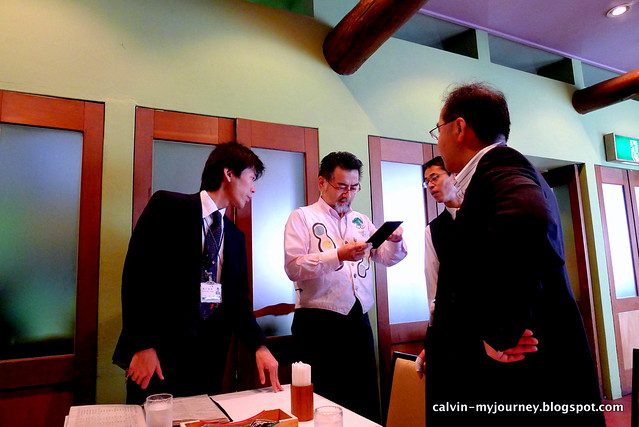
 Mr Ishii and Mr Ishizaki making the order from Mr Sakurai for the ambassadors. 

DSC00564

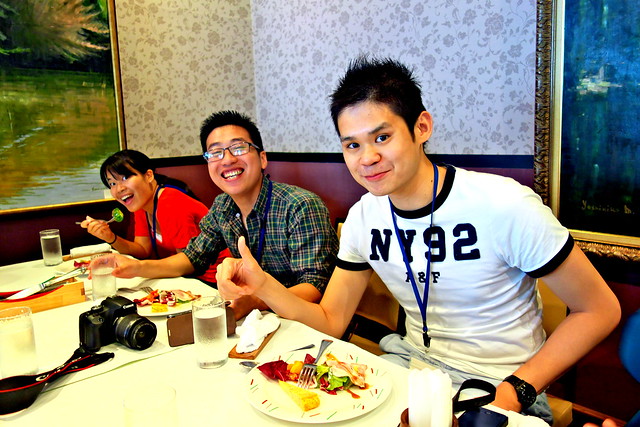
Chiba Kun Ambassadors practising their sweet smile for the best smile competition at the end of the tour lol!

The name "Comesta" is an Italian word, which means "how are you?" The word was picked from 88 Italian words because of its simple pronunciation among the Japanese. In Japanese language, it can be written as 「米・星」(kome-suta), which means "rice" and "star", representing the staple food of Japanese and the universe, respectively.

Interesting naming, isn't it?

The Comesta-style hospitality is one of the main characteristics of this Italian restaurant. What becomes the basic of the great hospitality towards their customers are the "bright smile", "vivacity and lucidly" and "brisk and passionate movements" of their staffs. However, the most important elements to them are the two words - "please" and "thank you" because these two words can be translated into the character and dignity of the food served in the restaurant.
P1580594-001

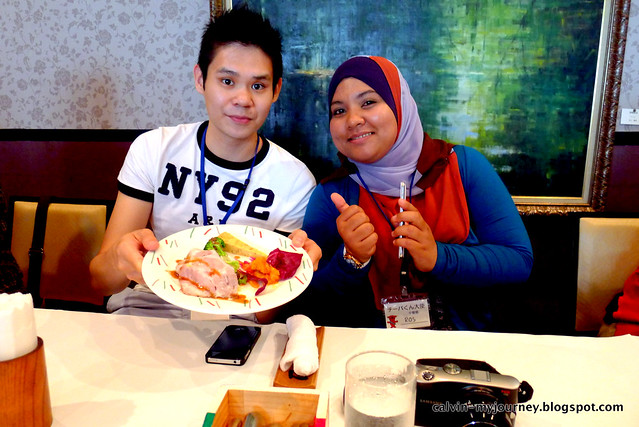
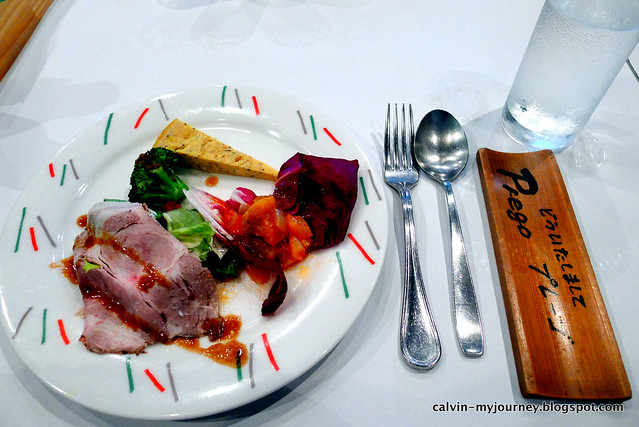
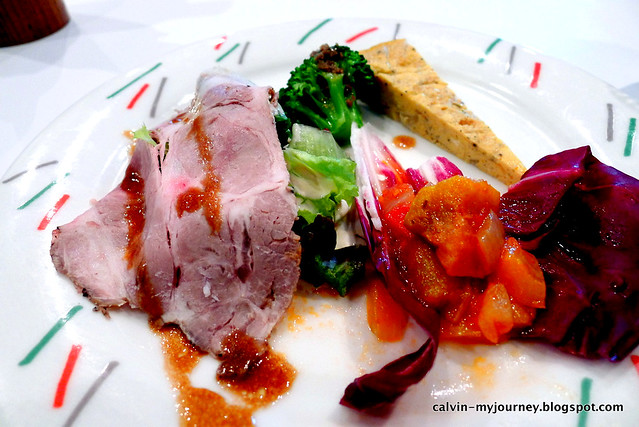
Starter of the course meal of the day. On the plate we have thinly sliced meat, lettuce and boiled broccoli, tomato and omelet.

P1580584-001

Also known as amuse-bouche, they are different from appetizers in that they are not ordered from a menu by patrons,
but, when served, are done so for free and according to the chef's selection alone.

DSC00571

With Rochelle (US) and Tridat (Vietnam), and we couldn't resist taking a photo with the colourful amuse-bouche (photo credit: Tooru Ishikawa).

P1580591-001

This is my crime partner from Terengganu, Kak Ros.

P1580606-001

  Comesta #19 Pizza (コメ・スタ19番ピッツァ). The aroma of soy sauce over the silky finish at the 19th hole after a golf session whets the appetite for this pizza.
 It is rated number one among the pizzas served in this restaurant.

P1580599-001

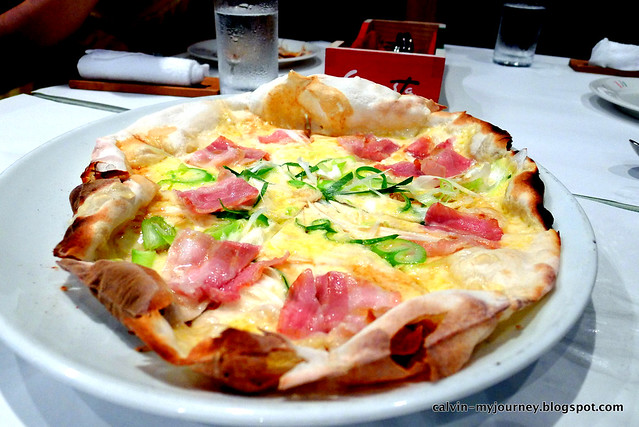
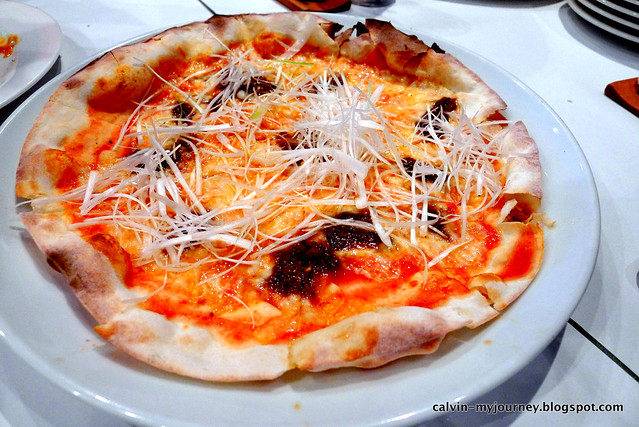
Noda City's Pizza (野田市のピッツァ). Minced chicken which is stewed with soy sauce moromi, topped with minced beef.
The crunchy white leeks also contribute to the wonderful taste of this pizza.

DSC00573

Ambassadors with their delicious pizza! (photo credit: Tooru Ishikawa)
 
P1580614-001

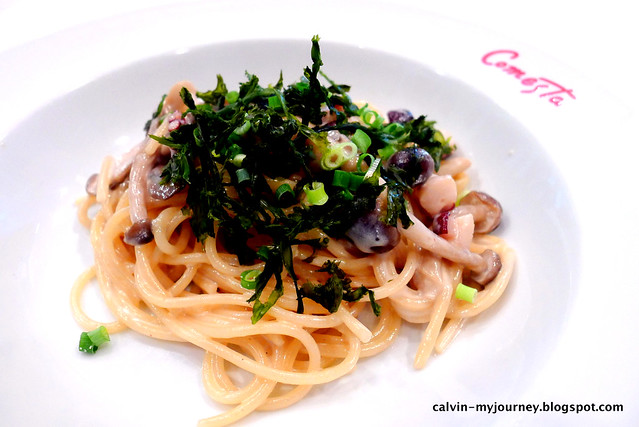
Seafood raw hishio sauce pasta (海鮮(エビ、イカ、タコ)生醤ひしほパスタ). The combination of seafood such as octopus and scallops,
with mushroom, topped with rich raw soy sauce and seaweed makes this a must-try from the menu.

P1580618-001

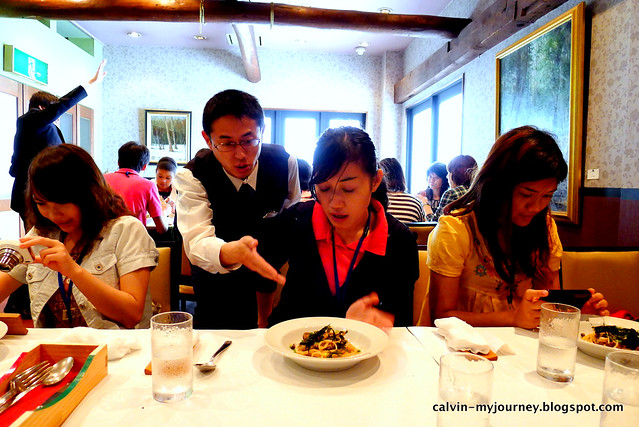
This staff will explain to us each and every meal served. What's interesting is that he did it in English and from what we saw, he really had tried his best. You just could see it from his facial expression. Not to dismiss his effort, but most of us agreed that we would understand it better if he explain to us in Japanese.

P1580621-001

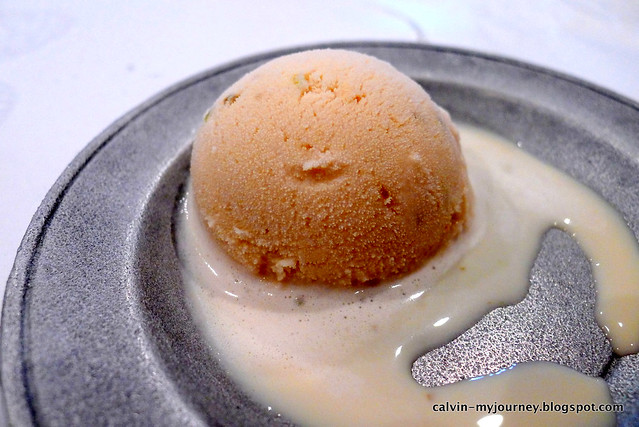
  Soy sauce sherbet (おしょうゆジェラート). A Japanese style sherbet. Refreshing aftertaste is guaranteed!


Final words. The food at Comesta was great if not the best. But what that left an impression on me was the courteous and friendly staff, and also the ambiance of the restaurant, which somehow gives the costumers a soothing atmosphere while dining here.

Do drop by Comesta if you ever visit Noda City!


|| INFORMATION ||
Comesta Italian Restaurant (Noda-Shi Main Branch)
Opening hours: 11:00 - 22:00 (last order 21:00) (Sun to Thu); 11:00 - 23:00 (last order 22:00) (Fri & Sat)
Address: 238 Tsutsumine, Noda-shi, Chiba Prefecture, 278-0021, Japan.
Tel:
04-7121-0010   Fax: 04-7125-0078
Website: http://comestadome.jp/index.html (Japanese)
Email:
nodashi@comestadome.jp
Parking space: 50 units

Wednesday, July 3, 2013

Kikkoman Soy Sauce Museum

"500 B.C. - 
Soy sauce was discovered in China."

The long history
of soy sauce


P1580412-001

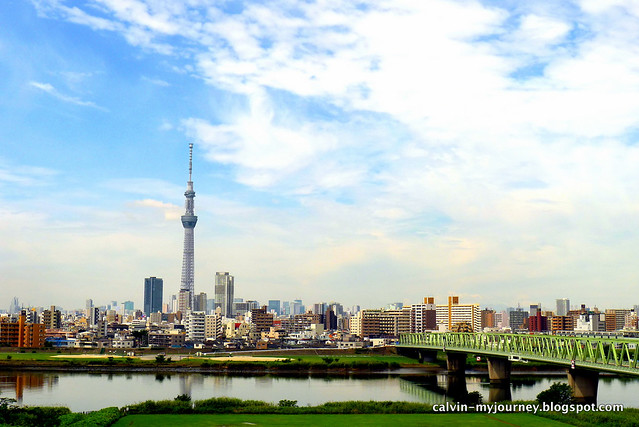
Tokyo Sky Tree was spotted from multiple angles across Edogawa River.

The first tour for the Chiba Kun Ambassadors this year took us to a couple of cities situated in the northern region of Chiba Prefecture - Noda City (野田市) and Matsudo City (松戸市). The geografical features of Noda, neighboured by Saitama Prefecture and Ibaraki Prefecture, makes it a regional commercial center. Noda City is easily accessible from Tokyo Station, in which the train ride takes approximately an hour.

Noda City was historically famous for the production of edamame (green soy beans) and the city was known until 2002 as Japan's prime producer of edamame. Today, it may be in third place behind Tsuruoka in Yamagata Prefecture and Niigata City, but edamame production is still a local pride.

IMG_4429

Chiba Kun Ambassadors in the bus, eagerly anticipating the first tour of the year!

The locals are so obsessed with edamame that they have edamame party every summer after the harvest. During this festival, everyone enjoys the Edamame Samba - a Noda City original with a jaunty tune to accompany the edamame taiso (edamame exercise). Edamame taiso is a kind of exercise based on the movements involved in soybean farming. It includes poses mimicking harvesting and swinging into a basket bunches of soybeans - and then wiping your sweat away.

However, there is something more prominent than edamame in Noda City. But no, not the former Japanese Prime Minister, Mr Noda. It's Kikkoman. So, what is Kikkoman you may ask.

P1580425-001

  The first stop of the day - Kikkoman Monoshiri Shoyukan.

P1580433-001

Kikkoman's promise to the world.

Kikkoman is a soy sauce brand, and along with Yamasa from Chosi City (also in Chiba Prefecture), they contribute to more than one-third of the overall production of soy sauce in Japan. Discovered in China more than 2,500 years ago, sou sauce is thought to be one of the world's oldest condiments. It has remained a cornerstone of many Asian cuisines. Today, it is increasing known in the West as a flavouring and flavour-enhancing ingredient for many types of foods.

In Japan, soy sauce is considered the most important condiment and is used to flavour all types of Japanese dishes. Made of fermented, roasted soy beans, there are countless varities and regional soy sauces that vary in flavour and colour. The typucal types of soy sauces are all purpose soy sauce, sashimi soy sauce with a lighter flavour and colour so as not to overpower the subtle flavours of sashimi, and low sodium soy sauce for those who are conscious on their health.

P1580438-001

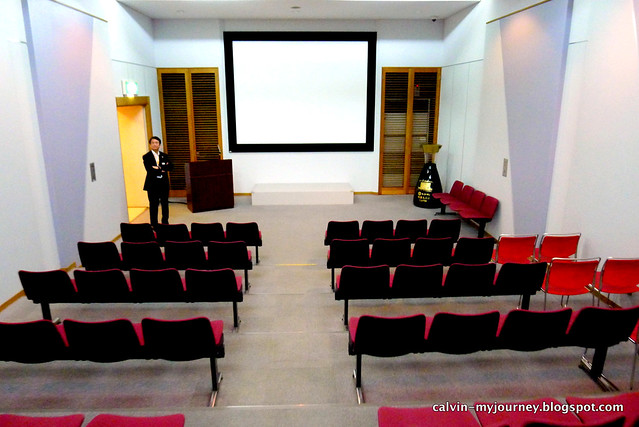
We were guided into a small hall and shown a short 10-minute video about the history and production of soy sauce.

P1580442-001

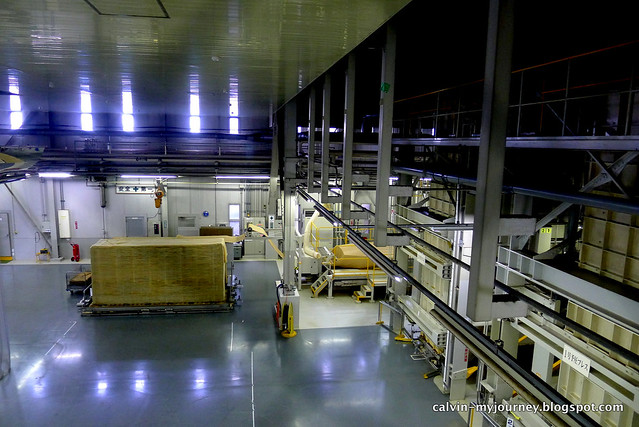
Later, we were taken to go around the factory by the guide, which lasted about 20 minutes.

DSC00493

And so, the ambassadors began their job like professional reporters lol! (photo credit: Tooru Ishikawa)

DSC00495

Having said that, we also listen attentively to the explanations by our guide. (photo credit: Tooru Ishikawa) 

Our first stop was Kikkoman Soy Sauce Museum in Noda City. Here, there is a wide range of information about naturally brewed Kikkoman soy sauce, including the history of soy sauce, details about its production process and features of soy sauce, together with recommended recipes. The tour is conducted six times daily - 9:00, 10:00, 11:00, 13:00, 14:00 and 15:00.
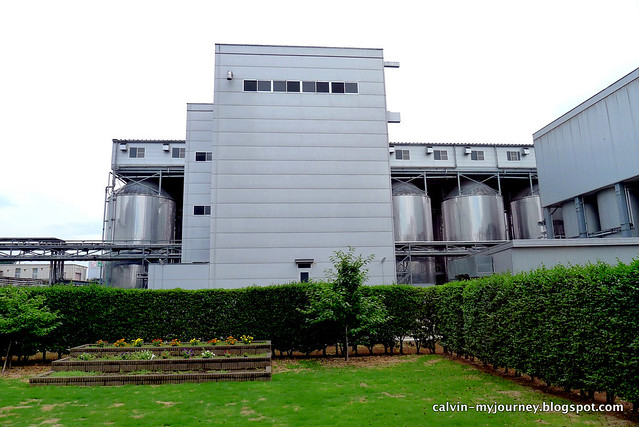
The moment we stepped down from the bus, I could sensed the distinctive delicious smell of soy sauce. Not only we received a warm welcome by the lovely manager and staff, our arrival to the factory was also greeted by the staff from Chiba TV. Exactly, our trip was gonna be covered in the news later that evening.

P1580453-001

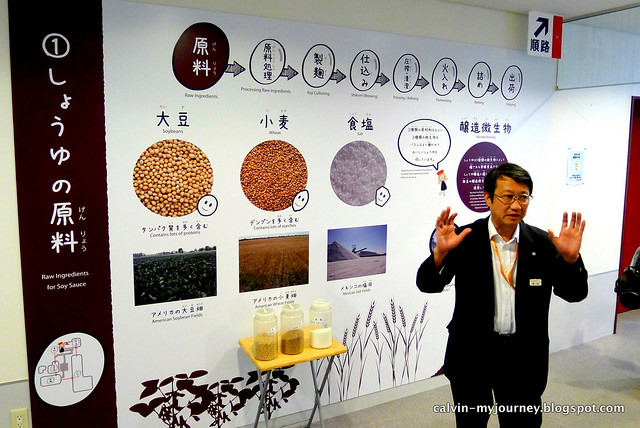
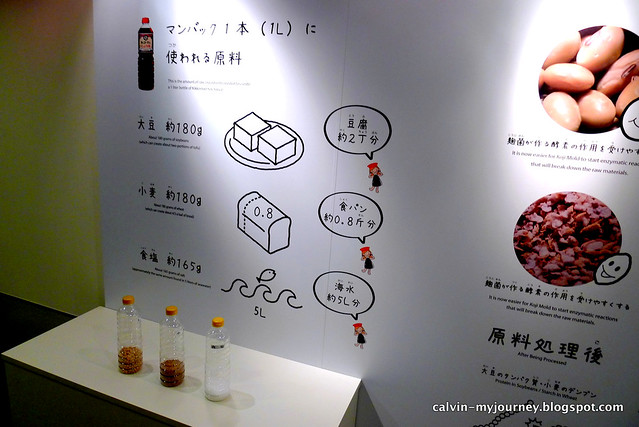
Here is the recipe to make a litre of soy sauce - 180 grams of soy bean, 180 grams of wheat, 165 grams of salt.
Technically, you can get a bottle of one-litre soy sauce by mixing two pieces of tofu, 0.8 loaf of bread and salt obtained from 5 litres of seawater. 

P1580463-001

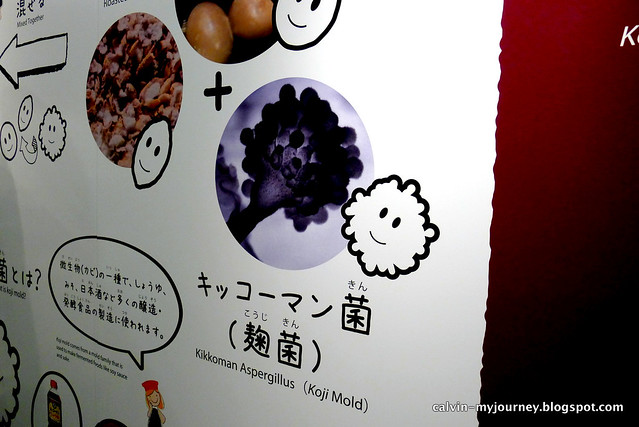
Since its foundation, Kikkoman has been using its original Kikkoman Aspergillus, a type of fungus, to propagate koji mold.
P1580456-001

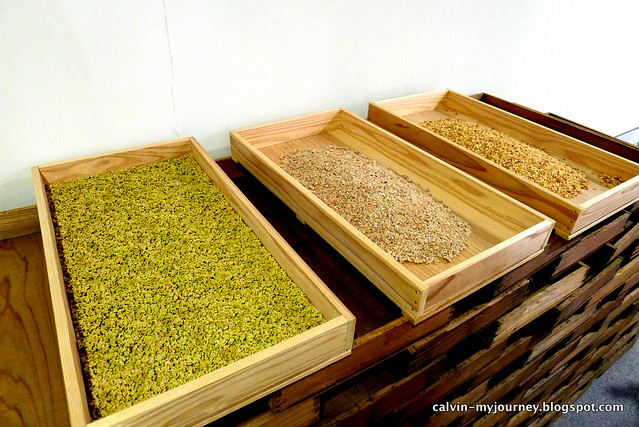
Old wooden boxes used for culturing koji. Koji mold is one of the most important elements in making soy sauce,
and plays an essential role in fermenting the ingredients: this activity is the key to the taste of soy sauce.

P1580469-001

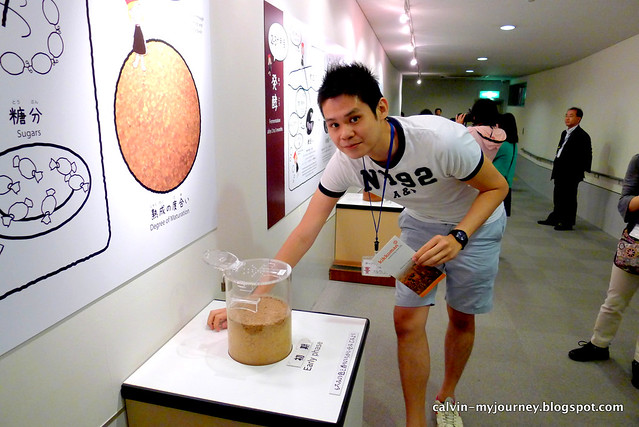
Early phase of moromi. Moromi is aged for several months. Various actions take place in the tank, including lactic acid fermentation, alcoholic fermentation
and organic acid fermentation, all of which impart to the moromi the rich flavor, aroma and color that are unique to soy sauce.

P6220026

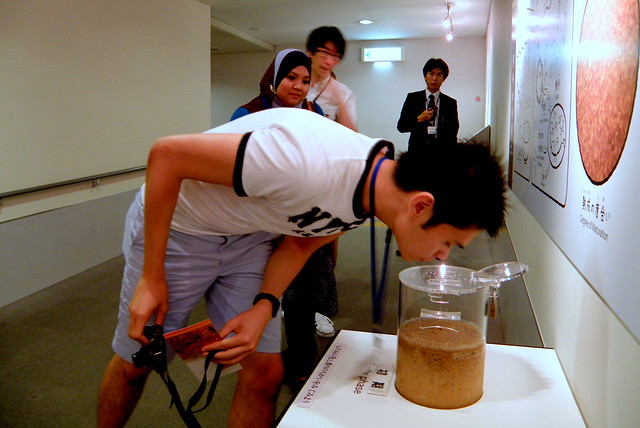
Sniffing on the one-month-old moromi. Smelled like miso lol! (photo credit: Ayako Uchiyama)  

P1580473-001

The mixing process starts from here: the shoyu koji is moved to a tank and mixed with the salt-and-water solution. This mixture is called moromi, a kind of mash, which is then fermented and aged in the tank. Each tank hols 500 tons of the mixture!

To prepare for winter, people of prehistoric Asia preserved meat and fish by packing them in salt. The liquid that leached from the preserved meat was subsequently used as a base for savory broths and seasonings.  In the sixth century AD, the practice of Buddhism flourished in both Japan and China. Many Buddhists practiced vegetarianism, which created the need for a meatless seasoning. One such seasoning consisted of a salty paste of fermented grains including soybeans, the first known product to resemble modern soy sauce.

While studying in China, a Japanese Zen priest came across this new seasoning. Upon returning to Japan, the priest began making his own version and introduced it to others. Over the years, the Japanese modified the ingredients and brewing techniques. One change was the addition of wheat in equal proportion to the soybeans. This produced a soy sauce with a more balanced flavor profile that enhanced food flavors without overpowering them.

P1580484-001

Soy sauce is pressed from aged moromi. During pressing, moromi is poured into special equipment
wherein the mash is strained through layers of incredibly long (2.4 km!) fabric, with each layer folded into three sub-layers.

P1580479-001

After allowing the soy sauce to flow out of the moromi under the force of gravity, the moromi is then mechanically pressed slowly
and steadily for about ten hours. It takes a considerable period of time to gradually press the mash in order to produce beautifully clear soy sauce.

P1580480-001

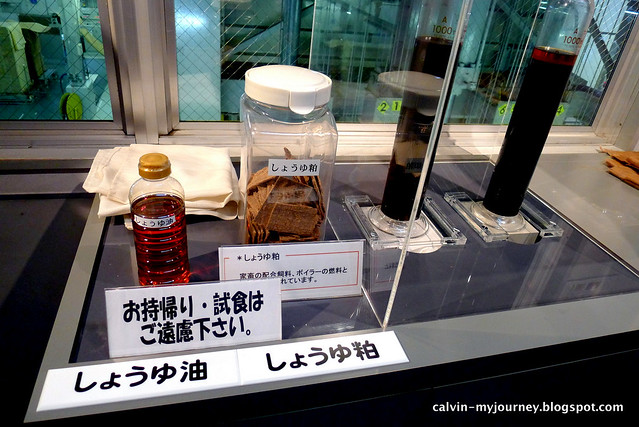
The result from the pressing process - soy sauce (left) and the leftover (right), which is usually cut and used to feed cows.

P1580476-001

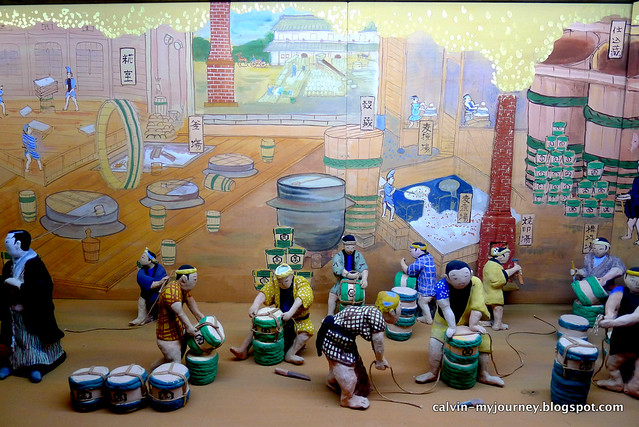
Interesting stuff found at one corner of the museum, which depicts the soy sauce production in the olden days.

P1580497-001

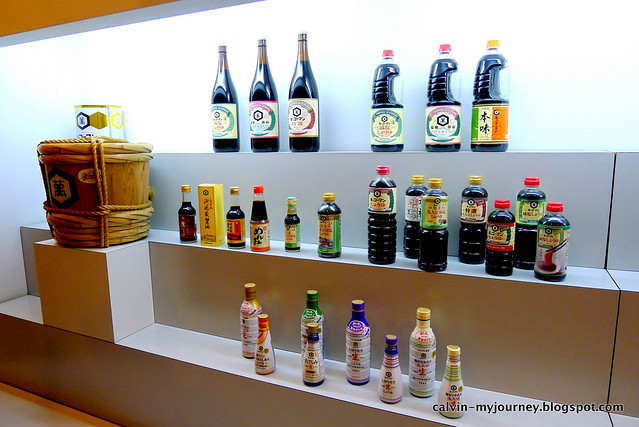
The line-ups of Kikkoman. Kikkoman Soy Sauce is produced from carefully selected ingredients:
its fine aroma is composed of roughly 300 different components, while its well-balanced mix of the five basic flavors satisfies the palate.

P1580498-001

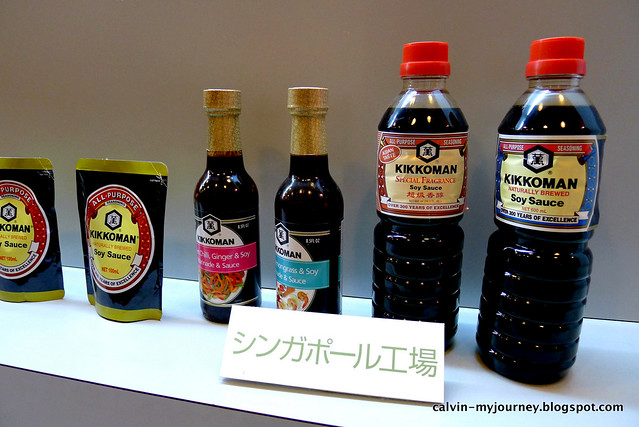
Kikkoman products from Singapore plant. They even produce chilly, ginger, lemon grass marinate soy sauce to suit the local taste-bud..

P1580500-001

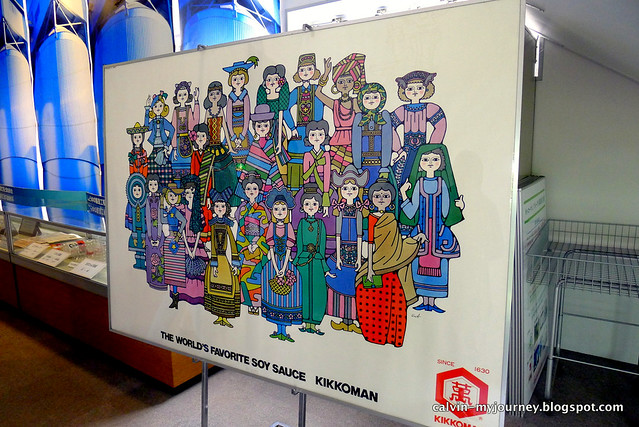
Kikkoman users around the world know that this seasoning enhances not only Asian cuisines, but Western dishes as well,
as it is requested in more than 100 countries.

During the hundred years from the mid-seventeenth century to the mid-eighteenth century, soy sauce production led by the Mogi and Takanashi families prospered in the city of Noda, located in Chiba Prefecture. This is where Kikkoman was born.  Noda is located on the Kanto plain, once one of the largest production centers for soybeans and wheat. It was easy to secure the necessary workforce in this region, owing to its growing population following on the establishment of nearby Edo (today's Tokyo) as the capital of Japan.

Besides its geographic advantages, boat transport had developed in Noda, which was blessed with two major waterways: the Tone and Edo rivers. The transportation of ingredients was thus facilitated, while manufactured products could be delivered to Edo for mass consumption.  Based on historical documents, nineteen soy sauce brewers organized an association in Noda to ship soy sauce mainly to Edo.

P1580537-001

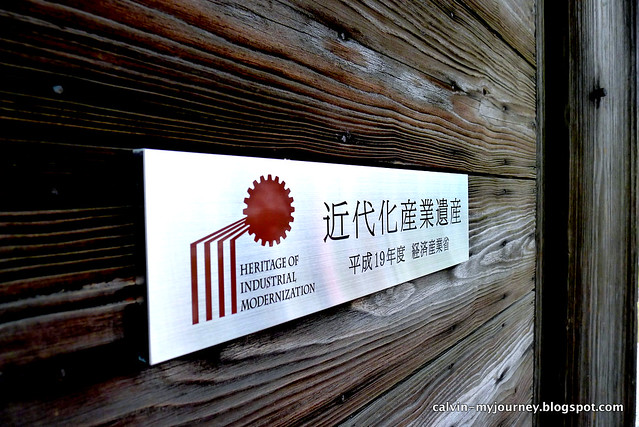
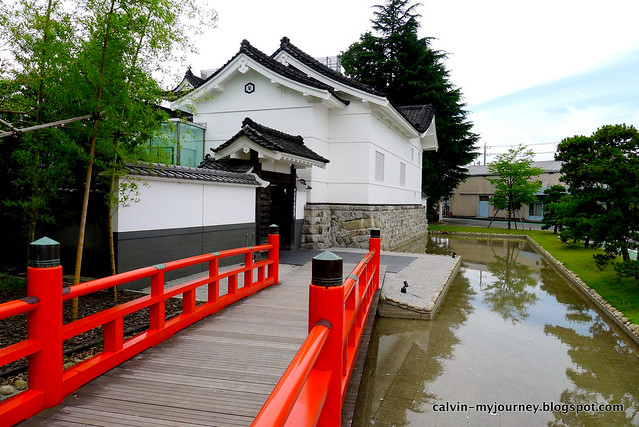
Building which are related to soy sauce production, build 80 to 100 years ago, are designated as Heritage of Industrial Modernization (近代産業遺産).

P1580539-001

One of them are located just next to the Kikkoman factory.

P1580511-001

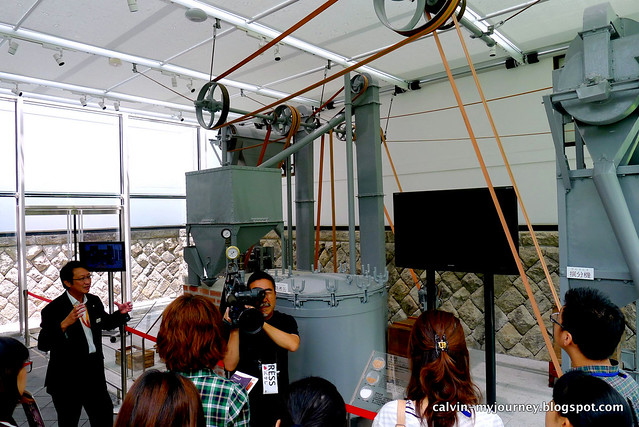
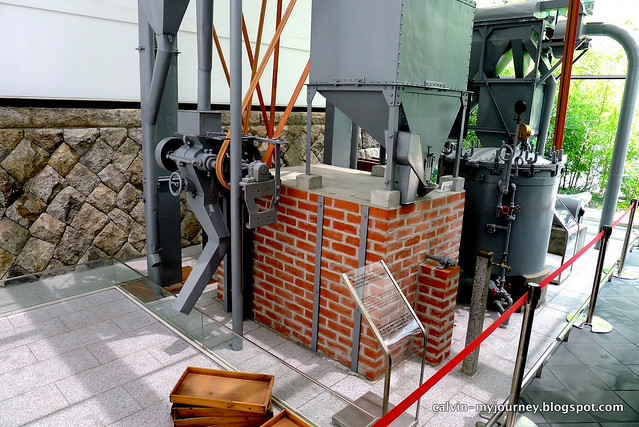
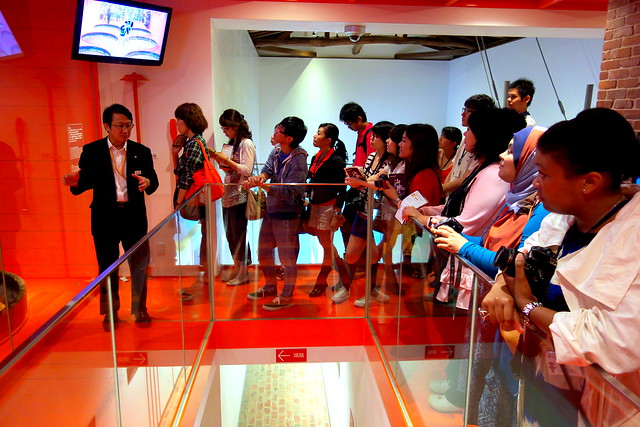
Here, the equipments used in the olden days are exhibited, as our guide explained to us how each component works.

P1580513-001

These equipments are used to process the raw materials of soy sauce, which are soybeans, wheat and salt.

P1580514-001

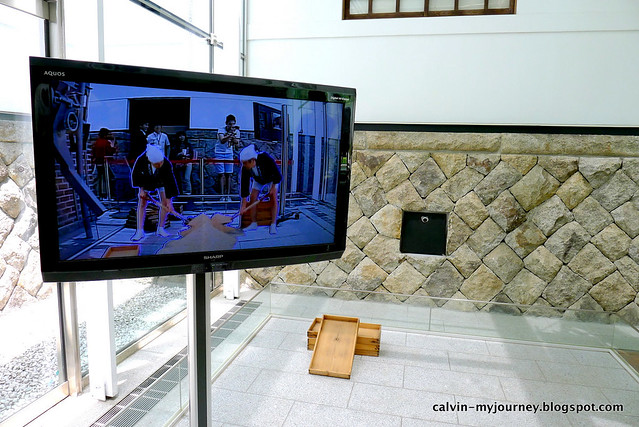
The image of workers working there is super-imposed onto the live feed to give visitors a clearer understanding of the process.

P1580518-001

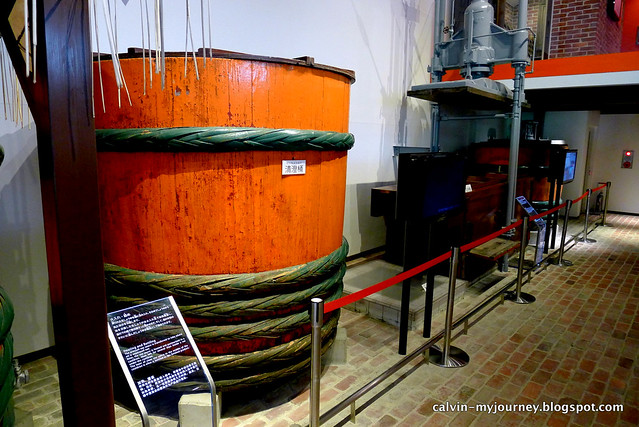
The vats used to ferment soy sauce consist of Japanese cedar boards held together with bamboo hoops. Soy sauce continues to be fermented using these vats, and microorganisms such as yeast and Lactobacillus, which thrive on the surface of the wood play vital role in the production of good quality soy sauce.

P1580520-001

This is the fermentation room, where vats are half filled with salt water, then topped up with shoyu koji and mixed. This mixture is called moromi.
Fermentation continues naturally after that.

DSC00531

The mixture is stirred about once a month in a procedure called kai-ire ("paddle stirring") to supply oxygen and homogenize the moromi,
 then taken out of the vat once it has matured. (photo credit: Tooru Ishikawa) 

P1580524-001

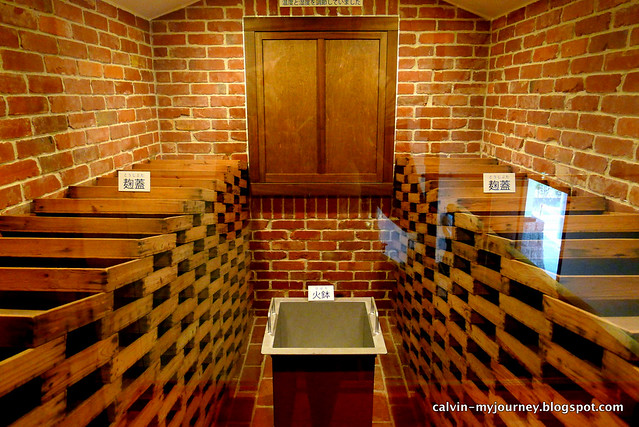
An example of how the wooden boxes used for culturing koji are stacked in a room.

P1580534-001

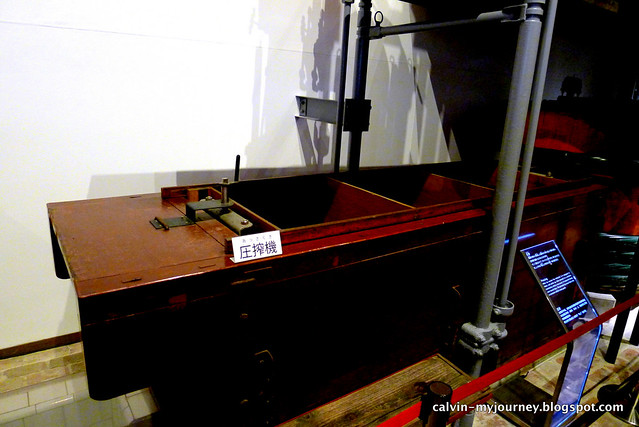
After the moromi has matured, it is wrapped in fabric and pilled up, then pressed in a machine, commonly called a mizu bune. It is pressed slowly over several days. The pressed soy sauce flows into a container called a kame guchi.

P1580517-001

The pressed soy sauce is transferred to tubs where oil is separated out. Next, the soy sauce is heated and pasteurized in a cauldron, then left for several days inside a vat under the cauldron. The layer of clear soy sauce in the middle of the cauldron is what is bottled as the finished product.

 P6220049

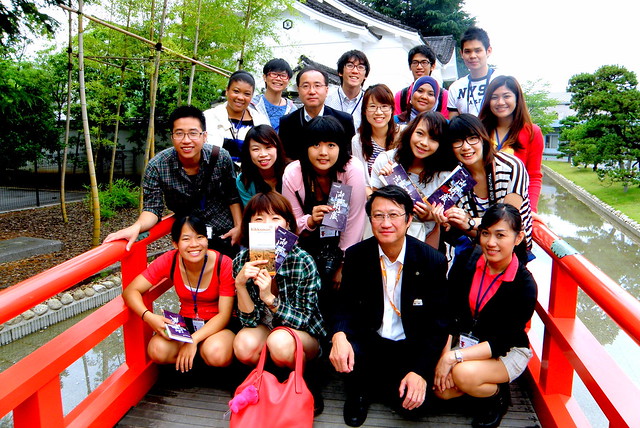
A group photo with the boss of Kikkoman and our boss - Tooru Ishikawa-san, the Director General of International Affairs Division,
Policy and Planning Department of Chiba Prefectural Government. (photo credit: Ayako Uchiyama)  

P1580549-001

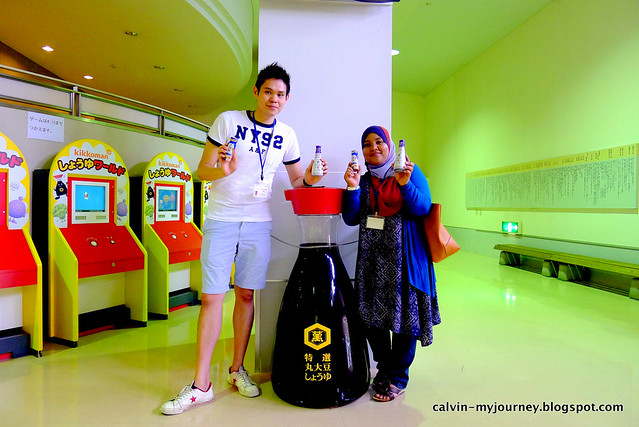
Kak Ros and I, the representatives from Malaysia posing with a huge soy sauce bottle. We wondered how long one will take to finish
this giant bottle of soy sauce lol!

By the mid-nineteenth century, Noda had become the largest soy sauce producer in the Kanto region.  In 1917, the Mogi family, the Takanashi family and the Horikiri family merged their businesses to form Noda Shoyu Co., Ltd. In 1964, Noda Shoyu Co., Ltd. changed its corporate name to Kikkoman Shoyu Co., Ltd. In 1980, this trade name was altered to the company’s current name: Kikkoman Corporation.

Today, Kikkoman Soy Sauce is the best-selling and most widely recognized brand name of soy sauce in the United States and other parts of the world, prized for its versatility as a flavor enhancer, sauce and marinade base, and table-top condiment.

P1580556-001

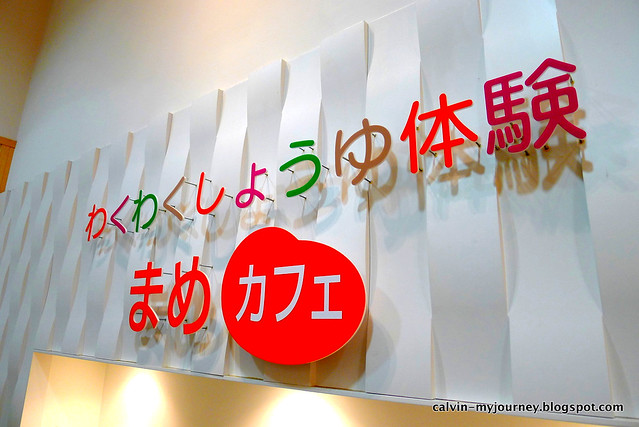
Waku Waku Shoyu Taiken Mame Cafe.
 
P1580564-001

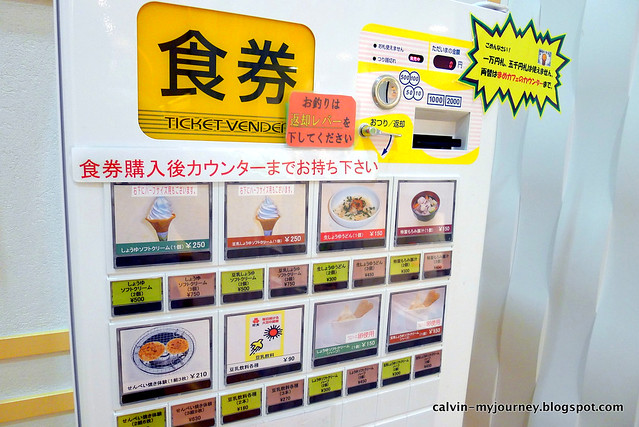
The ticket vending machine to get our food ticket.

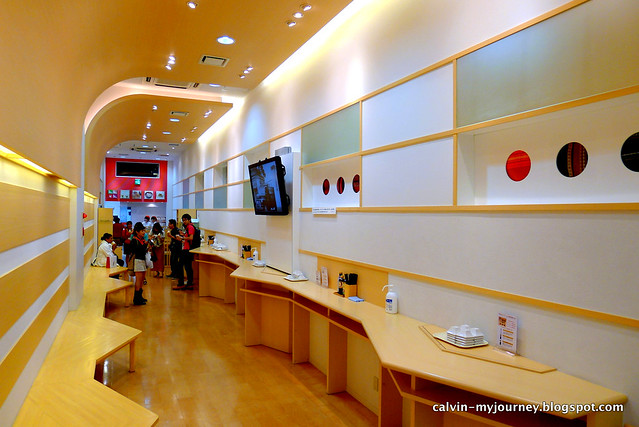
P1580557-001

This is how the interior of the cafe looks like.

P1580562-001

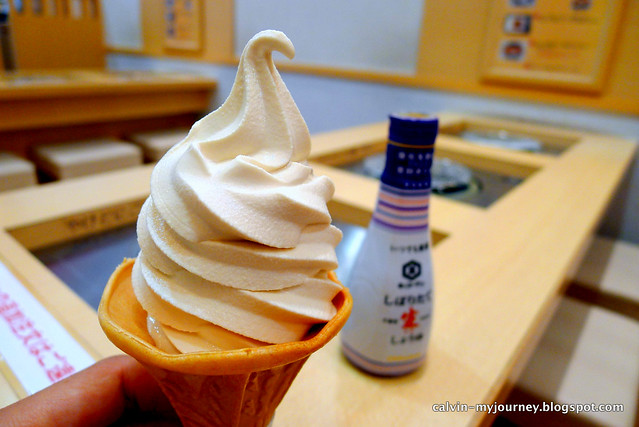
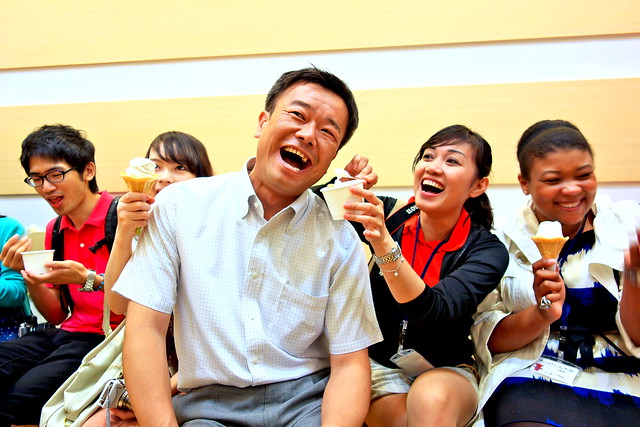
The soy sauce soft cream here tasted slightly saltier than the one we tried in Choshi last year.

P6220058

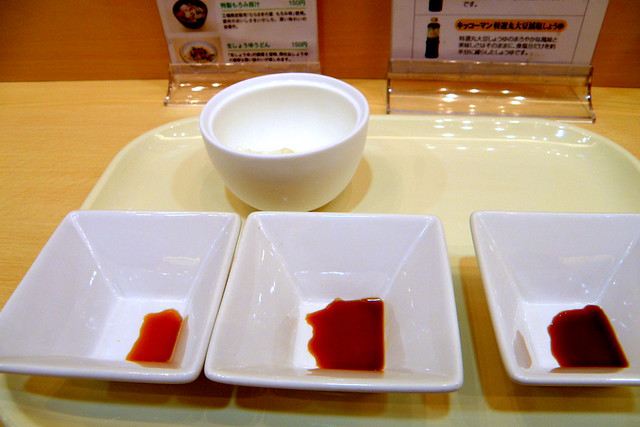
Visitors get to compare the taste of three types of soy sauce on the tofu, which is provided for free. (photo credit: Ayako Uchiyama) 

DSC00554

The Chiba Kun Ambassadors feeding one of the guides with soy sauce ice cream. See how happy he looks like. (photo credit: Tooru Ishikawa) 

DSC00548

A group photo in front of the souvenir shop with the Kikkoman's boss. (photo credit: Tooru Ishikawa) 

Before going back, we dropped by the souvenir shop - Murasakiya (むらさき屋) and also the cafeteria - "Mame Cafe" (まめカフェ) to try its popular soy sauce soft cream. Apparently, soft cream of soy sauce flavour is only available here. Besides that, they also have raw soy sauce (nama-shoyu) udon and soy sauce rice crackers (senbei) as well.

Another good thing not to be missed (however, I somehow missed it) is that there is a corner where you get to try on three different types of soy sauce on the tofu, which is free! One thing to take note is that this shop closes at 15:30, so to those who are joining the 15:00 factory tour, it is recommended that you arrive earlier to try on the soft cream first before the tour begins.

P1580905-001

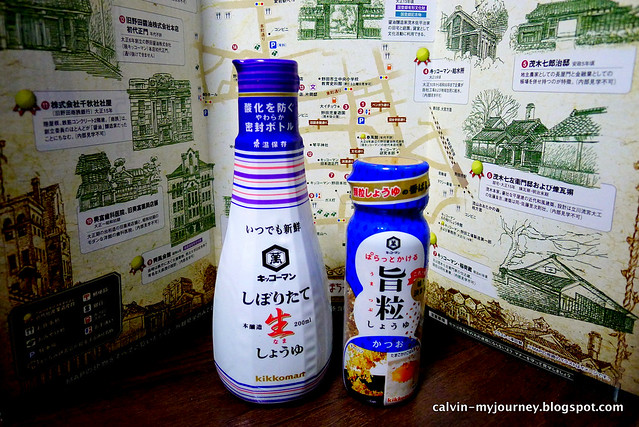
After the tour around the factory, each of us were given a mini bottle of soy sauce and furikake as souvenirs.


|| INFORMATION ||
Kikkoman Soy Sauce Museum (Mono-shiri Shoyu-kan)
Reservation:
Visitors are requested to make reservation through phone calls beforehand.
Opening hours: 9:00 - 16:00
Closed days: 4th Monday every month, Golden Week (May 3 - 6), Jul 6 - 7, Obon (Aug 12 - 16), Year-End-New-Year (Dec 26 - Jan 6)
Factory tour hours: 9:00, 10:00, 11:00, 13:00, 14:00, 15:00
Factory tour duration: Approximately 60 minutes (video presentation: 15 minutes, soy sauce production tour: 45 minutes), with guide books in English, Korean, and Mandarin.
Minimum number of person: 2 persons
Entrance fee: Free
Notes:* Two wheelchairs are available. Please make a request during reservation if needed.
* There are days (Sat, Sun, national holidays) where the production line does not run.
* Do not smoke, eat, drink or take photograph in undesignated area.
* Not pets are allowed into the factory & museum.
* Please use public transportation due to the limited parking spaces.

Address:
Kikkoman Shokuhin Noda Kojonai, 110 Noda, Noda-shi, Chiba Prefecture, 278-0037, Japan.

Tel:
04-7123-5136 (9:00 - 16:00, except closing days)
Website: http://www.kikkoman.com/index.shtml (English) & http://www.kikkoman.co.jp/ (Japanese only)
Access:

* Car: J
ōban Expressway (常磐自動車道) → Nagareyama IC (流山): 20 minutes.
* Train: Nodashi station (野田市) on Tōbu Noda Line: 3 minutes by foot to the factory.


Mame Cafe & Murasakiya
Opening days:
Same as opening days of Mono-shiri Shoyu-kan (please call directly for more details)
Opening hours: 9:30 - 16:00
Tel: 04-7123-5136
Menu:
* Soy sauce soft cream: 250 yen (half for 150 yen)
* Soy bean soy sauce soft cream: 250 yen (half for 150 yen)
* Special momomi pork soup: 150 yen
* Raw soy sauce udon:150 yen
* Rice crackers (3 pieces) baking session: 210 yen
* Soy sauce flavour testing (comes with tofu): Free