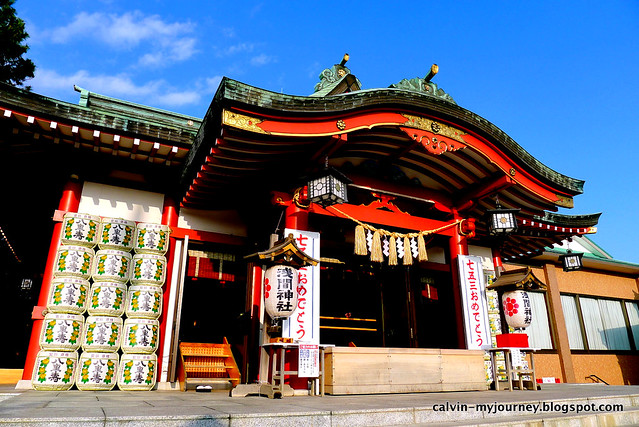
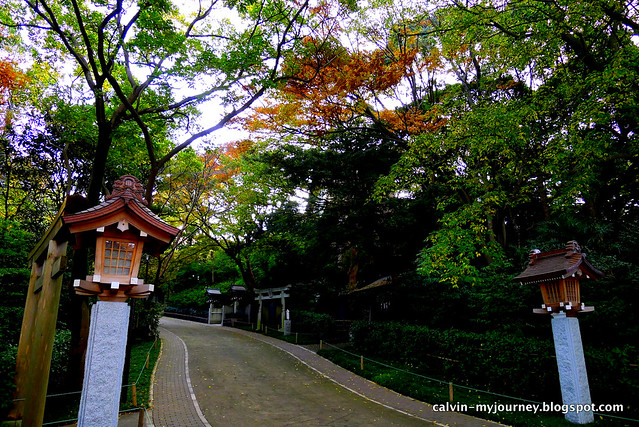
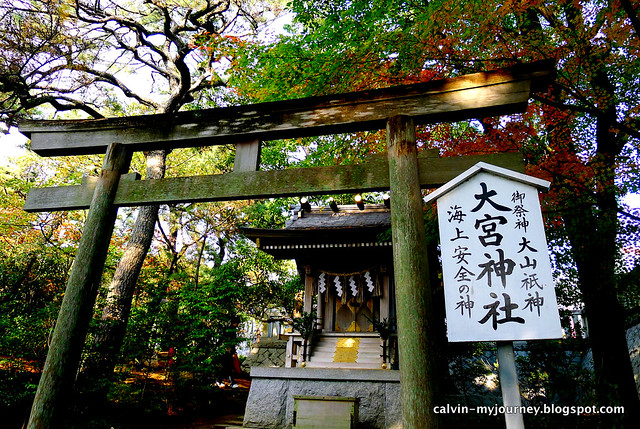
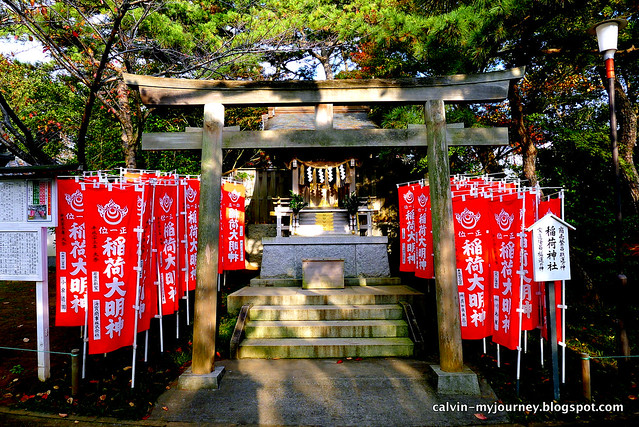
It was completely an impromptu plan to explore the city last weekend. My initial plan was to have a short and simple photography outing, as I tried to look for some photo-shots of the autumn foliage around few major spots in the city. Equipped with a mamachari, a term which refers to a very familiar kind of bike in Japan ("mama" means mom and "chari" means bicycle), it make the exploration much more convenient and faster.
The first stop was Chiba Park, or Chiba Koen (千葉公園) as the Japanese call it.
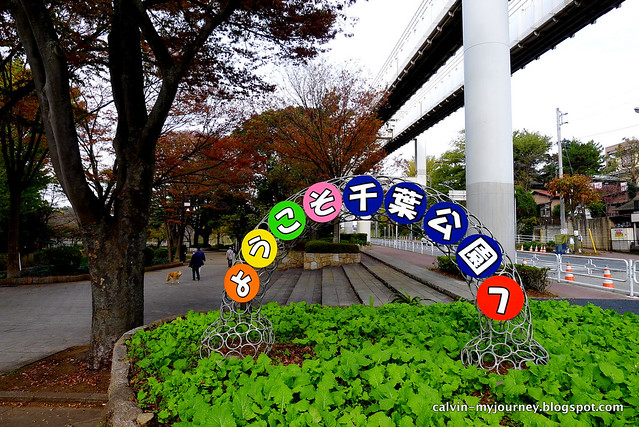
This colourful welcome sign has only being put up recently, as it was not here the last time I came, which was well, more than a year ago I think haha!
The first stop was Chiba Park, or Chiba Koen (千葉公園) as the Japanese call it.
This colourful welcome sign has only being put up recently, as it was not here the last time I came, which was well, more than a year ago I think haha!

The map of the park at the entrance. That pink lotus is called Chihana-chan (ちはなちゃん), the symbol character to represent
Chiba City's goals to "create a community filled with flowers."
Among the main attractions in Chiba Park is the sakura in spring and the beautiful Oga lotus (大賀ハス) at the lotus lake, which usually blooms between mid-June and early July. The Oga lotus story can be traced back half a century ago.
In 1951, an ancient lotus seed estimated to be 2000 years old was excavated from an archaeological site in the Tokyo University Kemigawa Field of Hanamigawa Ward. The discoverer was botanist Dr. Ichiro Oga, who germinated the seed, and planted it at the Chiba Prefecture Agricultural Laboratory. This ancient lotus bloomed the following July, and its news spread throughout the world, even inspiring an article on LIFE magazine.
The flower was named the Oga Lotus after Dr. Oga. The Oga Lotus was designated as a national treasure by Chiba Prefecture in 1954, and became the Chiba City flower in 1993 (source).

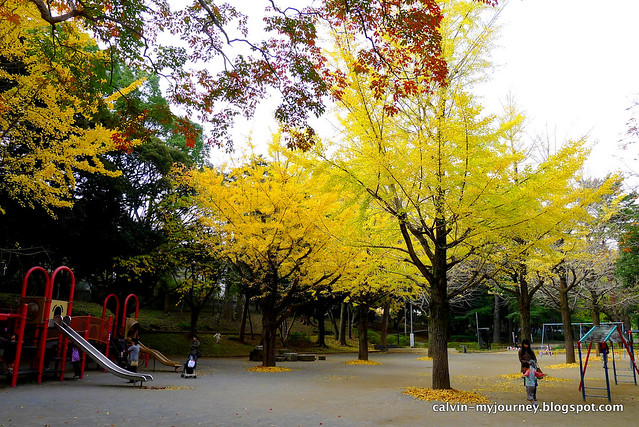
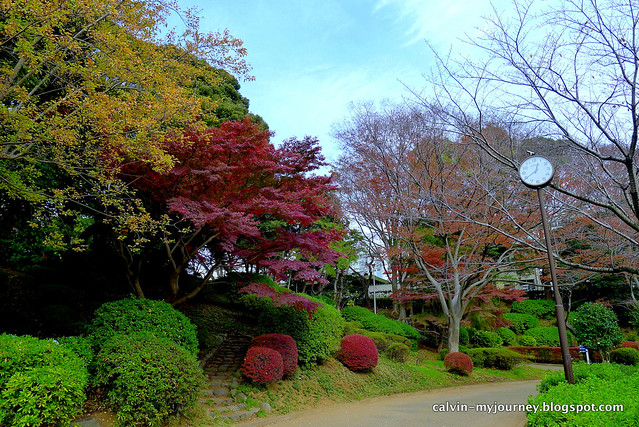
Magnificent autumn foliage along the walking path next to the baseball field.

Watauchi pond (綿打池), which has the pine trees supported by bamboo poles as the winter is coming. This technique is called yuki-zuri (雪吊り),
a protection against heavy snow, as pine trees with almost horizontal branches can easily be damaged by heavy snow.
I left Chiba Park and headed to the next destination - Chiba Shrine (千葉神社).
Chiba Shrine is a beautiful Shinto shrine that is dedicated to the Chiba Clan's tutelary deity, Myoken, a deification of the North Star and the constellation Ursa Major, often associated with Ame-no-minakanushi-no-mikoto.
In 1951, an ancient lotus seed estimated to be 2000 years old was excavated from an archaeological site in the Tokyo University Kemigawa Field of Hanamigawa Ward. The discoverer was botanist Dr. Ichiro Oga, who germinated the seed, and planted it at the Chiba Prefecture Agricultural Laboratory. This ancient lotus bloomed the following July, and its news spread throughout the world, even inspiring an article on LIFE magazine.
The flower was named the Oga Lotus after Dr. Oga. The Oga Lotus was designated as a national treasure by Chiba Prefecture in 1954, and became the Chiba City flower in 1993 (source).
Magnificent autumn foliage along the walking path next to the baseball field.
Watauchi pond (綿打池), which has the pine trees supported by bamboo poles as the winter is coming. This technique is called yuki-zuri (雪吊り),
a protection against heavy snow, as pine trees with almost horizontal branches can easily be damaged by heavy snow.
I left Chiba Park and headed to the next destination - Chiba Shrine (千葉神社).
Chiba Shrine is a beautiful Shinto shrine that is dedicated to the Chiba Clan's tutelary deity, Myoken, a deification of the North Star and the constellation Ursa Major, often associated with Ame-no-minakanushi-no-mikoto.
The shrine is said to have its origins in the Chiba Clan's first roots into eastern Kanto, making it well over 800 years old. It is said that the shrine attendants have been carrying out the same tradition of local festival rites continuously since the year 1127. It is home to several festivals during the year, including a popular setsubun (節分) celebration.
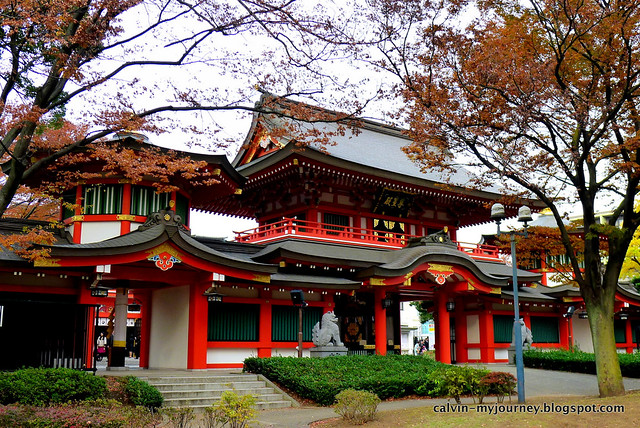
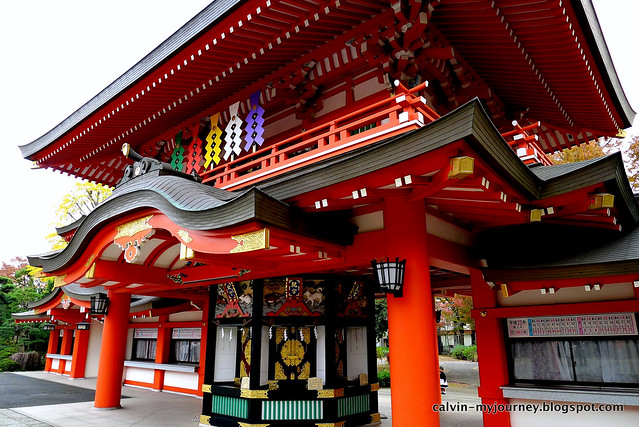
The view of the rōmon from the inside of the shrine.

Beautiful wooden carvings of the twelve zodiac animals in the middle.
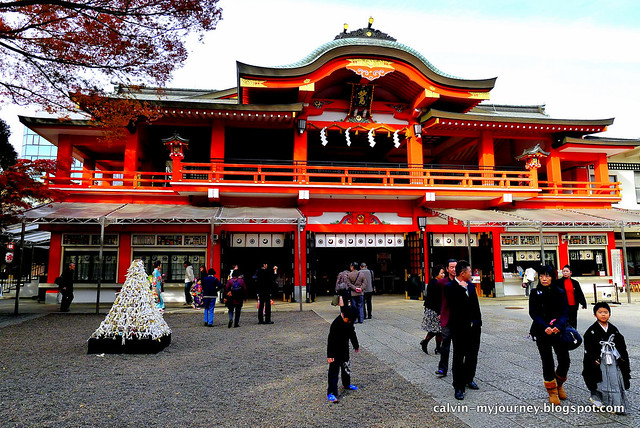
The shaden (社殿), which acts as the main building of the shrine.
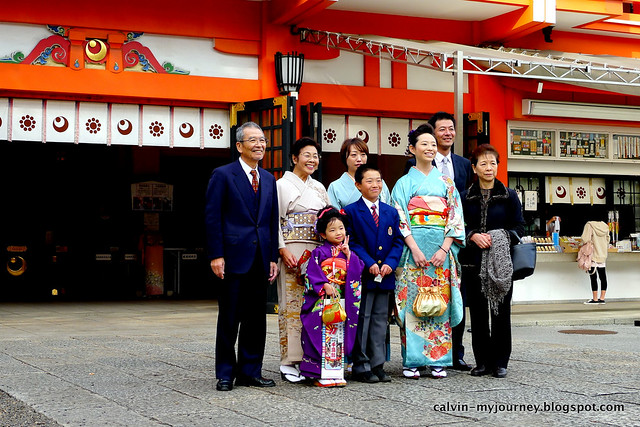
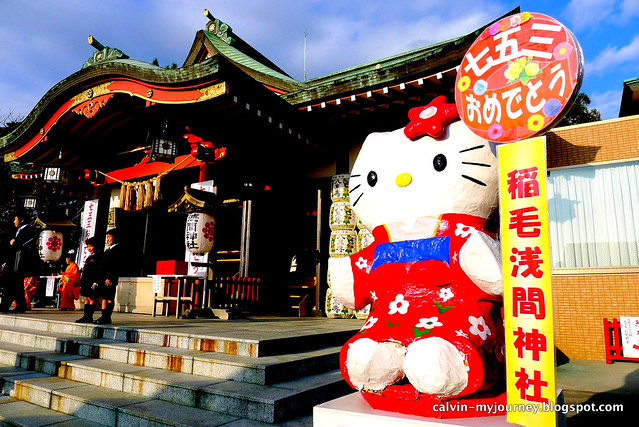
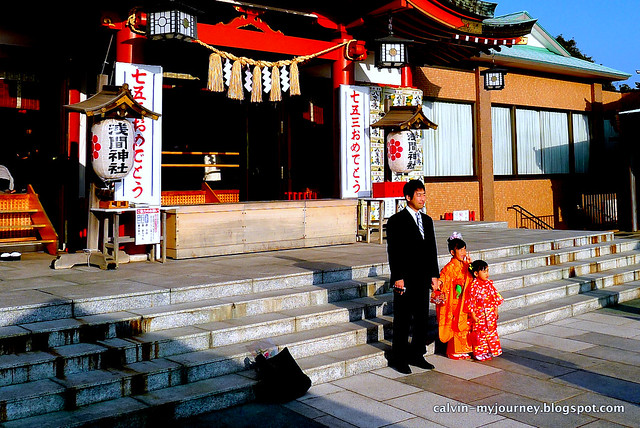
The shrine was crowded with families who went there wearing their beautiful kimonos for the Shichi-Go-San (七五三) celebration.
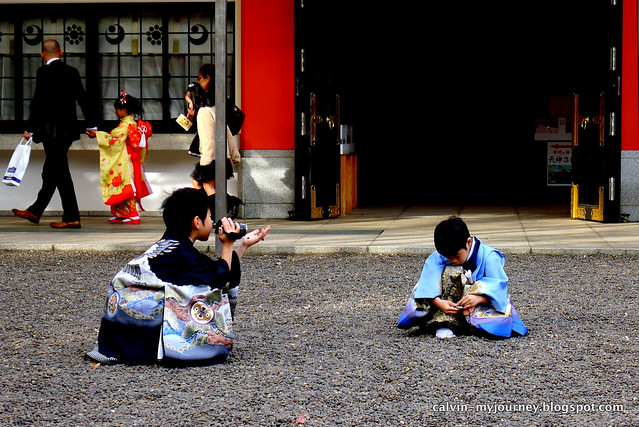
Two little kids taking some time off to have fun around.

Managed to randomly grab these two kids to have a photo taken with them haha! (actually I had gotten the permission from their parents).
Chiba Shrine is famous for its annual festival called the Myoken-daisai (妙見大祭) or also known as Daradara-matsuri (だらだら祭), held from August 16 to 22, that lasts for a period of a week. This festival has been celebrated every single year since 1127.
It is said that during the one-week period this festival is celebrated, a single wish that one made will definitely come true (何か一言願をかければ、その願いは必ず達成される). That is why this festival is also sometimes known as Hitokoto Myoken Daisai (一言妙見大祭).
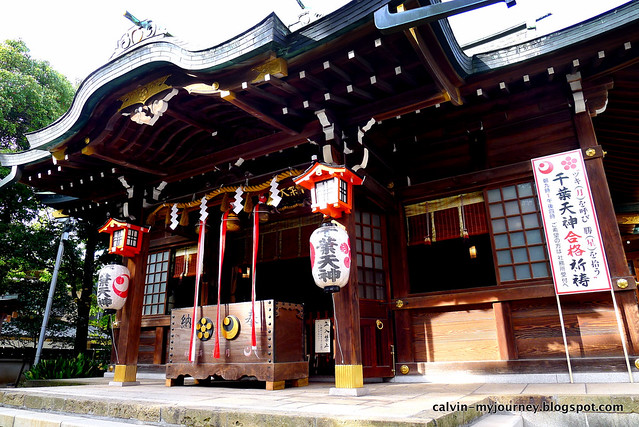
Tenjin-sama (天神様), a God which is worshiped for getting good results in examination.
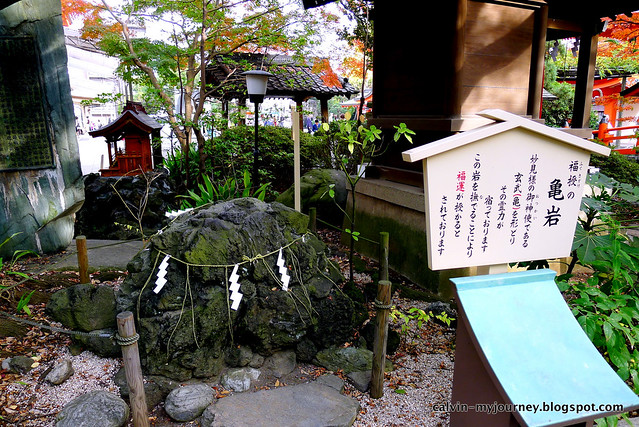
Kame-iwa (亀岩), or the "tortoise stone". It is believed that stroking this stone gently will bring prosperity.
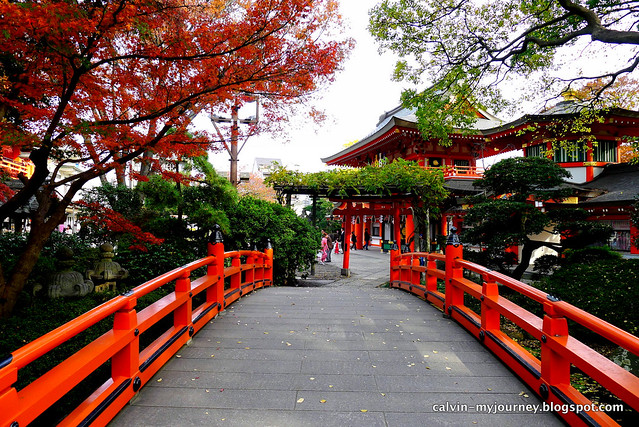
This gorgeous red bridge is called the negai-bashi (ねがい橋), or the "wishing bridge" which goes across Myoken pond (妙見池). They say you will live happily ever
after if you walk pass this bridge with your loved one. Actually I just made that out haha!
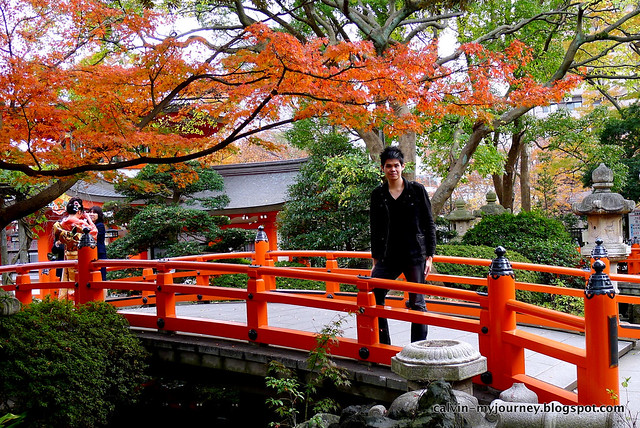
Not gonna miss the chance to have a photo on this beautiful bridge, with the spectacular red maple leaves spreading across the bridge.
Without the help from the GPS from a smart phone, I relied on the traditional method of looking at the map I got from the tourist information booth when I went from one place to another. It was not that difficult, just that sometimes I found myself almost lost in the middle of nowhere haha! That is when I resorted to a more ancient method, which is by looking at the sun and stars, and guided my way through my instinct lol!
My final stop was Chiba Castle (千葉城), which sits on a hilltop. It is a picturesque castle which is the home of the Chiba City Folk Museum at present. The present castle is a reconstruction designed to house the museum in 1967, built on the site where Chiba's namesake Chiba Clan once ruled from their own fortification, Inohana Castle. The small hilltop park around the castle is particularly nice when the cherry blossoms are in full bloom.
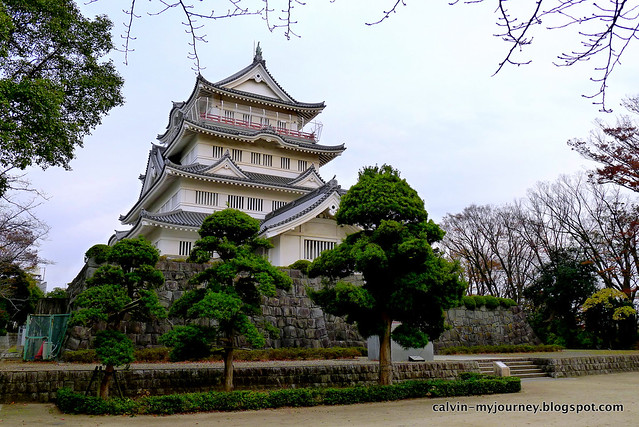
The front view of Chiba Castle. Its castle tower is built on an anti-earthquake foundation.
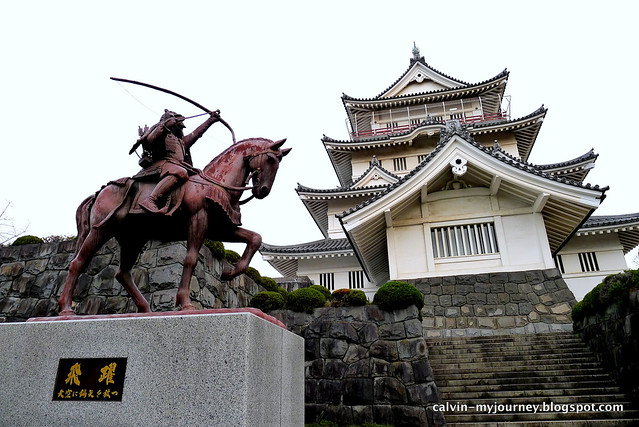
Statue of Chiba-no-suke Tsuneshige (千葉介常重), built in December 2001 to commemorate Chiba city's 80th anniversary.
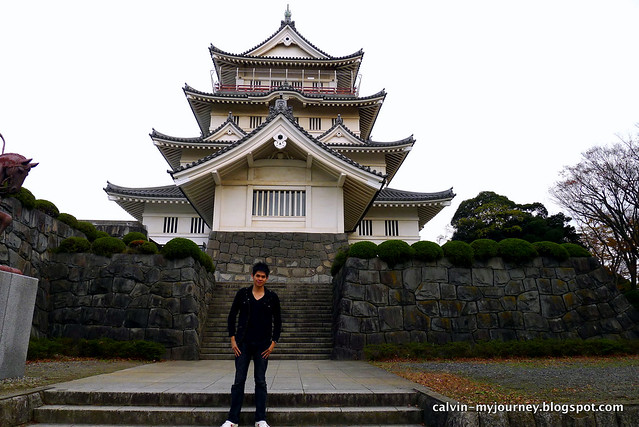
In front of the castle tower.
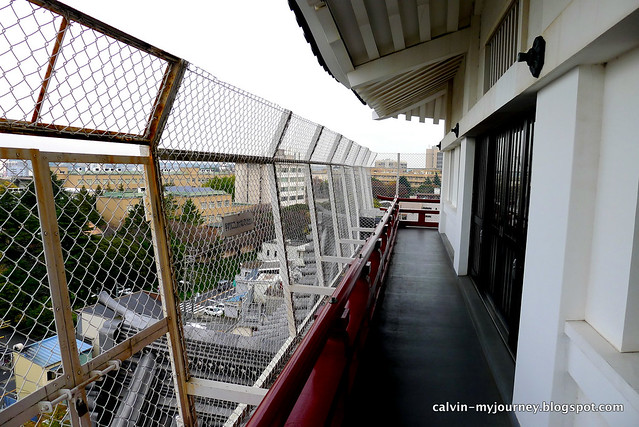
The balcony at the highest floor. The red fence is so low that anyone can fall over; so they built a mesh fence, though it ruins the view and picture-taking.
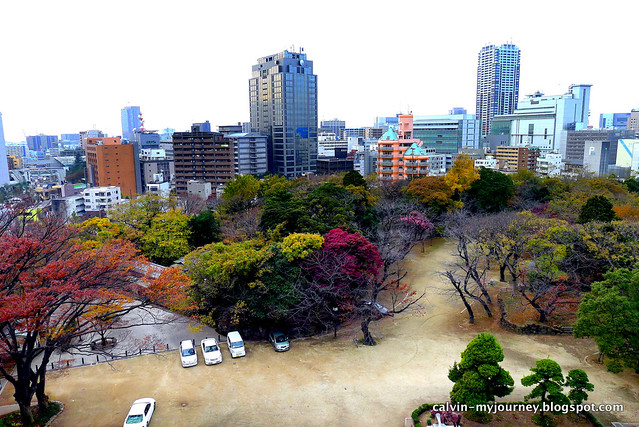
View of Chiba city from the balcony on the fifth floor.
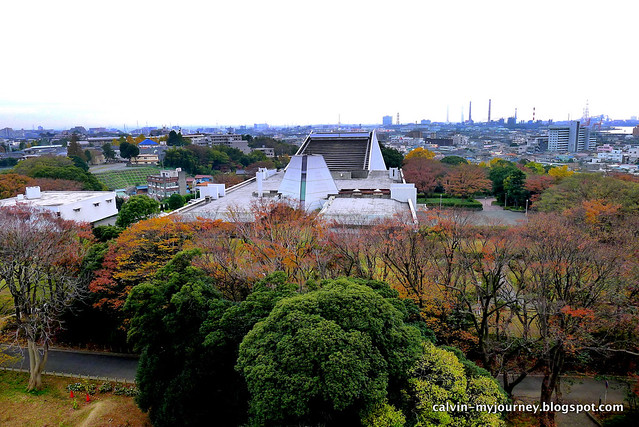
Chiba port is visible in the far background. Having long arms has its advantage at times like this because I can stretch it through the fence when I take photos.

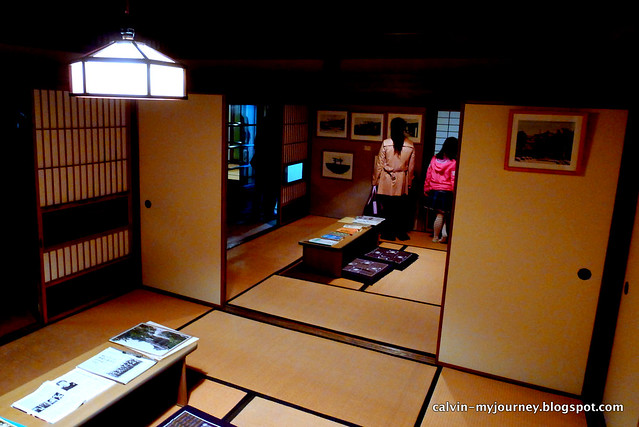
A typical view of a Japanese house before the war.
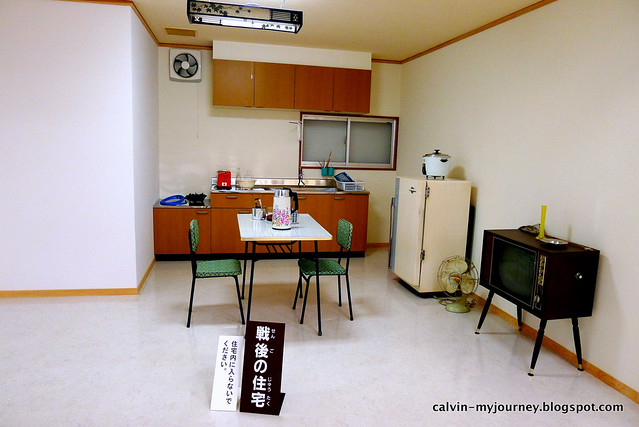
After the war, the houses in Japan underwent a significant change when foreign influences, especially from the West can be seen.

Some of the description of the life after the war period. The lotus root by Dr. Oga is put on display on the bottom left.
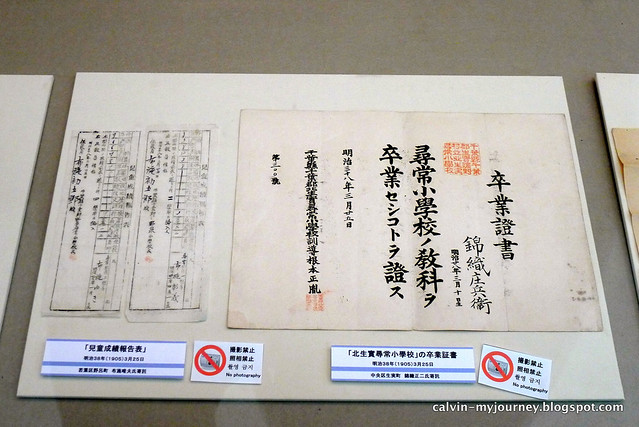
A copy of a hand-written graduation certificate in the olden times. This one (right) dated 25 March 1905, that is almost a century ago.
That's the end of my short half-day tour around Chiba City. Thanks for reading.
The front view of Chiba Castle. Its castle tower is built on an anti-earthquake foundation.
Statue of Chiba-no-suke Tsuneshige (千葉介常重), built in December 2001 to commemorate Chiba city's 80th anniversary.
In front of the castle tower.
The balcony at the highest floor. The red fence is so low that anyone can fall over; so they built a mesh fence, though it ruins the view and picture-taking.
View of Chiba city from the balcony on the fifth floor.
Chiba port is visible in the far background. Having long arms has its advantage at times like this because I can stretch it through the fence when I take photos.
A typical view of a Japanese house before the war.
After the war, the houses in Japan underwent a significant change when foreign influences, especially from the West can be seen.
Some of the description of the life after the war period. The lotus root by Dr. Oga is put on display on the bottom left.
A copy of a hand-written graduation certificate in the olden times. This one (right) dated 25 March 1905, that is almost a century ago.
That's the end of my short half-day tour around Chiba City. Thanks for reading.